Quantum Supremacy represents a pivotal moment in the evolution of technology, where quantum computers surpass classical ones in solving complex problems. This groundbreaking achievement promises to revolutionize various fields, from cryptography to pharmaceuticals, igniting immense curiosity and speculation about the future.
Understanding the concept of quantum supremacy requires delving into the distinct mechanics of quantum and classical computing, highlighting their stark differences. As we explore this fascinating terrain, we uncover the historical milestones and significant breakthroughs that have paved the way for this technological leap, as well as the implications it holds for society.
The Fundamental Concept of Quantum Supremacy
Quantum supremacy refers to the point at which a quantum computer can perform calculations that are infeasible for classical computers to execute within a reasonable timeframe. This milestone is significant because it demonstrates the potential of quantum computing to solve complex problems far beyond the capabilities of traditional computing technologies. The achievement of quantum supremacy could revolutionize various sectors, leading to advancements in fields like cryptography, drug discovery, and artificial intelligence.
The realm of quantum computing fundamentally differs from classical computing in how information is processed. While classical computers use bits as the smallest unit of information, which can be either 0 or 1, quantum computers utilize quantum bits or qubits. Qubits harness the principles of quantum mechanics, allowing them to exist in multiple states simultaneously—a phenomenon known as superposition. Additionally, qubits can be entangled, meaning the state of one qubit can depend on the state of another, regardless of the distance between them. This enables quantum computers to perform parallel computations that significantly enhance processing power.
Implications of Achieving Quantum Supremacy
The achievement of quantum supremacy holds profound implications across various fields:
– Cryptography: Quantum computers could potentially break existing encryption methods, such as RSA and ECC, which currently secure online communications. The Shor’s algorithm, for example, can factor large numbers exponentially faster than the best-known classical algorithms, making many current security protocols obsolete.
– Pharmaceuticals and Drug Discovery: Quantum computing can simulate molecular interactions at unprecedented levels of detail, facilitating rapid drug discovery processes. By accurately modeling complex biological systems, researchers could identify new therapeutic drugs significantly faster than traditional methods allow.
– Artificial Intelligence: Quantum algorithms have the potential to enhance machine learning models. With the ability to process vast datasets simultaneously, quantum computing could lead to breakthroughs in AI, enabling more sophisticated algorithms that improve decision-making and predictive analytics.
– Material Science: Quantum simulations can lead to the discovery of new materials with desirable properties, such as superconductors or advanced nanomaterials. This could result in innovations in electronics, energy storage, and more.
– Optimization Problems: Many industries face complex optimization challenges, from logistics to finance. Quantum computing can tackle these problems more efficiently than classical computers, leading to cost savings and improved operational efficiency.
“Quantum supremacy is not just a goal; it is a transformation of our approach to computation and problem-solving.”
Historical Milestones Leading to Quantum Supremacy
The journey toward quantum supremacy has been marked by numerous groundbreaking advancements in quantum computing technology. These milestones represent the collective effort of researchers and institutions dedicated to unlocking the potential of quantum mechanics for computational power that far exceeds classical capabilities. An understanding of these historical developments provides valuable insight into the evolution of quantum computing and the eventual achievement of quantum supremacy.
Key breakthroughs have been essential in shaping the field of quantum computing. These advancements have been driven by significant contributions from notable researchers and institutions. The timeline of these critical events chronicles the progression of ideas, theories, and experimental achievements that have propelled quantum computing to new heights.
Key Breakthroughs in Quantum Computing Technology
Several pivotal breakthroughs have played a crucial role in advancing quantum computing technology. These breakthroughs laid the groundwork for the eventual realization of quantum supremacy.
- Quantum Bits (Qubits): The concept of quantum bits, or qubits, was fundamental to quantum computing. Unlike classical bits, which can be either 0 or 1, qubits can exist in superpositions of states, enabling quantum computers to perform multiple calculations simultaneously.
- Quantum Gates and Circuits: The development of quantum gates and circuits allowed for the manipulation of qubits, resembling classical logic gates. This innovation was essential for constructing quantum algorithms.
- Shor’s Algorithm (1994): Proposed by Peter Shor, this algorithm demonstrated that quantum computers could factor large integers exponentially faster than classical computers, highlighting their potential power.
- Grover’s Algorithm (1996): Lov Grover introduced this algorithm, which showed that unstructured search problems could be solved quadratically faster on quantum computers, further illustrating the advantages of quantum over classical computation.
- Quantum Error Correction (1995): The development of error correction codes for quantum systems by researchers like Peter Shor and others addressed the challenge of maintaining coherence in qubits, which is vital for reliable quantum computation.
Notable Researchers and Institutions
The progress in quantum computing is attributed to numerous influential researchers and prestigious institutions that have dedicated their efforts to this field.
- John Preskill: A prominent physicist, Preskill coined the term “quantum supremacy” and has been a key advocate for quantum computing research, emphasizing its potential transformative impact on technology.
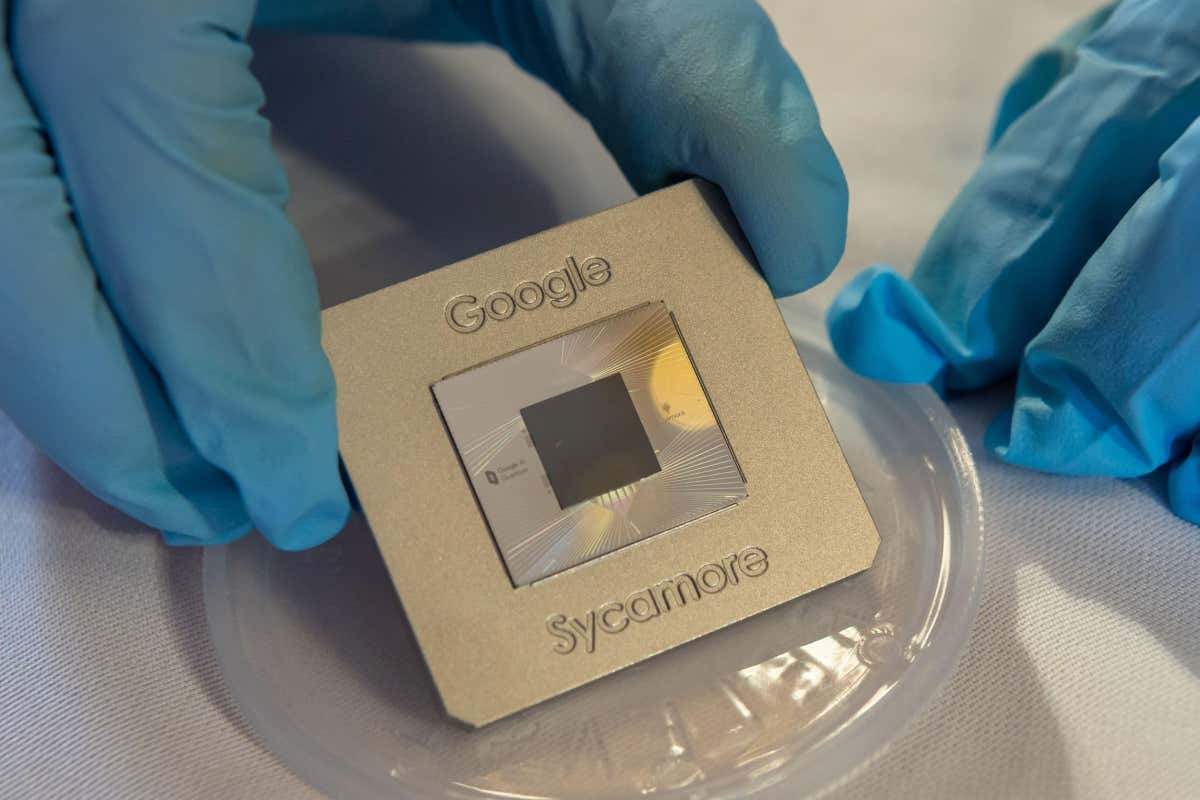
- Google AI Quantum: Google’s quantum computing division achieved a significant milestone in 2019 by announcing quantum supremacy with its Sycamore processor, completing a complex task faster than the best classical supercomputers.
- IBM Quantum: IBM has been a leader in developing quantum computing technologies, introducing the IBM Quantum Experience, which allows researchers to experiment with quantum algorithms on real quantum hardware.
- MIT and Caltech: These institutions have been at the forefront of quantum research, producing groundbreaking work in both theoretical and experimental quantum physics and engineering.
- University of California, Berkeley: Researchers from Berkeley have made significant advancements in quantum algorithms and have contributed to the development of various quantum technologies.
Timeline of Significant Events
A timeline of significant events leading up to the announcement of quantum supremacy illustrates the critical advancements that have occurred over the years.
| Year | Event |
|---|---|
| 1980s | Development of the theoretical framework for quantum computing by researchers such as David Deutsch. |
| 1994 | Peter Shor introduces Shor’s algorithm, demonstrating the potential for quantum computing in factoring. |
| 1996 | Lov Grover presents Grover’s algorithm, showcasing quantum speedup for search problems. |
| 2001 | Experimental demonstration of Shor’s algorithm on a quantum computer by IBM and Stanford University. |
| 2019 | Google announces quantum supremacy with the Sycamore processor, completing a task in 200 seconds. |
Current State of Quantum Computing Technologies
The landscape of quantum computing is rapidly evolving, with various technologies vying for dominance in the race towards practical quantum supremacy. As researchers and companies invest heavily in quantum solutions, understanding the nuances of these technologies becomes crucial for stakeholders in the tech sector. This overview delves into the leading quantum computing technologies in use today, highlighting their unique features and the challenges they face.
Leading Quantum Computing Technologies
Several prominent technologies are currently shaping the quantum computing landscape. These include superconducting qubits, trapped ions, and topological qubits, each with distinct advantages and limitations.
Superconducting qubits, popularized by companies like IBM and Google, operate at extremely low temperatures, enabling the manipulation of quantum states with high precision. They are known for their scalability and fast operation speeds, making them suitable for implementing complex quantum algorithms. However, they require intricate cooling systems and are sensitive to environmental noise, which can lead to decoherence.
Trapped ions, on the other hand, utilize charged atoms confined in electromagnetic fields. This method, adopted by companies like IonQ and Honeywell, excels in coherence time and error rates, facilitating accurate quantum gate operations. Despite this, the scalability of trapped ion systems can be challenging, primarily due to the complexity involved in managing multiple qubits.
Topological qubits, which are still largely theoretical, promise robustness against errors through their unique properties. This approach, being explored by Microsoft, could potentially simplify error correction processes, but significant technical hurdles remain before practical applications can be realized.
Challenges to Widespread Adoption
The journey towards widespread adoption of quantum computing technologies is fraught with challenges. Key issues include technical limitations, resource requirements, and the need for specialized expertise.
One major challenge is the need for error correction in quantum systems. Quantum bits are inherently fragile, and even minor disturbances can lead to errors. Advanced error correction techniques, such as surface codes, require extensive overhead resources, which complicates the design and operation of quantum computers.
Another challenge is the high cost of developing and maintaining quantum computing hardware. The need for ultra-cold environments, specialized equipment, and highly skilled personnel contributes to the barriers faced by organizations looking to integrate quantum computing into their operations.
Furthermore, the lack of a comprehensive ecosystem for software development and application design hampers innovation. Many quantum computing platforms still require specialized knowledge to program, which limits access for a broader audience.
In summary, while the current state of quantum computing technologies shows promising advancements, significant challenges remain in achieving widespread adoption. The interplay of these technologies and their evolving capabilities will shape the future trajectory of quantum computing.
Real-World Applications of Quantum Supremacy
Quantum supremacy marks a significant leap in computational capabilities, with the potential to revolutionize various industries. By harnessing the principles of quantum mechanics, this new paradigm introduces unprecedented power to solve complex problems that are currently beyond the reach of classical computers. The implications of this technology span across multiple sectors, offering transformative solutions and efficiencies.
Quantum supremacy can be particularly impactful in areas such as cryptography, pharmaceuticals, and finance. The unique ability of quantum computers to process vast amounts of data simultaneously allows them to tackle problems that traditional systems struggle with. This leads to enhanced security, faster drug development, and optimized financial modeling, among other benefits.
Cryptography
Quantum computers can potentially break current cryptographic protocols, leading to the development of new security measures. Traditional encryption methods, such as RSA, rely on the difficulty of factoring large numbers. Quantum algorithms, like Shor’s algorithm, can efficiently factor these numbers, rendering existing encryption methods vulnerable. This shift necessitates the creation of quantum-resistant cryptography to secure sensitive data. Several initiatives are underway to research and implement these new protocols, ensuring data security in a quantum-enabled future.
Pharmaceuticals
The pharmaceutical industry can leverage quantum supremacy for drug discovery and molecular modeling. Quantum computers excel at simulating molecular interactions at an atomic level, which classical computers find computationally expensive or infeasible. This capability can accelerate the discovery of new drugs and enhance the understanding of complex biological processes. Notable projects, such as those by companies like D-Wave and IBM, are focused on applying quantum computing to optimize drug development workflows and predict molecular behavior with high accuracy.
Finance
In the finance sector, quantum supremacy holds promise for improving risk analysis, portfolio optimization, and fraud detection. The ability to process and analyze vast datasets in real-time enables financial institutions to make data-driven decisions faster and more accurately. For instance, companies are exploring quantum algorithms to optimize asset allocations, enhancing returns while minimizing risks. Ongoing collaborations between financial institutions and quantum computing firms aim to create practical applications tailored to the complexities of modern finance.
Quantum supremacy will redefine computational capabilities, unlocking solutions to problems previously deemed unsolvable by classical computing.
The convergence of quantum computing with real-world applications is already in motion. As ongoing projects continue to evolve, industries will increasingly adopt these revolutionary technologies, paving the way for a new era of innovation and efficiency.
Ethical Considerations Surrounding Quantum Supremacy
As quantum computing technology advances, it brings forth a myriad of ethical considerations that demand urgent attention. The concept of quantum supremacy, where quantum computers outperform classical computers in specific tasks, poses significant implications for data privacy and security. This burgeoning field of technology raises questions regarding the balance between innovation and ethical responsibility in the digital landscape.
One major concern is the potential breach of data privacy and security. Quantum computers have the ability to process information at unprecedented speeds, which could render traditional encryption methods obsolete. The implications of this capability extend to various sectors, including finance, healthcare, and personal data management, where sensitive information could be compromised. As quantum computing technologies become more accessible, the need for robust security measures becomes paramount to protect individuals and organizations from potential threats.
Risks Associated with the Misuse of Quantum Computing Technologies
The misuse of quantum computing technologies can lead to catastrophic security breaches and unauthorized access to sensitive information. The following points highlight the risks involved:
- Cryptographic Vulnerability: Quantum computers can efficiently solve complex mathematical problems that underpin current encryption methods, such as RSA and ECC, potentially allowing malicious actors to decrypt secure communications.
- Data Theft: The ability to process large datasets could facilitate the large-scale theft of personal and corporate information, leading to identity theft and corporate espionage.
- Weaponization of Quantum Technology: Quantum computing could be used to develop advanced cyber weapons that exploit vulnerabilities in critical infrastructure, posing risks to national security.
- Disruption of Financial Systems: The financial sector relies heavily on encryption for secure transactions. The advent of quantum computing could destabilize this sector if security measures are not updated in time.
As society grapples with the realities of quantum supremacy, it is essential to foster a framework for ethical use. Proactive measures should be taken to ensure that quantum technologies are developed and deployed responsibly. Establishing regulations and guidelines can mitigate the risks associated with misuse while promoting innovation.
Preparing Society for Quantum Supremacy
In light of the impending quantum landscape, society must adapt and prepare for its impact. Key strategies include:
- Education and Awareness: Increasing public understanding of quantum technology and its implications can empower individuals to protect their data and privacy.
- Investment in Quantum-safe Cryptography: The development of new cryptographic methods designed to withstand quantum attacks is crucial for maintaining data security.
- Collaboration Across Sectors: Governments, academia, and industry should collaborate to create standards and best practices to govern the use of quantum technologies responsibly.
- Continuous Research on Ethical Frameworks: Ongoing research into the ethical implications of quantum computing will help establish a robust ethical framework that keeps pace with technological advancements.
“The future of quantum computing holds great promise, but with it comes the responsibility to navigate its ethical landscape carefully.”
Future Prospects and the Road Ahead for Quantum Supremacy

As quantum computing technology continues to evolve, its prospects for transforming various sectors are becoming increasingly evident. The next decade holds significant potential for advancements that may redefine our technological landscape. With ongoing research and investment, we may witness not just incremental improvements, but potentially revolutionary breakthroughs that leverage the unique capabilities of quantum systems.
The future of quantum computing hinges on multiple key developments, including hardware improvements, software advancements, and the establishment of robust quantum networks. These elements are vital for establishing a more integrated quantum ecosystem that enables innovative applications across industries. Governments and private sectors must collaborate effectively to capitalize on these technologies.
Potential Developments in Quantum Computing
Several developments are on the horizon that could herald a new era in quantum computing. These advancements include:
- Increased Qubit Count and Quality: Future quantum computers are expected to feature a far greater number of qubits that are more stable and reliable. For instance, IBM’s roadmap indicates plans to achieve over 1,000 qubits within the next few years, enhancing computational power significantly.
- Quantum Error Correction: Advances in error correction techniques are essential for practical quantum computing. Developing robust algorithms to mitigate decoherence and errors will improve the viability of long-running quantum computations.
- Quantum Algorithms and Applications: New quantum algorithms tailored for specific applications, such as optimization and material science, are being developed. For example, quantum simulations could revolutionize drug discovery by modeling complex molecular interactions efficiently.
- Interconnectivity and Quantum Networks: The creation of quantum communication networks will enable secure data transmission and allow distributed quantum computing, thus enhancing the capabilities of quantum systems globally.
Government and Industry Collaboration for Quantum Research
For nations and companies to maintain a lead in quantum research, strategic investments and collaborations are critical. Key initiatives include:
- Funding and Incentives: Increased funding for research institutions and startups focused on quantum technologies can stimulate innovation. Governments should provide tax incentives to companies investing in quantum research.
- Education and Workforce Development: Developing educational programs to train the next generation of quantum scientists and engineers is crucial. Partnerships between universities and industry can help cultivate the necessary skill sets.
- International Collaboration: Global partnerships can foster knowledge sharing and accelerate advancements. Collaborative efforts such as the Quantum Internet Alliance can enhance capabilities across borders.
- Support for Quantum Startups: Providing resources and mentorship to startups in the quantum space can drive innovation and accelerate the development of practical applications.
Impact of Quantum Supremacy on Technology and Society
The implications of quantum supremacy will likely be profound, reshaping both technology and societal structures over the next decade.
- Revolutionizing Industries: Quantum computing is set to transform sectors such as finance, healthcare, and logistics by solving problems currently intractable for classical computers, leading to increased efficiency and innovation.
- Advancements in Artificial Intelligence: Quantum computing could enhance machine learning algorithms, enabling faster data processing and more complex modeling, thus improving decision-making across industries.
- Enhanced Security Protocols: The rise of quantum cryptography promises unbreakable encryption methods, altering the landscape of cybersecurity and protecting sensitive data.
- Societal Adaptations: As quantum technologies proliferate, society will need to adapt to new ethical and regulatory frameworks, ensuring equitable access and addressing potential inequalities arising from technological advances.
“The future will be quantum, driven by innovations that allow us to tackle the most complex challenges facing humanity.”
Conclusion
In summary, the journey toward Quantum Supremacy is not just about technological advancements; it’s about how these innovations will redefine our world. With ethical considerations and practical applications at the forefront, the path ahead holds both promise and challenges that we must navigate thoughtfully to shape a beneficial future.
FAQ Summary
What is quantum supremacy?
Quantum supremacy is the point at which a quantum computer can perform a calculation that is infeasible for any classical computer to complete in a reasonable timeframe.
How does quantum computing differ from classical computing?
Quantum computing operates on qubits that can exist in multiple states simultaneously, whereas classical computing relies on bits that are either 0 or 1, enabling quantum computers to solve certain problems much faster.
What are some real-world applications of quantum supremacy?
Applications include advancements in cryptography, drug discovery, optimization problems in finance, and complex material simulations.
What challenges do quantum technologies currently face?
Challenges include error rates, the need for stable qubits, scalability, and the high costs associated with quantum hardware development.
How can society prepare for the implications of quantum supremacy?
Society can prepare by fostering discussions on ethical considerations, investing in education and research, and developing regulatory frameworks to manage the impact of quantum technologies.