Net Neutrality is a fundamental principle that ensures an open and free internet, allowing users to access content without interference from service providers. By preventing ISPs from favoring certain sites or applications, it promotes fairness and innovation in the digital landscape. As the internet continues to evolve, the discussion surrounding net neutrality remains pivotal, influencing everything from consumer choice to economic growth.
This topic delves into the historical context and economic implications of net neutrality, examining how regulations have shaped internet access and industry competition. Understanding the impact on consumers and the role technology plays in this debate helps illuminate why net neutrality matters in today’s interconnected world.
The Historical Context of Net Neutrality
The concept of net neutrality has become a fundamental topic in discussions about internet governance and regulation. To understand its importance, it is essential to explore the historical context that has shaped the current landscape of internet access and regulations. Over the years, various legislative actions and technological advancements have influenced the principles of net neutrality, leading to the debates we witness today.
The evolution of internet regulations can be traced back to the early days of the internet. Initially, the internet functioned as an open platform, allowing for equal access to all users, regardless of their service provider or the type of content they accessed. However, as the internet began to gain popularity, concerns arose regarding the potential for internet service providers (ISPs) to prioritize certain types of traffic over others. This led to various government decisions and regulatory actions aimed at ensuring fair access to the internet.
Key Events and Government Decisions
Several pivotal events have significantly impacted the net neutrality debate. These include:
- The Telecommunications Act of 1996: This legislation was one of the first major attempts to address the evolving internet landscape. It aimed to promote competition among telecommunications providers but did not explicitly address net neutrality, allowing for varied interpretations.
- The FCC’s 2005 Policy Statement: The Federal Communications Commission (FCC) issued a policy statement affirming the importance of net neutrality principles, emphasizing that consumers should have the right to access any content without interference from ISPs.
- The 2010 Open Internet Order: The FCC adopted regulations to protect net neutrality, establishing rules against blocking and throttling content by ISPs. However, these regulations faced legal challenges, highlighting the contentious nature of the issue.
- The 2017 Repeal: In a controversial move, the FCC voted to repeal net neutrality regulations, arguing that less regulation would encourage investment in internet infrastructure. This decision sparked widespread protests and debates about the future of internet access.
These events illustrate the ongoing struggle between regulatory efforts to maintain an open internet and the desires of ISPs for greater control over their networks.
Technological Advancements and Net Neutrality
Technological developments have also played a crucial role in how net neutrality has evolved. The rise of streaming services, cloud computing, and the Internet of Things (IoT) has intensified the debate about net neutrality. As more users rely on high-bandwidth applications, the potential for ISPs to manage traffic and prioritize certain services has increased.
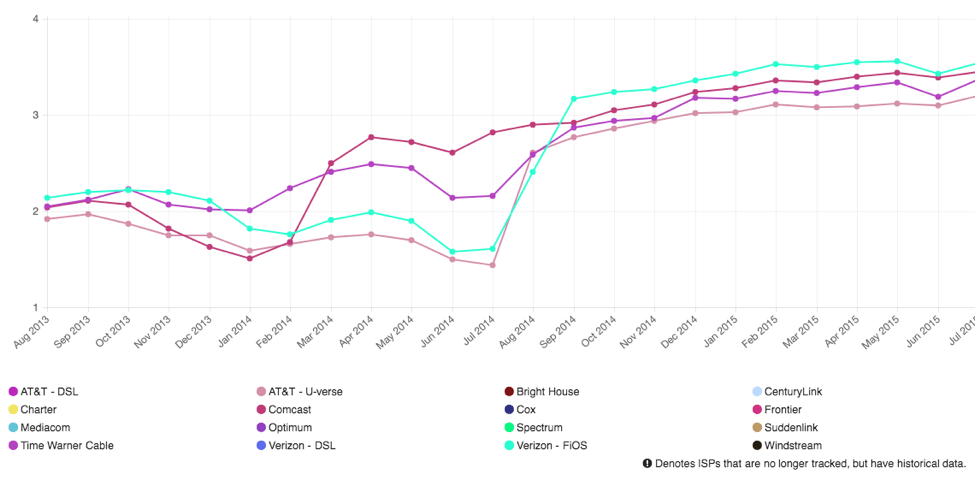
For instance, the emergence of platforms like Netflix and YouTube has changed the bandwidth landscape significantly. In 2014, Netflix famously struck a deal with Comcast to ensure faster streaming speeds for its users, raising concerns about whether this practice undermines the principles of net neutrality. Such instances highlight the need for robust regulations to prevent ISPs from creating a tiered internet experience based on their business interests.
“The internet should remain a level playing field where all content is treated equally, regardless of its source.”
In conclusion, the historical context of net neutrality reveals a complex interplay of legislative actions, key events, and technological advancements that continue to shape the current debate. The ongoing discussions surrounding net neutrality reflect broader concerns about fairness, access, and the future of the digital landscape.
The Economic Implications of Net Neutrality
Net neutrality plays a crucial role in shaping the economic landscape of the internet, influencing how internet service providers (ISPs) operate and compete. The principle of treating all internet data equally ensures that users can access any content without interference or favoritism from ISPs. This foundational concept has far-reaching implications for competition, innovation, and the overall economy.
Net neutrality affects competition among ISPs by preventing them from engaging in discriminatory practices that could disadvantage certain services or websites. Without these regulations, larger ISPs may prioritize their own content or that of high-paying partners, leading to a tiered internet experience. This could create significant barriers for smaller ISPs trying to compete on a level playing field. For instance, if a major ISP were to throttle access to a competing service, it would undermine fair competition and limit consumer choices.
Impact on Small Businesses and Startups
Maintaining net neutrality presents several economic benefits for small businesses and startups, which often rely on the internet as a primary platform for growth and customer engagement. Ensuring equal access allows these businesses to compete fairly with larger corporations, promoting innovation and diversity in the marketplace.
The following points highlight the advantages that net neutrality provides for small enterprises:
- Equal Access to Resources: Small businesses benefit from equal visibility on the internet, allowing them to reach potential customers without having to pay for preferential treatment.
- Innovation Encouragement: With a level playing field, startups are more likely to innovate, knowing they can compete effectively against established players without financial barriers imposed by ISPs.
- Cost Predictability: Operating under net neutrality means businesses can budget more reliably without worrying about unexpected costs arising from prioritization practices.
- Consumer Choice Expansion: A diverse array of businesses can flourish, leading to greater consumer choice and potentially lower prices across various services and goods.
The importance of net neutrality is underscored by examples from countries with varying regulatory frameworks. In countries with strong net neutrality laws, like Canada and the Netherlands, a flourishing startup ecosystem has emerged, showcasing a vibrant array of online services and businesses. Conversely, in countries lacking such regulations, like the United States pre-2015, small businesses often struggled to compete, leading to a less dynamic market.
Comparison of Economic Scenarios
Examining the economic conditions in countries with and without net neutrality regulations reveals significant disparities in market competitiveness and innovation. In regions enforcing net neutrality, the impact on the economy is generally positive, fostering a diverse digital landscape.
Key observations include:
- Investment in Innovation: Countries with net neutrality see higher rates of investment in tech startups, as entrepreneurs feel empowered to launch new ideas without the fear of being stifled by ISP practices.
- Market Entry Barriers: In nations lacking net neutrality, new entrants face substantial hurdles, including the need for substantial financial backing to secure competitive access to the market.
- Economic Growth Correlation: Data shows a correlation between net neutrality enforcement and GDP growth in the tech sector, suggesting that maintaining an open internet benefits the broader economy.
“An open internet fosters innovation and economic growth, enabling small businesses and startups to thrive.”
The economic implications of net neutrality extend far beyond the digital realm, influencing the fundamental structure of competition and entrepreneurship. By promoting a fair and equitable online environment, net neutrality serves as a critical pillar for sustaining economic dynamism in the digital age.
The Impact of Net Neutrality on Consumers
Net neutrality plays a crucial role in shaping the online experience for consumers, influencing everything from their choices to the quality of service they receive. When internet service providers (ISPs) are prohibited from prioritizing certain content, it ensures a level playing field for all websites and services, thereby directly impacting consumer access and experience. Understanding the implications of net neutrality can help consumers navigate their choices in an increasingly digital world.
The principle of net neutrality ensures that all internet traffic is treated equally, which has significant implications for consumer choice and accessibility to online content. Without net neutrality, ISPs could potentially favor websites that pay for better access, making it harder for smaller, independent sites to compete. As a result, consumers may find their options limited to only those services that are financially backed by larger corporations, reducing diversity in content available online.
Consumer Access and Choice
The absence of net neutrality can lead to a segmented internet experience, where consumers are faced with a restricted selection of content. Here are key factors to consider regarding how net neutrality influences consumer access:
-
Increased variety of content:
Net neutrality means consumers have the freedom to explore a wide range of content without ISP restrictions. They can access niche websites and newer platforms without being slowed down or blocked.
-
Equal footing for startups:
Startups and smaller companies can compete on equal terms with established firms, fostering innovation and giving consumers access to fresh ideas and services.
-
Prevention of pay-to-play scenarios:
Without net neutrality, ISPs could create “fast lanes” for those willing to pay, marginalizing users who cannot afford these fees and ultimately limiting consumer choices.
Internet Speeds and Service Quality
The enforcement of net neutrality directly correlates with the internet speeds and overall quality of service experienced by consumers. Here’s an overview of its implications:
-
Consistent speeds for all users:
With net neutrality, consumers can expect consistent internet speeds regardless of the content they are accessing. This means no throttling based on the type of service or website.
-
Improved service quality:
ISPs are held accountable for maintaining the quality of their services. Without net neutrality, the incentive to invest in infrastructure could diminish, leading to degraded user experiences.
-
Consumer trust:
When users know they can access any content equally, they are more likely to trust their ISPs. This trust is essential for encouraging the use of online services, from streaming to e-commerce.
Examples of Consumer Experiences Relating to Violations
Instances of net neutrality violations have been documented, providing real-life context to its significance. Some notable examples include:
-
Throttling of streaming services:
Reports emerged where ISPs were found to be intentionally slowing down services like Netflix, leading to consumer frustration and increased subscription costs.
-
Blocking of specific content:
Certain ISPs have been accused of blocking access to political content or activist sites, severely limiting consumer information and choices.
-
Paid prioritization:
Cases where companies had to pay ISPs for faster loading times highlight the detrimental effects of a non-neutral internet on competition and accessibility.
The Role of Technology in Promoting Net Neutrality
The landscape of internet access is increasingly influenced by technology, which plays a dual role in either supporting or challenging the principles of net neutrality. As the debate continues, understanding the technologies involved is essential for comprehending their impact on the internet’s open nature.
Various technologies can either uphold or undermine net neutrality. On one hand, technologies that promote net neutrality include VPNs (Virtual Private Networks) and decentralized networks that aim to provide users with unrestricted access and protect their online activities from ISP interference. Conversely, practices such as data throttling by ISPs and paid prioritization schemes highlight challenges to net neutrality, where certain services or content receive preferential treatment over others.
Technologies Supporting and Challenging Net Neutrality
It’s important to recognize the specific technologies that influence net neutrality. The following Artikels some of the key technologies that support and challenge the ideals of a free and open internet:
- VPNs (Virtual Private Networks): VPNs help users maintain privacy and bypass restrictions imposed by ISPs, promoting a more open internet experience.
- Decentralized Networks: Technologies like Mesh Networking and blockchain facilitate direct peer-to-peer communication, reducing reliance on traditional ISPs.
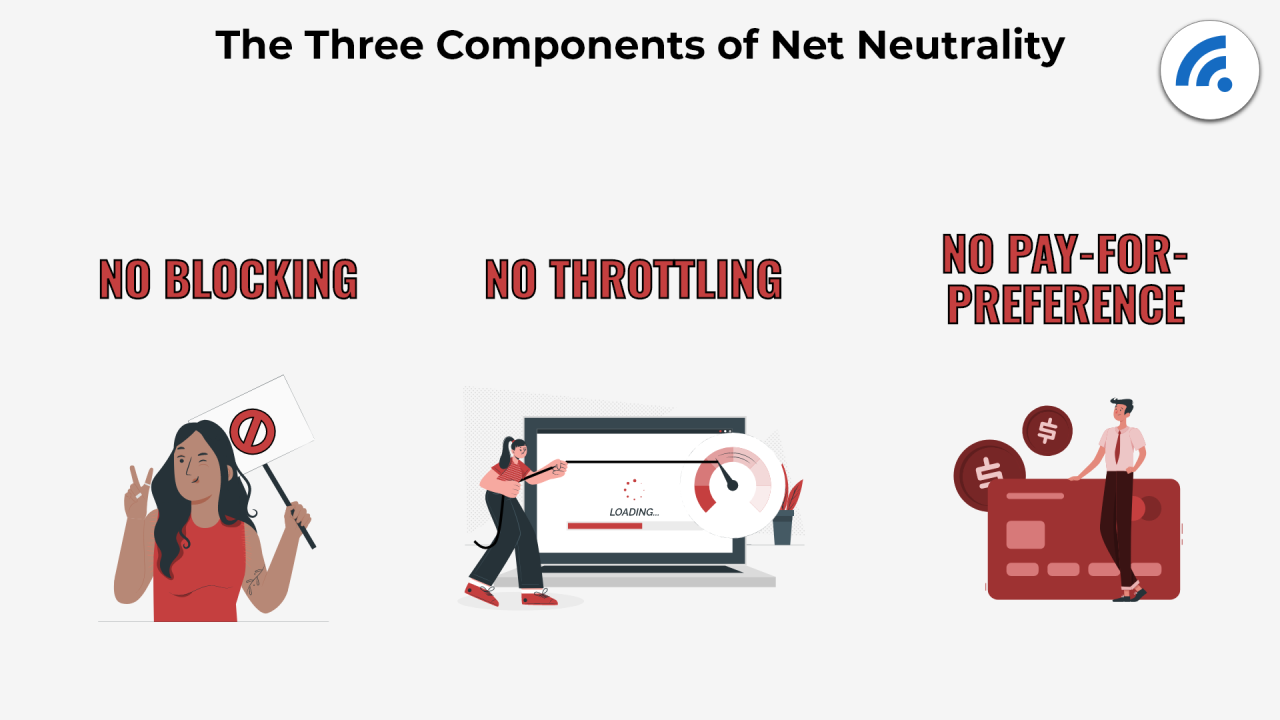
- Data Throttling: ISPs may slow down users’ internet speeds for specific content or services, violating net neutrality principles.
- Paid Prioritization: Some ISPs may offer faster data access to certain companies willing to pay more, leading to a tiered internet experience.
The emergence of innovative technologies such as blockchain has the potential to enhance net neutrality significantly. Blockchain can create decentralized applications and services that are resistant to censorship and interference. By using distributed ledgers, users can interact with services directly without relying on a centralized provider, thereby reducing opportunities for ISPs to control access.
Comparison of Traditional ISPs and Emerging Tech Companies
The practices and policies of traditional ISPs compared to emerging tech companies illustrate stark differences regarding net neutrality. The following table Artikels key distinctions:
| Criteria | Traditional ISPs | Emerging Tech Companies |
|---|---|---|
| Access Control | Often engage in data throttling and paid prioritization. | Promote open access and decentralized services. |
| Business Model | Subscription-based with limited competition. | Freemium models and decentralized applications. |
| Consumer Rights | Limited transparency regarding data usage policies. | Prioritize user control and privacy. |
As the internet evolves, the roles of these technologies and companies will continue to shape the net neutrality landscape. By understanding these dynamics, stakeholders can better advocate for an open and equitable internet for all users.
The International Perspective on Net Neutrality
Net neutrality policies vary significantly across the globe, reflecting the diverse political, economic, and social contexts of different countries. While some nations have embraced robust regulations to ensure equal access to the internet, others have adopted laissez-faire approaches or implemented restrictive measures that challenge the principles of net neutrality. Understanding these varying perspectives provides essential insights into the global debate surrounding internet access and regulation.
Various countries have taken distinct paths regarding net neutrality, leading to a range of outcomes based on their respective legislative environments. In some regions, comprehensive net neutrality laws have been enacted, while others have seen policies that prioritize bandwidth prioritization or allow for paid prioritization of services. Here’s a closer look at how different regions approach net neutrality:
Regional Approaches to Net Neutrality
In exploring regional approaches to net neutrality, it’s important to highlight key examples and their implications on internet freedom and user experience. Below are notable cases from different areas around the world:
- United States: The U.S. has seen a see-saw of net neutrality regulations, with the Federal Communications Commission (FCC) repealing significant protections in 2017. This has led to fears of potential throttling and higher costs for consumers, although legal challenges and state-level regulations are ongoing.
- European Union: The EU enacted strong net neutrality regulations in 2016, emphasizing that all internet traffic should be treated equally. This framework aims to prevent service providers from discriminating against online content or applications, contributing to a vibrant digital marketplace.
- India: India made headlines in 2018 when its telecom regulatory authority implemented a ban on discriminatory pricing for data services, reinforcing net neutrality principles. This was a significant victory for consumer rights, reflecting the country’s commitment to equal internet access.
- Canada: Canada’s regulatory body, the Canadian Radio-television and Telecommunications Commission (CRTC), has upheld net neutrality, supporting the principle that service providers should not block or throttle lawful content. This has fostered a competitive environment for online innovation.
Understanding these regional differences helps to identify trends in how net neutrality is enforced and the implications for users and service providers alike.
International Organizations and Net Neutrality
International organizations provide guidance and recommendations regarding net neutrality, underscoring its importance for global digital rights. Their stances often reflect the need for equitable internet access as a fundamental human right.
- United Nations (UN): The UN has recognized access to the internet as a vital component for the exercise of human rights, advocating for frameworks that support net neutrality to ensure freedom of expression and information.
- International Telecommunication Union (ITU): The ITU promotes policies that encourage open and equal access to the internet, stressing the role of net neutrality in fostering innovation and economic growth.
- Electronic Frontier Foundation (EFF): The EFF actively campaigns for net neutrality worldwide, providing resources to activists and policymakers to strengthen digital rights and protect against censorship.
The collective efforts of these organizations illustrate the international consensus on the necessity of net neutrality to promote a free, open, and accessible internet for all.
The Debate Over Net Neutrality
The discussion surrounding net neutrality is a significant and contentious aspect of modern internet governance. Proponents argue for an open internet where all data is treated equally, while opponents often highlight concerns about regulation and innovation. Understanding the diverse perspectives on this issue is essential for grasping its implications on society, politics, and economics.
The debate over net neutrality involves various stakeholders, including internet service providers (ISPs), content providers, consumers, and policymakers. Each group presents unique arguments regarding the necessity and potential impact of maintaining or dismantling net neutrality regulations. The ethical implications of this debate are profound, influencing access to information, free speech, and economic opportunities.
Arguments for and Against Net Neutrality
The arguments surrounding net neutrality center on the benefits of an unrestricted internet versus the potential downsides of regulatory frameworks. Below is a summary of these arguments, highlighting multiple perspectives.
Pros of Net Neutrality:
-
Equal Access: Advocates argue that net neutrality ensures that all users have equal access to online content, promoting diversity and equality.
-
Innovation Encouragement: Startups and small businesses benefit from a level playing field, as they can compete without facing throttled bandwidth costs from larger companies.
-
Consumer Rights: Net neutrality protects consumers from discriminatory practices, ensuring that no service provider can block or slow down access to specific sites or services.
Cons of Net Neutrality:
-
Investment Dilemma: Opponents argue that without the ability to create prioritized lanes, ISPs may be less likely to invest in infrastructure improvements.
-
Regulatory Burden: Some believe that net neutrality regulations impose excessive government control over the internet, potentially stifling innovation.
-
Market Dynamics: ISPs claim that allowing them to manage bandwidth can lead to improved service efficiency and tailored offerings for consumers.
The ethical implications of both sides of the net neutrality debate are significant. Supporters emphasize the moral responsibility to provide equitable access to information, arguing that the internet is a fundamental utility akin to electricity. On the flip side, opponents raise concerns about freedom in the marketplace and the importance of allowing businesses to create different pricing models to sustain their operations.
Comparison of Benefits and Drawbacks of Net Neutrality
To present a clearer view of the arguments, the following table summarizes the benefits and drawbacks of net neutrality, facilitating easy comparison for stakeholders interested in the issue.
| Benefits | Drawbacks |
|---|---|
| Ensures equal access to all websites and services | May hinder investment in network infrastructure |
| Promotes competition and innovation among startups | Could impose excessive regulatory burdens on ISPs |
| Protects consumer rights against discrimination | Potentially limits ISP flexibility in managing traffic |
| Supports free speech and information diversity | May lead to less tailored services for specific consumer needs |
Future Trends in Net Neutrality Legislation
As the digital landscape evolves, the future of net neutrality legislation appears to be shifting significantly. Current political climates and technological advancements are likely to influence how laws are shaped and enforced. This ongoing debate reflects broader concerns about internet access, equity, and freedom of information, making it a hot topic for lawmakers and citizens alike.
The growing demand for online services, coupled with the rapid development of technology, is pushing the conversation around net neutrality to the forefront. Policymakers are increasingly recognizing the implications of internet service providers (ISPs) managing data traffic differently. These considerations will likely lead to a reevaluation of existing regulations and the introduction of new ones.
Potential Changes in Net Neutrality Laws
Several factors are expected to drive the evolution of net neutrality laws in the coming years. Key trends include:
- The influence of the digital economy on legislative priorities, leading to a potential shift toward more restrictive regulations for ISPs.
- The increasing reliance on streaming services, gaming, and cloud computing, prompting calls for regulations that ensure equal access to these platforms.
- The rise of 5G technology and its implications for broadband access, which may necessitate new regulatory frameworks to keep pace with advancements.
- The ongoing political shifts, as changes in administration could lead to swings between pro and anti-net neutrality policies.
Role of Advocacy Groups
Advocacy groups play a critical role in shaping net neutrality regulations by mobilizing public opinion and influencing lawmakers. These organizations often highlight the potential consequences of deregulation, including reduced competition and limited access for underserved populations. Their efforts include:
- Campaigning for legislative reforms that preserve an open internet, emphasizing the importance of net neutrality for innovation and free expression.
- Conducting research and disseminating information that underscores the economic implications of net neutrality, appealing to both consumers and businesses.
- Utilizing social media and grassroots activism to raise awareness and engage individuals in advocacy efforts.
- Collaborating with technology companies and other industry stakeholders to create a united front in support of net neutrality protections.
Timeline of Significant Milestones in Future Net Neutrality Developments
The timeline of future developments in net neutrality is expected to feature several key milestones. These events will reflect ongoing regulatory changes and public engagement efforts. Relevant points include:
| Year | Event |
|---|---|
| 2024 | Potential introduction of new federal legislation aimed at reinstating net neutrality protections following shifts in political power. |
| 2025 | Public hearings on net neutrality to gather input from consumers, advocacy groups, and ISPs, shaping future regulatory approaches. |
| 2026 | Implementation of new regulations based on hearing outcomes, setting clear standards for ISP practices and consumer protections. |
| 2027 | Evaluation of the impact of the new regulations, with potential adjustments based on market responses and technological advancements. |
Summary
In conclusion, the ongoing discourse on net neutrality reflects broader themes of equity, innovation, and consumer rights in the digital age. As we consider future trends in legislation and the role of advocacy, it’s clear that the principles of net neutrality will continue to be crucial in shaping an accessible and fair internet for all. Whether you are a consumer, a small business owner, or a tech enthusiast, staying informed on this topic is essential for navigating the digital future.
FAQs
What is net neutrality?
Net neutrality is the principle that Internet Service Providers must treat all data on the internet equally, without discriminating or charging differently by user, content, website, platform, or application.
Why is net neutrality important?
It ensures equal access to information and services, fostering innovation, competition, and free expression online.
How does net neutrality affect small businesses?
Net neutrality allows small businesses to compete on an equal footing with larger companies by ensuring they have the same access to customers online.
What can consumers do to support net neutrality?
Consumers can advocate for net neutrality by contacting their representatives, supporting organizations that promote it, and raising awareness about its importance.
Are there countries without net neutrality?
Yes, some countries have adopted policies that do not enforce net neutrality, which can lead to restricted access and higher costs for consumers.