Cyber-physical Systems are transforming the way we interact with technology, seamlessly blending the physical and computational worlds. These systems enable real-time monitoring and control, making them vital across numerous industries, from healthcare to manufacturing. By integrating sensors, actuators, and advanced algorithms, they provide unprecedented insights and efficiencies, ultimately shaping the future of automation and connectivity.
As we delve deeper into the fundamentals of Cyber-physical Systems, we uncover how their architecture allows for effective communication between physical elements and computational processes. This interaction not only enhances operational efficiencies but also opens avenues for innovations that were previously unimaginable, paving the way for a more interconnected and intelligent world.
Understanding the Fundamentals of Cyber-physical Systems
Cyber-physical systems (CPS) represent a convergence of the physical world with computational elements, integrating sensors, actuators, and software into traditional physical systems. These systems are designed to work seamlessly with both hardware and software components, enabling them to monitor, control, and optimize physical processes. The essence of cyber-physical systems lies in their ability to communicate and interact in real time, blurring the lines between the physical and digital realms.
Cyber-physical systems are composed of several key elements that define their functionality and applications. At the heart of these systems are sensors and actuators that collect data and perform actions in the physical environment. The data collected by sensors is processed by computational elements, often using algorithms and models to make informed decisions. This feedback loop is crucial, as it allows the system to adapt to changing conditions in real time. Moreover, communication networks enable the interaction between different system components, facilitating the exchange of information.
The significance of the interaction between physical and computational elements cannot be overstated. This interaction enables sophisticated automation and control strategies that improve efficiency, safety, and reliability across various applications. For instance, in smart manufacturing, CPS enables real-time monitoring of production processes, leading to enhanced productivity and minimization of waste. In transportation, CPS integrates vehicles with traffic management systems to optimize traffic flow and reduce congestion.
Examples of cyber-physical systems are abundant across multiple industries. In healthcare, CPS facilitates remote patient monitoring systems where wearable devices track vital signs and transmit the data to healthcare providers for analysis. In smart cities, CPS applications include traffic management systems that utilize real-time data to improve public transportation efficiency. Additionally, in agriculture, CPS is employed in precision farming, where sensors monitor soil conditions and crop health, allowing farmers to make data-driven decisions to optimize yields.
In summary, cyber-physical systems represent a transformative approach to integrating the physical and computational worlds, resulting in increased capabilities and efficiencies across various sectors. Their ability to provide real-time feedback and adaptability makes them a cornerstone of modern technological advancements.
Exploring the Architecture of Cyber-physical Systems
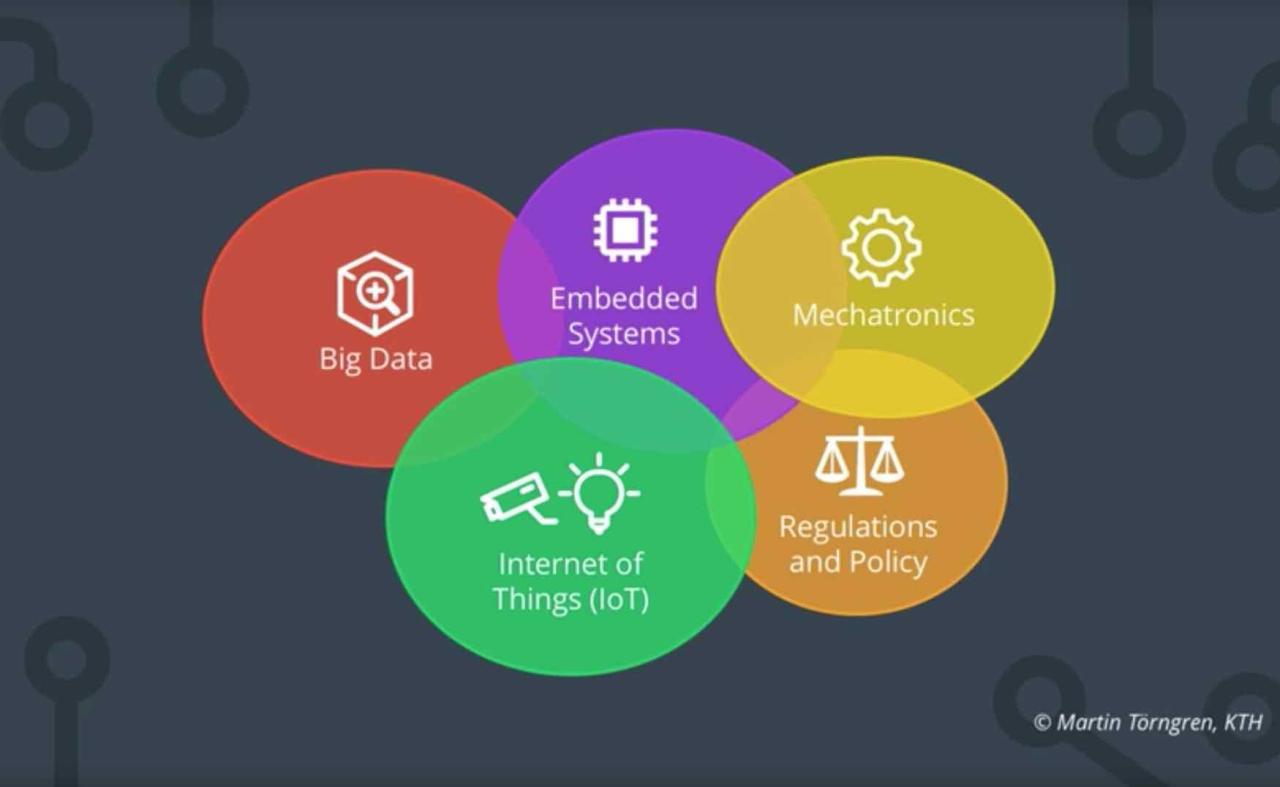
Cyber-physical systems (CPS) seamlessly integrate physical processes with computation and networking. This architecture is essential in applications such as smart cities, autonomous vehicles, and industrial automation, where real-time data and control are vital. Understanding the architecture of CPS allows stakeholders to appreciate how various components interconnect to form intelligent systems that respond dynamically to their environments.
The typical architecture of a cyber-physical system can be visualized in a layered model that encompasses several key components and their interactions. Generally, the architecture consists of three fundamental layers: the perception layer, the network layer, and the application layer. Each layer has specific functionalities that contribute to the overall operation of the system.
Architecture Layers and Components
The interaction among these layers is critical for the effective functioning of a cyber-physical system. Below is a description of each layer along with its components:
1. Perception Layer: This is the foundational layer responsible for data collection from the physical environment. It includes:
– Sensors: Devices that detect changes in the physical environment such as temperature, pressure, or movement. Examples include temperature sensors for HVAC systems and motion detectors in security applications.
– Actuators: These convert control signals into physical actions, allowing the system to interact with its environment. Examples include motors that control robotic arms or valves that regulate fluid flow.
2. Network Layer: This layer facilitates communication between various components of the CPS. It ensures that data collected by the sensors is transmitted to the control units and that commands from the control units are sent to the actuators. Key aspects include:
– Communication Protocols: These protocols govern data transfer methods, ensuring reliable and efficient communication. Common protocols include MQTT for IoT devices and TCP/IP for networking.
– Data Processing Units: These units preprocess and filter data before sending it to higher layers, playing a vital role in managing data overload and ensuring timely responses.
3. Application Layer: The topmost layer interprets the processed data and makes decisions based on predefined algorithms. This layer often includes:
– Control Units: These units execute the logic and algorithms to make decisions on how to respond to the data received. Examples include programmable logic controllers (PLCs) used in industrial applications or embedded systems in automotive technologies.
– User Interfaces: These provide human operators with insights and control options, often through dashboards or mobile applications.
To illustrate this architecture, imagine a smart home system. The perception layer consists of temperature sensors and smart thermostats (actuators). The network layer comprises Wi-Fi and communication protocols that enable these devices to talk to each other and to a central hub. Finally, the application layer encompasses the control algorithms that manage heating and cooling based on user preferences and external conditions.
“The integration of these layers enables cyber-physical systems to dynamically adapt and respond to real-world changes, making them a cornerstone of modern automation and smart technologies.”
In conclusion, the layered architecture of cyber-physical systems highlights the complexity and interconnectivity of the components involved. Each layer plays a significant role in ensuring that the system operates effectively and efficiently, paving the way for innovative applications across various industries.
The Role of Communication Protocols in Cyber-physical Systems
In the intricate landscape of cyber-physical systems (CPS), communication protocols serve as the backbone for seamless interaction between the digital and physical realms. These protocols facilitate the exchange of data, allowing devices and systems to communicate efficiently and reliably. A robust communication framework is essential for the performance, safety, and scalability of CPS, as it directly impacts the effectiveness of operations and the quality of service provided.
The importance of communication protocols in CPS cannot be overstated. They establish standardized methods for data transmission, including error detection, message integrity, and data synchronization. In environments where real-time responses are critical—and often necessary, such as in healthcare, manufacturing, and autonomous vehicles—these protocols ensure that systems can operate cohesively, responding to each other’s signals without delays or misunderstandings.
Commonly Used Communication Protocols
There is a variety of communication protocols employed in cyber-physical systems, each with its own benefits and limitations. Understanding these protocols is vital for optimizing system performance and reliability.
The following are some key protocols frequently utilized in CPS:
- MQTT (Message Queuing Telemetry Transport): A lightweight messaging protocol ideal for low-bandwidth, high-latency networks. Its simplicity makes it suitable for IoT applications.
- CoAP (Constrained Application Protocol): Designed for constrained nodes and networks, CoAP enables efficient communication in resource-constrained environments.
- OPC UA (Open Platform Communications Unified Architecture): A machine-to-machine communication protocol for industrial automation. Its platform independence and security features are significant benefits.
- HTTP/HTTPS: While traditionally used for web communication, these protocols are also applied in CPS, especially for remote data access and integration with web services.
While these protocols offer distinct advantages, they also come with challenges. For instance, MQTT is best suited for simple messaging, but it may not handle complex data structures well. CoAP’s efficiency in constrained environments can lead to performance issues in larger systems. OPC UA’s complexity might introduce overhead that is not always justified for smaller applications.
Effective communication is fundamental for the integrity and responsiveness of cyber-physical systems.
Examples of scenarios where communication failures could significantly impact system performance include a smart factory where delays in machine-to-machine communication can lead to production bottlenecks or an autonomous vehicle experiencing latency in sensor data transmission, potentially resulting in hazardous situations. In both cases, the repercussions of communication failures underscore the necessity for resilient, reliable protocols that ensure timely and accurate interactions within cyber-physical systems.
Security Challenges in Cyber-physical Systems
The integration of computational, networking, and physical processes found in cyber-physical systems (CPS) has introduced a new realm of security challenges. These systems, which include everything from smart grids and autonomous vehicles to industrial control systems, face unique vulnerabilities that can have dire consequences. Understanding these vulnerabilities is crucial for ensuring their security and operational integrity.
Cyber-physical systems are particularly vulnerable due to their interconnected nature. They operate in real-time, often with limited human oversight, making them attractive targets for cyber-attacks. One of the primary challenges is the complexity of these systems, which often consist of numerous components including sensors, actuators, and communication networks. Each of these components can serve as an entry point for attacks. For example, insecure communication protocols can allow unauthorized access, while poorly secured devices may be manipulated to disrupt services or siphon off sensitive data.
Unique Vulnerabilities in Cyber-physical Systems
To better understand the security landscape of CPS, it is essential to identify the specific vulnerabilities that they exhibit. These include:
1. Insecure Communication Protocols: Many CPS rely on standardized communication protocols that may not incorporate robust security measures. This can lead to vulnerabilities that attackers can exploit to intercept or manipulate data.
2. Physical Access Vulnerabilities: Unlike traditional IT systems, CPS often involve physical components located in remote or unmonitored areas. An attacker gaining physical access can tamper with devices or disrupt operations directly.
3. Legacy Systems: Many CPS operate on legacy systems that lack modern security features. These outdated technologies are often unable to receive critical updates or patches, leaving them exposed.
4. Data Integrity Issues: The integrity of data transmitted and received is crucial in CPS, especially in applications such as autonomous vehicles or medical devices. Compromised data can lead to catastrophic outcomes.
5. Supply Chain Vulnerabilities: The complexity of CPS often extends to their supply chains. Compromised components or software introduced at any point can create security weaknesses that are difficult to trace.
Recent high-profile breaches illustrate these vulnerabilities starkly. For instance, the 2021 Colonial Pipeline ransomware attack not only disrupted fuel supply across the Eastern United States but also highlighted the potential for cyber-attacks on critical infrastructure. Attackers exploited weaknesses in the company’s cybersecurity posture to gain access, demonstrating the real-world consequences of inadequately secured CPS.
Strategies for Enhancing Security
To mitigate the risks associated with these vulnerabilities, several strategies and best practices should be considered:
– Implementing Strong Authentication Mechanisms: Utilizing multi-factor authentication can significantly enhance security by ensuring that only authorized users have access to critical systems.
– Regular Software Updates and Patching: Organizations must prioritize keeping all components of their CPS updated with the latest security patches to protect against known vulnerabilities.
– Conducting Security Audits and Assessments: Regular security assessments can help identify vulnerabilities within the system, allowing organizations to address potential security gaps proactively.
– Employing Intrusion Detection Systems (IDS): Implementing IDS can help monitor network traffic for suspicious activities, enabling quick responses to potential threats.
– Establishing Incident Response Plans: Developing comprehensive incident response strategies prepares organizations to handle breaches effectively, minimizing their impact on operations.
By addressing the unique vulnerabilities of cyber-physical systems and implementing robust security measures, organizations can create a more resilient infrastructure capable of withstanding potential threats.
The Impact of Cyber-physical Systems on Industry 4.0
The advent of Cyber-physical Systems (CPS) has revolutionized the landscape of Industry 4.0, creating a paradigm shift in manufacturing and production processes. These systems integrate computing, networking, and physical processes, enabling a new level of automation and efficiency. By bridging the physical and digital worlds, CPS enhances the capabilities of traditional manufacturing systems, fostering the development of smart factories and interconnected supply chains.
Cyber-physical Systems serve as the backbone of Industry 4.0 by facilitating seamless automation, robust data exchange, and real-time analytics within manufacturing environments. Automation is significantly enhanced through the use of CPS, where machines can communicate with each other and make decisions without human intervention. This interconnectedness allows for streamlined operations and rapid responses to changes in the production process.
Facilitation of Automation and Data Exchange
The integration of CPS transforms traditional manufacturing methods into intelligent systems capable of real-time data processing and insightful analytics. This shift leads to improved operational efficiency and reduced downtime. The following are key elements that illustrate how CPS enhances automation and data exchange in manufacturing:
- Smart Sensors and Actuators: CPS utilizes advanced sensors to monitor equipment conditions, allowing for predictive maintenance and reducing unexpected failures. This technology ensures machines work at optimal levels, thus enhancing productivity.
- Cloud Computing and IoT: By leveraging cloud services and the Internet of Things (IoT), CPS enables devices to communicate with each other and with centralized data systems. This connectivity results in instant data retrieval and analysis, enabling manufacturers to make data-driven decisions in real time.
- Digital Twins: A digital twin is a virtual representation of a physical object or system. In Industry 4.0, CPS employs digital twins to simulate and analyze manufacturing processes, allowing for optimization and the identification of potential issues before they arise.
In contrast to traditional manufacturing methods, which often rely on isolated systems and manual interventions, CPS-driven approaches create a highly interconnected environment. This connectivity offers significant advantages such as:
- Increased Flexibility: CPS allows for quick adjustments in production lines to meet changing consumer demands without substantial downtime or reconfiguration costs.
- Enhanced Quality Control: Real-time data analytics enables manufacturers to maintain high-quality standards by identifying defects and inefficiencies instantly.
- Sustainability: With the ability to monitor resource consumption and waste production closely, CPS promotes more sustainable manufacturing practices, reducing environmental impact.
As businesses adopt CPS, the transformation from traditional methods to Industry 4.0 paradigms leads to substantial improvements in productivity, quality, and sustainability. By embracing these advancements, manufacturers position themselves for success in an increasingly competitive global market.
Future Trends in Cyber-physical Systems
The landscape of cyber-physical systems (CPS) is rapidly evolving, driven by advancements in technology and changing user expectations. As these systems integrate more closely with the digital and physical worlds, emerging trends shape their future, enabling smarter applications across various sectors. The synergy of cyber-physical systems with emerging technologies holds immense potential for innovation in industries ranging from healthcare to transportation.
Emerging Technologies in Cyber-physical Systems
The convergence of various technologies is heralding a new era for cyber-physical systems. Key trends include the integration of the Internet of Things (IoT), advancements in edge computing, and enhanced connectivity solutions such as 5G networks. These technologies facilitate real-time data processing and synchronization between the physical and virtual realms, significantly improving system responsiveness and efficiency.
The IoT enables devices to communicate and share data seamlessly, enhancing the intelligence of CPS. For instance, smart factories leverage IoT sensors to monitor machinery performance, predict failures, and optimize processes, reducing downtime and operational costs. Edge computing further complements this by processing data closer to its source, thereby minimizing latency and bandwidth usage. This is particularly crucial in applications requiring immediate responses, such as autonomous vehicles.
Moreover, the rollout of 5G technology is revolutionizing CPS by providing high-speed, low-latency connections. This improvement enables more reliable communication between devices in real-time, which is vital for applications such as remote surgery in healthcare or synchronized operations in smart cities.
The integration of artificial intelligence (AI) and machine learning (ML) within cyber-physical systems enhances their ability to adapt and learn from data patterns.
AI and machine learning are pivotal in transforming CPS capabilities. Through intelligent algorithms, CPS can analyze vast amounts of data, automate decision-making processes, and predict future events. These systems become more autonomous, allowing for proactive management rather than reactive responses. For example, in agricultural technology, AI-driven CPS can optimize resource use based on predictive analytics, leading to increased yields and sustainability.
As these trends continue to evolve, their impact across different sectors becomes more pronounced. In the healthcare sector, AI-integrated CPS will lead to personalized medicine, where treatment plans can be tailored to individual patient data, improving outcomes. In transportation, the advancement of autonomous vehicles will redefine mobility, reducing accidents and congestion.
Overall, the synergy of emerging technologies with cyber-physical systems not only enhances operational efficiencies but also opens new avenues for innovative applications that can fundamentally change various industries.
Case Studies of Successful Cyber-physical Systems Implementation

The rise of cyber-physical systems (CPS) has ushered in a new era of innovation across various industries. By integrating computing, networking, and physical processes, these systems have the potential to enhance efficiency, safety, and data analysis. This section explores several case studies that exemplify the successful implementation of cyber-physical systems, highlighting their objectives, challenges faced, and remarkable outcomes achieved.
Smart Manufacturing in Siemens
Siemens has been a pioneer in the realm of smart manufacturing through the implementation of cyber-physical systems in their production facilities. The main objective was to create a fully interconnected production line that could respond dynamically to changes and ensure maximum productivity.
In the process, Siemens encountered several challenges, including the integration of legacy systems with modern technologies and ensuring robust cybersecurity measures to protect sensitive data. Despite these hurdles, Siemens successfully deployed their MindSphere platform, which collects data from machinery in real time and analyzes it to optimize production processes.
The outcomes have been impressive: a reported increase in production efficiency by 20% and a significant reduction in downtime. Furthermore, the system’s predictive maintenance capabilities have led to a decrease in maintenance costs, showcasing the immense potential of CPS in manufacturing.
Smart Grids in General Electric
General Electric (GE) has implemented cyber-physical systems to revolutionize energy distribution through smart grids. The primary objective was to enhance grid reliability and efficiency while integrating renewable energy sources, such as wind and solar power.
The challenges faced included managing the vast amount of data generated by the grid and ensuring seamless communication between different energy sources and the grid itself. GE addressed these challenges by utilizing advanced data analytics and machine learning algorithms through their Digital Wind Farm solution.
The results have been encouraging, with GE reporting a 10% increase in energy output from wind farms and improved grid stability. The integration of these systems has also facilitated a smoother transition toward a more sustainable energy landscape.
Autonomous Vehicles by Tesla
Tesla has made significant strides in the automotive industry with the integration of cyber-physical systems in their autonomous vehicles. The objective was to develop cars that could navigate and make decisions without human intervention, aiming to enhance road safety and reduce traffic congestion.
However, the road to successful implementation was fraught with challenges, including regulatory hurdles and the need for extensive real-world testing to ensure safety and reliability. Tesla overcame these challenges by employing an extensive fleet of vehicles for data collection and utilizing advanced algorithms for real-time data processing.
The outcome has been a remarkable advancement in autonomous driving technology, with Tesla becoming a leader in the self-driving market. Their vehicles are now equipped with features that allow them to navigate complex environments, significantly reducing the likelihood of accidents.
| Case Study | Objectives | Challenges | Outcomes |
|---|---|---|---|
| Siemens Smart Manufacturing | Maximize productivity and connectivity | Integration of legacy systems, cybersecurity | 20% increase in efficiency, reduced downtime |
| General Electric Smart Grids | Enhance grid reliability and efficiency | Data management, communication challenges | 10% increase in energy output, improved stability |
| Tesla Autonomous Vehicles | Develop fully autonomous driving | Regulatory hurdles, real-world testing | Leadership in self-driving market, improved safety |
Summary
In summary, Cyber-physical Systems represent a significant leap towards a future where technology and the physical environment work in harmony. Understanding their architecture, communication protocols, and security challenges is essential for harnessing their full potential. As we continue to explore and implement these systems, they will undoubtedly play a crucial role in advancing industries and driving the next wave of technological evolution.
Detailed FAQs
What are Cyber-physical Systems?
Cyber-physical Systems are integrations of computation and physical processes that interact through feedback loops, allowing real-time monitoring and control.
How do Cyber-physical Systems benefit industries?
They enhance efficiency, improve data-driven decision-making, and enable automation, leading to increased productivity and reduced operational costs.
What industries use Cyber-physical Systems?
They are utilized in various sectors, including manufacturing, healthcare, transportation, and smart cities, to optimize operations and services.
What are the key challenges in Cyber-physical Systems?
Challenges include security vulnerabilities, interoperability issues, and the complexity of integrating physical and software components.
How do communication protocols affect Cyber-physical Systems?
They facilitate the exchange of information between system components, impacting performance, reliability, and responsiveness of the systems.
What is the future of Cyber-physical Systems?
Future trends suggest increased integration of AI and machine learning, further enhancing capabilities and applications across various fields.