Signal Processing serves as the backbone of many modern technologies, from communication systems to medical imaging. This field revolves around the manipulation and analysis of signals, whether they are audio, visual, or sensor data, to extract meaningful information. It transcends various domains, making it a crucial area of study for engineers, scientists, and researchers alike.
With the ever-increasing amount of data generated in our digital world, understanding signal processing is more important than ever. By delving into the significance of both time and frequency domains, we can appreciate how these concepts facilitate the analysis of complex signals. The journey through the historical milestones, techniques, and applications of signal processing reveals not just its foundational principles, but also the innovative trends that continue to shape its future.
Signal Processing Fundamentals
Signal processing is a field that deals with the analysis, interpretation, and manipulation of signals. These signals can take various forms, including audio, video, and sensor data. The primary goal of signal processing is to extract meaningful information from these signals or improve their quality for further analysis or transmission. Understanding the foundational principles of signal processing is crucial for anyone looking to work in areas ranging from telecommunications to biomedical engineering.
The core principles of signal processing encompass a few fundamental aspects: signal representation, transformation, and filtering. Signals can be represented in both time and frequency domains. Time-domain representation captures how a signal changes over time, while frequency-domain representation illustrates the signal’s frequency components. These two domains are interconnected through mathematical transformations, the most common being the Fourier Transform. This transformation allows for the analysis of the signal’s frequency content, revealing how different frequency components contribute to the overall signal.
Understanding the significance of both time and frequency domains is essential for effective signal analysis. The time domain is where we observe the signal’s amplitude variations over time, making it intuitive for real-time analysis, such as monitoring audio signals. For instance, when you listen to music, you perceive the variations in sound over time, which is directly related to the time-domain representation of the audio signal. Conversely, the frequency domain provides insights into the signal’s periodic components. For example, when analyzing a musical note, the frequency domain representation can reveal the fundamental frequency and its harmonics. This makes it easier to manipulate or filter signals, as certain frequencies can be enhanced or attenuated based on the desired outcome.
Common types of signals encountered in the field of signal processing include continuous signals, discrete signals, deterministic signals, and random signals. Continuous signals are defined for all time values and can take any value within a given range, such as an analog audio signal. Discrete signals, on the other hand, are defined only at discrete time intervals, commonly encountered in digital processing scenarios. Deterministic signals have predictable and repeatable patterns, making them easier to analyze and predict, such as a sine wave. In contrast, random signals are unpredictable and can often be described using statistical characteristics; examples include noise in communication systems.
Signals can also be categorized based on their characteristics and application. For instance, periodic signals repeat at regular intervals, while non-periodic signals do not exhibit a repeating pattern over time. Furthermore, signals can be classified based on their energy and power, with energy signals having finite energy and power signals having finite power over an infinite duration.
Understanding these types of signals and their representations is fundamental for anyone working in signal processing, as they form the basis for more advanced concepts such as modulation, filtering, and compression techniques.
Historical Development of Signal Processing
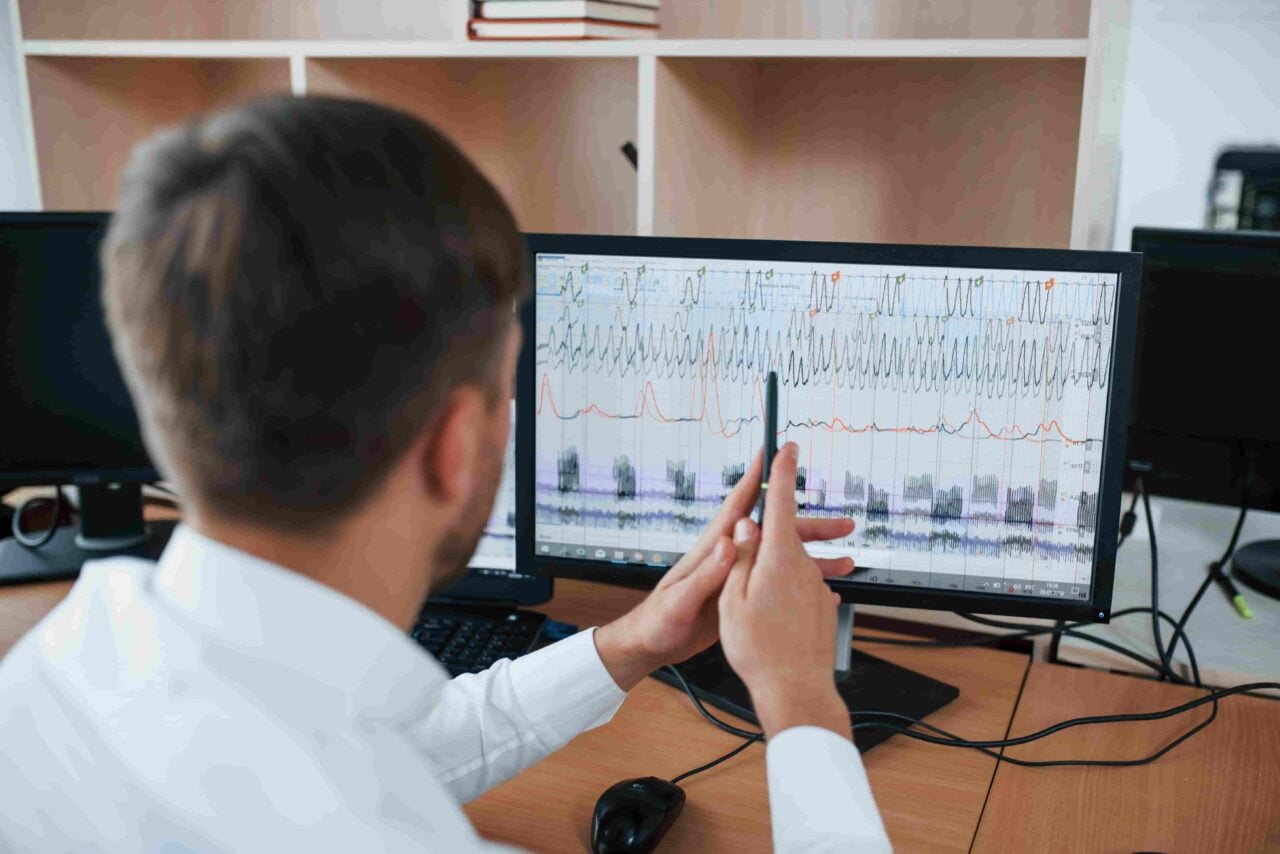
Signal processing has undergone significant evolution from its inception in the early 20th century to the sophisticated techniques employed today. Initially, the focus was on analog signal processing, primarily for telecommunications. With the advent of digital technology, the field transitioned dramatically, leading to groundbreaking advancements that have shaped modern applications ranging from audio processing to image enhancement.
The early 20th century witnessed the foundation of signal processing as engineers sought methods to improve communication systems. The invention of the telegraph and later the telephone marked pivotal moments, as engineers began employing basic filtering techniques to manage noise and ensure clearer transmission. The introduction of Fourier analysis in the 1920s, particularly through the work of Jean-Baptiste Joseph Fourier, enabled the decomposition of signals into their frequency components, setting the stage for modern signal processing.
Key Milestones and Breakthroughs
Several key milestones have propelled the field of signal processing forward, each contributing to its growth and diversification. The following points highlight significant breakthroughs:
- 1940s – The Development of Digital Signal Processing (DSP): The advent of digital computing allowed for the manipulation of signals using algorithms, giving rise to the field of DSP.
- 1960s – The Fast Fourier Transform (FFT): Cooley and Tukey developed the FFT algorithm, revolutionizing frequency analysis by reducing computational time significantly.
- 1970s – Introduction of Linear Predictive Coding (LPC): LPC emerged as a powerful technique for speech synthesis and recognition, influencing the development of voice-responsive systems.
- 1980s – Wavelet Transforms: The introduction of wavelet analysis provided a new mechanism for analyzing localized variations of power within a time series, enhancing image processing techniques.
- 1990s – Multimedia Signal Processing: Advances in computer technology led to the integration of video and audio processing, paving the way for digital media applications.
Prominent figures have been instrumental in these developments. Norbert Wiener, considered the father of cybernetics, made fundamental contributions to the theoretical underpinnings of signal processing. Similarly, Claude Shannon’s work on information theory laid the groundwork for understanding signal integrity and efficiency in communication systems. Their pioneering research has had lasting impacts, influencing modern techniques and applications across various industries.
Key Techniques in Signal Processing
Signal processing is a vital field that enables the manipulation and analysis of signals to extract meaningful information. Various techniques are employed to enhance, modify, and transmit signals effectively. Understanding these techniques helps in various applications, from telecommunications to audio engineering.
One of the fundamental techniques in signal processing is filtering. Filtering involves modifying a signal to enhance certain aspects while suppressing others. For instance, low-pass filters allow signals with a frequency lower than a certain cutoff to pass through, removing high-frequency noise. Modulation is another key technique that involves varying a carrier signal in order to transmit information. This is often seen in radio broadcasting, where audio signals modulate a radio wave for effective transmission over distances. Sampling refers to converting a continuous signal into a discrete signal by taking measurements at regular intervals, which is crucial for digital signal processing.
Comparison of Digital and Analog Signal Processing Methods
Digital and analog signal processing methods serve similar purposes but operate on fundamentally different principles. Digital signal processing (DSP) manipulates signals represented as discrete values, allowing for greater precision and flexibility. In contrast, analog signal processing deals directly with continuous signals.
The primary difference lies in their implementation and performance. Digital systems can utilize advanced algorithms for processing, making them more adaptable to different applications. Analog systems, however, are often simpler and can be less expensive to implement in certain scenarios.
Here’s a comparison table that Artikels the advantages and disadvantages of each technique:
| Technique | Advantages | Disadvantages |
|---|---|---|
| Filtering |
|
|
| Modulation |
|
|
| Sampling |
|
|
Applications of Signal Processing in Various Fields
Signal processing is a fundamental technology that drives innovation across various sectors. Its applications span telecommunications, biomedical engineering, and audio processing, each relying on sophisticated techniques to enhance performance, reliability, and user experience. By manipulating, analyzing, and interpreting signals, professionals in these fields can develop cutting-edge systems that address complex challenges.
Telecommunications
In telecommunications, signal processing plays a pivotal role in managing and improving the quality and efficiency of data transmission. Techniques such as modulation, error detection, and compression are essential to ensure that voice, video, and data signals are transmitted accurately and efficiently.
One prominent use case is in mobile communication systems, where signal processing enables multiple users to share the same frequency band without interference. This is achieved through techniques like Orthogonal Frequency-Division Multiplexing (OFDM), which divides data into several closely spaced subcarriers, optimizing bandwidth usage.
In addition, error correction codes (like Turbo Codes and Low-Density Parity-Check codes) enhance data integrity by detecting and correcting errors during transmission. Technologies such as 4G and 5G networks heavily depend on these advanced signal processing methods to deliver high-speed data services and seamless connectivity.
Biomedical Engineering
Signal processing is equally crucial in biomedical engineering, particularly in the analysis of medical signals such as electrocardiograms (ECGs) and electroencephalograms (EEGs). These signals provide vital information about a patient’s health and neurological states.
For example, digital filtering techniques are employed to remove noise from ECG signals, allowing for accurate diagnosis of heart conditions. Advanced algorithms analyze the frequency and amplitude characteristics of these signals, helping healthcare professionals detect anomalies like arrhythmias or ischemic events.
Moreover, imaging technologies such as Magnetic Resonance Imaging (MRI) and Computed Tomography (CT) utilize signal processing to reconstruct detailed images of the human body. The application of algorithms like Fast Fourier Transform (FFT) allows for rapid image analysis, significantly enhancing diagnostic capabilities.
Audio Processing
In the realm of audio processing, signal processing techniques are key to enhancing sound quality and creating immersive audio experiences. Applications include music production, speech recognition, and noise cancellation.
Digital audio workstations (DAWs) utilize various signal processing effects such as equalization, compression, and reverb to manipulate audio tracks. For instance, equalizers adjust the balance of different frequency components in a sound, while compressors reduce the dynamic range, making quiet sounds louder and loud sounds quieter.
In speech recognition technology, signal processing is used to convert spoken language into text, facilitating applications in virtual assistants and transcription software. Advanced methods like Hidden Markov Models (HMMs) and neural networks are employed to improve the accuracy of voice recognition systems.
Finally, noise-canceling headphones employ signal processing to analyze ambient sounds and generate anti-noise signals, effectively reducing unwanted background noise. This technology enhances user experience in various environments, from commuting to office spaces.
Challenges and Limitations in Signal Processing
Signal processing is a critical field that plays a vital role in various applications, from telecommunications to biomedical engineering. However, it is fraught with challenges that impact its efficacy and efficiency. Among these challenges are noise reduction, computational limitations, and the complexities of real-time processing. Understanding these issues is essential for developing more robust signal processing techniques.
The presence of noise in signals is one of the most significant challenges that engineers face. Noise can originate from various sources, including electronic components, environmental factors, and even human activity. This interference can severely degrade the quality of the signal, making it difficult to extract meaningful information. For instance, in audio signal processing, background noise can obscure speech, while in image processing, noise can lead to inaccuracies in object recognition. The challenge lies in developing effective algorithms that can distinguish between the desired signal and unwanted noise, particularly when the noise levels are high.
Computational Limitations
Computational limitations also pose significant challenges in signal processing. As the complexity of algorithms increases, so does the computational power required to execute them. In applications like real-time video processing, maintaining a high frame rate while applying sophisticated algorithms can strain processing resources. Moreover, many signal processing techniques require large amounts of memory and processing time, which can lead to slow performance and reduced efficiency in applications that require immediate results, such as autonomous driving systems.
To address these challenges, several potential solutions can be explored. The following list Artikels various strategies to overcome the limitations in signal processing:
- Implementation of advanced filtering techniques, such as adaptive filters, that can dynamically adjust to changing noise profiles.
- Utilization of parallel processing and multi-core architectures to enhance computational efficiency and speed.
- Development of optimized algorithms that balance accuracy with lower computational requirements, such as using machine learning models that can operate on reduced data sets.
- Application of wavelet transforms for better noise reduction while preserving signal integrity, particularly in image processing.
- Integration of hardware accelerators, like FPGAs and GPUs, to offload intensive computations from the main processor.
By actively pursuing these solutions, the field of signal processing can continue to evolve, addressing current challenges and enhancing the effectiveness of applications across various domains.
Future Trends in Signal Processing
The landscape of signal processing is evolving rapidly, driven by technological advancements and the integration of innovative methodologies. As machine learning (ML) emerges as a powerful tool, its incorporation into signal processing applications is reshaping how data is analyzed and interpreted. This trend has significant implications for various industries, as they adapt to real-time processing capabilities that enhance efficiency and decision-making.
Machine learning is revolutionizing signal processing by enabling systems to learn from data and improve their performance over time. This integration allows for more sophisticated analysis techniques, such as deep learning algorithms that can process large datasets with high accuracy. Real-time processing is another key trend, driven by the increasing demand for instant data analysis in fields like telecommunications, healthcare, and automotive technologies. The ability to process signals in real-time allows for immediate responses to changes in the environment, fostering smarter systems and automation.
Impact on Industries
The anticipated impact of these trends on industries relying on signal processing is profound. Sectors such as telecommunications are experiencing enhanced data transmission methods, thereby improving bandwidth efficiency and reducing latency.
- Healthcare: In medical imaging, the use of ML algorithms can significantly enhance image quality and assist in early diagnosis by analyzing signals from MRI and CT scans more effectively.
- Automotive: The integration of real-time signal processing in autonomous vehicles is critical for processing sensor data, enabling safer navigation and obstacle detection.
- Consumer Electronics: Smart devices are utilizing real-time data processing to enhance user experience, such as in noise-cancellation headphones that adapt to ambient sound conditions dynamically.
As technological advancements continue to shape the field, the integration of machine learning with real-time processing will likely lead to more intelligent systems across various domains, transforming how industries operate and interact with data. The evolution of signal processing is not just a technological enhancement; it is a paradigm shift that will redefine capabilities and pave the way for future innovations.
Mathematical Foundations of Signal Processing
Signal processing relies heavily on mathematical principles that provide the framework for analyzing, manipulating, and interpreting signals. The mathematical foundation encompasses a variety of concepts such as Fourier transforms, linear systems, and statistical methods that are essential for effective signal analysis. By utilizing these mathematical tools, engineers and scientists can design systems that reliably process audio, image, and other types of signals, making the understanding of these concepts crucial to the field.
Key Mathematical Concepts
Fourier transforms are one of the cornerstones of signal processing, allowing the transformation of a signal from its time domain representation to the frequency domain. This capability enables the identification of frequencies present in a signal, effectively revealing hidden patterns and structures that might not be obvious in the time domain. Linear systems theory also plays a vital role, providing a way to model systems that respond to inputs linearly. This approach simplifies the analysis and design of complex systems by allowing engineers to predict outputs based on known inputs.
In addition to these concepts, probability and statistics are integral to signal processing, particularly in areas such as noise reduction and signal reconstruction. The ability to model uncertainty and randomness in signals can significantly enhance the performance of signal processing algorithms.
A critical equation used in signal processing is the Fourier Transform, expressed mathematically as:
F(ω) = ∫ f(t) e^{-jωt} dt
This equation illustrates the transformation of a time-domain function \( f(t) \) into its frequency-domain representation \( F(ω) \), emphasizing the profound connection between these two domains. Through the application of such mathematical tools, professionals in the field can develop innovative solutions to complex problems, advancing technologies that touch various aspects of everyday life, from telecommunications to multimedia processing.
End of Discussion
In conclusion, Signal Processing is a dynamic field that bridges theory and practical applications across various industries. By addressing its challenges and embracing emerging trends, we can harness the full potential of signal processing to enhance technology and improve lives. As we look ahead, the integration of advanced techniques such as machine learning will undoubtedly pave the way for groundbreaking innovations.
FAQ Compilation
What is the primary goal of signal processing?
The primary goal of signal processing is to analyze, modify, and synthesize signals to extract useful information or improve signal quality.
How do analog and digital signal processing differ?
Analog signal processing deals with continuous signals, while digital signal processing operates on discrete signals represented by binary data.
What are some common applications of signal processing?
Common applications include telecommunications, audio and speech processing, image enhancement, and biomedical signal analysis.
What challenges does the field of signal processing face today?
Challenges include noise reduction, computational limitations, real-time processing requirements, and the need for efficient algorithms.
What role does mathematics play in signal processing?
Mathematics is essential for modeling signals, designing algorithms, and analyzing the behavior of signal processing systems.