SQL & NoSQL are two major types of database management systems that cater to different data needs. While SQL databases are well-suited for structured data with predefined schemas, NoSQL databases excel in handling unstructured and semi-structured data. Understanding these distinctions can significantly impact how applications are designed and how data is managed.
This article explores the fundamental differences between SQL and NoSQL databases, including their respective advantages, scalability options, and data consistency models. By diving into the unique features and use cases of each type, readers will gain insight into which database system might be best suited for their specific requirements.
SQL and NoSQL
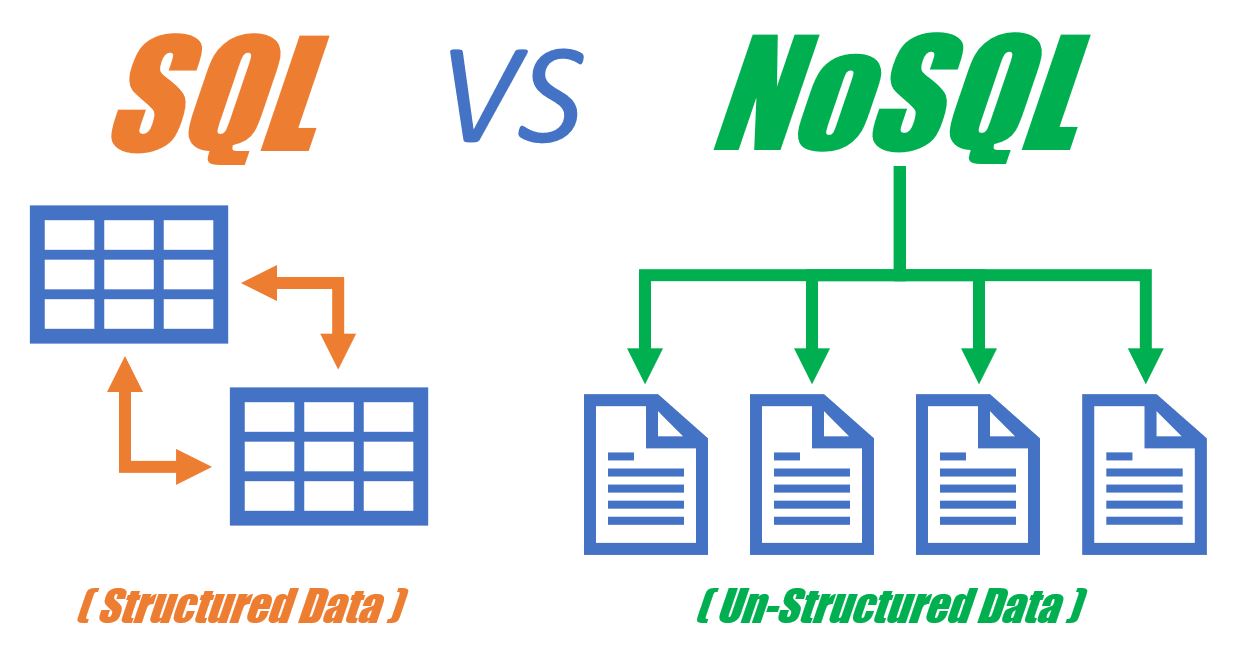
SQL (Structured Query Language) and NoSQL (Not Only SQL) databases represent two fundamental approaches to data storage and retrieval, each with its own set of methodologies and use cases. SQL databases use a structured schema and are designed to handle complex queries efficiently, whereas NoSQL databases adopt a more flexible schema-less approach, allowing for a wide variety of data formats and types. Understanding these distinctions is essential for developers and database administrators to choose the appropriate system for their project requirements.
The core differences between SQL and NoSQL databases lie in their data storage and retrieval methods. SQL databases are relational and utilize a fixed schema with tables that contain rows and columns. Each table can be linked through foreign keys, allowing for complex joins and relational queries. This structure is optimal for applications that require transactional integrity and consistent data, making SQL a preferred choice for traditional business applications like banking or inventory management.
In contrast, NoSQL databases offer a non-relational model that can store data in various formats, including key-value pairs, document stores, wide-column stores, and graph databases. This flexibility allows developers to store data in a more dynamic fashion, which is beneficial for applications that process vast amounts of unstructured or semi-structured data, such as social media platforms, content management systems, and big data analytics.
Examples of SQL databases include MySQL, PostgreSQL, and Microsoft SQL Server, which are commonly used in scenarios that demand strong consistency and complex querying. On the other hand, NoSQL databases encompass MongoDB, Cassandra, and Redis, which excel in handling high-velocity data and horizontal scalability, catering to modern applications and real-time analytics.
Understanding these differences is crucial for developers and database administrators as it impacts design decisions, performance optimization, and ultimately, the success of the application. Choosing the right database type can lead to improved performance, scalability, and maintainability in software development, enhancing the overall user experience.
Examine the advantages of using SQL databases in structured data environments.
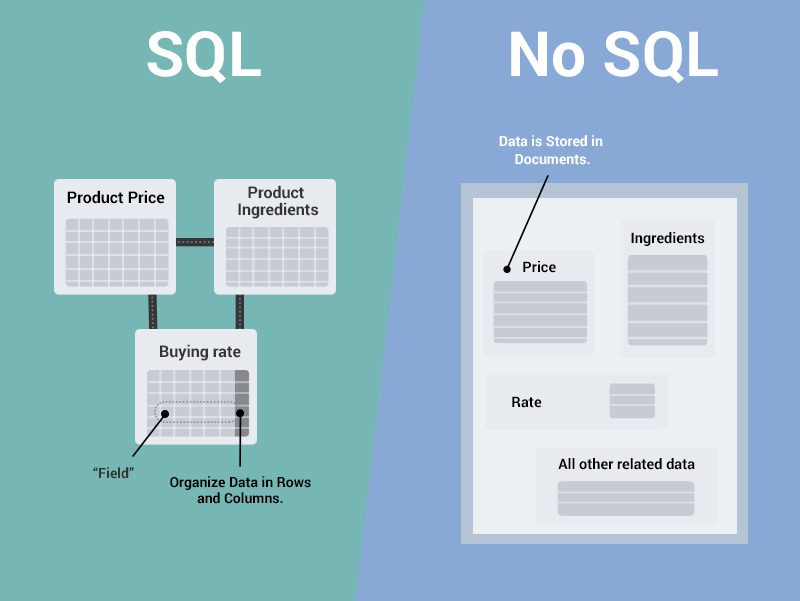
SQL databases have long been the backbone of data management in various industries, particularly when dealing with structured data. Their reliance on a predefined schema makes them a reliable choice for applications requiring consistency and complex querying capabilities. As data continues to grow in volume and complexity, understanding the advantages of SQL databases becomes crucial for organizations looking to optimize their data handling strategies.
The core strength of SQL databases lies in their structured query language (SQL), which allows users to perform complex queries and transactions on structured data efficiently. This feature is particularly beneficial in environments where data integrity and relationships between entities play a vital role. By adhering to the ACID (Atomicity, Consistency, Isolation, Durability) properties, SQL databases ensure that transactions are processed reliably, reducing the risk of data anomalies and inconsistencies.
Key Features of SQL Databases for Structured Data
SQL databases offer several features that enhance their suitability for structured data environments. Here are some critical aspects to consider:
- Predefined Schema: SQL databases require a fixed schema, which enforces data integrity and consistency across the database. This structured approach is ideal for applications where data formats and relationships are known in advance.
- Complex Queries: SQL allows for complex queries involving multiple tables through JOIN operations. This capability is essential when working with relational data, as it enables comprehensive data analysis and reporting.
- Robust Transaction Management: With built-in support for transactions, SQL databases ensure that multiple operations are completed without error. This is crucial for financial applications where data accuracy is paramount.
- Data Integrity Constraints: SQL databases support various constraints like primary keys, foreign keys, and unique constraints. These mechanisms help maintain data validity and prevent errors.
- Standardized Language: SQL is a widely recognized and standardized language, making it easier to find skilled professionals and resources for database management.
Scenarios Where SQL Databases Outperform NoSQL Options
There are specific scenarios where SQL databases are preferred over NoSQL counterparts. These instances typically involve structured data requirements and the need for reliable transaction management:
- Applications requiring a high level of data integrity, such as banking systems, where ACID compliance is essential.
- Business intelligence and analytics platforms that need complex queries across multiple datasets, benefitting from SQL’s powerful querying capabilities.
- Systems with well-defined data schemas, such as customer relationship management (CRM) applications, where relationships between entities are crucial.
- Scenarios that demand strict data validation and constraints, ensuring that only valid data is entered into the system.
- Companies operating in regulated industries, such as healthcare and finance, where adherence to compliance and data governance is critical.
Comparison of SQL Strengths versus NoSQL Limitations
To further clarify the advantages of SQL databases in structured data environments, the following table highlights SQL strengths compared to common limitations of NoSQL databases:
| Aspect | SQL Databases | NoSQL Databases |
|---|---|---|
| Data Structure | Fixed schema, ideal for structured data | Flexible schema, better for unstructured data |
| Query Complexity | Supports complex queries with SQL | Limited query capabilities, often requires additional code |
| Transaction Management | ACID compliant | Eventual consistency, not always ACID compliant |
| Data Integrity | Enforces data integrity through constraints | Less stringent data integrity enforcement |
| Use Cases | Best for financial, CRM, and other structured applications | Best for big data, real-time web apps, and unstructured data |
Investigate the benefits of NoSQL databases in handling unstructured data.
NoSQL databases have emerged as a robust solution for managing unstructured data, which is increasingly prevalent in today’s digital landscape. As organizations gather vast amounts of data that do not conform to traditional relational database structures, the flexibility offered by NoSQL becomes essential for effective data management and analysis.
NoSQL databases are designed to accommodate a variety of data formats and structures, making them ideal for handling unstructured data such as text, images, and videos. This flexibility allows for the storage of complex data types without the need for predefined schemas, leading to greater ease of use and scalability. NoSQL systems can efficiently manage data with diverse structures, enabling businesses to adapt and evolve their data strategies in real-time.
Types of NoSQL Databases and Their Use Cases
Understanding the different types of NoSQL databases and their applications is crucial for leveraging their benefits in unstructured data handling. Below are the primary types of NoSQL databases along with their common use cases:
- Document Stores: These databases, like MongoDB and CouchDB, store data in documents (often JSON or XML). They are ideal for content management systems, e-commerce applications, and social media platforms where data is often unstructured and variable.
- Key-Value Stores: Examples include Redis and DynamoDB. They are used for caching and session management, where fast access to unstructured data is necessary and data can be easily retrieved using a unique key.
- Column Family Stores: Such as Cassandra and HBase, are designed for large-scale data storage and retrieval. They are commonly used in analytics applications and IoT data management, where data can be stored in sparse, distributed structures.
- Graph Databases: Like Neo4j, these databases excel in handling complex relationships among unstructured data. They are well-suited for social networks, recommendation engines, and fraud detection systems, where interconnections between data points are crucial.
In practice, organizations have successfully implemented NoSQL databases to manage unstructured data. For example, LinkedIn utilizes Apache Kafka, a distributed streaming platform, to efficiently process vast amounts of unstructured interaction data, enabling real-time analytics and personalized content delivery. Similarly, Spotify uses NoSQL to manage its extensive music library and user-generated playlists, allowing seamless access and personalized recommendations for users.
“The ability of NoSQL databases to handle diverse data formats and structures is a game changer in today’s data-driven world.”
Analyze the scalability options available in SQL versus NoSQL databases.
Scalability is a critical factor when choosing a database solution, as it directly influences how well a system can handle growth in data volume and user load. Both SQL and NoSQL databases offer distinct scalability options, which can impact performance and data management in unique ways.
Vertical and Horizontal Scaling
Scaling refers to the ability of a database to accommodate increased loads. There are two primary strategies for scalability: vertical scaling and horizontal scaling.
Vertical scaling, or scaling up, involves adding more power (CPU, RAM) to an existing server. This approach is common in SQL databases, which are often designed for transactional consistency and complex queries. For instance, traditional relational databases like MySQL or PostgreSQL can be scaled vertically by upgrading the server hardware. However, this method has limitations; it reaches a point where further upgrades become impractical or too expensive.
Horizontal scaling, or scaling out, entails adding more servers to distribute the load. This is a typical strategy for NoSQL databases, such as MongoDB and Cassandra, which are built to handle vast amounts of unstructured data. By horizontally scaling, businesses can increase capacity and redundancy by distributing data across multiple nodes. For example, Facebook utilizes horizontal scaling with its NoSQL systems to manage massive amounts of user data and interactions without performance degradation.
Impact of Scalability on Performance and Data Management
The choice of scalability approach significantly affects performance and data management strategies. Vertical scaling can lead to enhanced performance due to the increased resources available to a single server, making it suitable for applications requiring complex queries and relationships between data. However, it can result in a single point of failure; if the server goes down, the entire database is affected.
On the other hand, horizontal scaling improves fault tolerance and availability since data is spread across multiple servers. However, the complexity of managing distributed systems increases, requiring sophisticated techniques for data consistency and synchronization. NoSQL databases often employ eventual consistency models, which can impact how businesses manage their data integrity compared to the strong consistency models typical in SQL databases.
Choosing a Database Based on Scalability Needs
When deciding between SQL and NoSQL, businesses should carefully consider their scalability needs. For instance, a financial institution handling transactional data may prefer SQL for its strong data integrity and ACID compliance. Conversely, a social media platform that needs to manage vast amounts of user-generated content and requires flexibility in data structure might lean towards NoSQL.
Key factors influencing the choice include:
- Data Structure: Structured data benefits from SQL’s rigid schema, while unstructured data suits NoSQL’s flexible format.
- Traffic Patterns: Applications expecting high user traffic can benefit from NoSQL’s horizontal scaling capabilities.
- Consistency Requirements: SQL’s strong consistency is critical in scenarios where data integrity is paramount.
- Cost Efficiency: NoSQL may offer a more cost-effective solution for scaling out with commodity hardware, while SQL may lead to higher costs for vertical scaling with specialized hardware.
Consider a retail company that experiences spikes in traffic during holiday seasons. It may choose a NoSQL solution to handle fluctuating loads easily, ensuring customer satisfaction without significant downtime.
“The right database choice hinges on understanding the scalability requirements of your applications. SQL excels at structured data and transactions, while NoSQL shines in flexibility and scalability.”
Discuss the role of data consistency in SQL and NoSQL databases.
Data consistency is a critical aspect of database management, determining how reliably data is stored and retrieved across different systems. In the realm of SQL and NoSQL databases, understanding the nuances of data consistency can significantly impact application performance and user experience. SQL databases, primarily relational in nature, enforce strict consistency rules, while NoSQL databases adopt more flexible models to achieve scalability and performance. This dichotomy leads to distinct implications for how data integrity and accuracy are managed.
ACID properties in SQL
ACID stands for Atomicity, Consistency, Isolation, and Durability, which are the core principles that ensure reliable processing of database transactions in SQL databases. Each property plays a crucial role in maintaining data integrity:
- Atomicity: Ensures that a transaction is treated as a single unit, which either fully completes or fully fails, preventing partial updates that could corrupt data.
- Consistency: Guarantees that a transaction brings the database from one valid state to another, maintaining database invariants.
- Isolation: Provides that concurrent transactions do not interfere with one another, ensuring that transactions are executed in isolation until they are committed.
- Durability: Assures that once a transaction is committed, it remains so, even in the event of a power loss or system failure.
These properties collectively uphold the reliability of the data in SQL databases, making them suitable for applications where accuracy is paramount, such as financial systems.
Eventual consistency model in NoSQL
In contrast to the rigid structure of SQL, NoSQL databases often embrace the eventual consistency model. This approach accepts that while changes may not be immediately reflected across all nodes, the system will eventually converge to a consistent state.
Eventual consistency allows for high availability and partition tolerance, often sacrificing immediate consistency for performance and scalability.
This model is particularly beneficial in distributed database systems, where the frequency of reads and writes can lead to temporary discrepancies. Examples include social media platforms and content delivery networks, where real-time consistency is less critical than quick data access and flexibility. However, this can lead to scenarios where users may see slightly outdated information, raising concerns over data accuracy during those transient states.
Comparison of consistency models
To illustrate the differences in data consistency between SQL and NoSQL databases, the following table highlights key aspects of their respective consistency models:
| Aspect | SQL Databases | NoSQL Databases |
|---|---|---|
| Consistency Model | Strong Consistency (ACID) | Eventual Consistency (BASE) |
| Transaction Support | Full transaction support with ACID properties | Limited transaction support, focus on availability |
| Data Structure | Relational (tables and schemas) | Flexible (key-value, document, graph) |
| Performance | Optimized for complex queries | Optimized for high throughput and low latency |
| Use Case Examples | Banking, ERP systems | Social networks, IoT applications |
This comparison underscores the fundamental differences in how SQL and NoSQL databases approach data consistency, ultimately guiding organizations in selecting the right technology for their specific needs.
Explore the use cases for hybrid database systems that combine SQL and NoSQL elements.
Hybrid database systems have gained traction in recent years as organizations seek to leverage the strengths of both SQL and NoSQL databases. These systems offer the flexibility of NoSQL’s scalability and unstructured data handling alongside the reliability and structure of traditional SQL databases. This duality allows businesses to optimize their data management strategies to suit varying needs across different applications and workloads.
The architecture of hybrid database systems is designed to integrate the best features of both SQL and NoSQL databases. Typically, these systems operate using a unified interface that allows for seamless interaction with both types of databases. Data can be stored in multiple formats, facilitating a combination of relational data structures and non-relational document-based or key-value storage. This architecture not only enhances data accessibility but also improves performance by allowing systems to route queries to the most appropriate database type based on the data being accessed.
Scenarios Benefiting from a Hybrid Approach
Certain scenarios highlight the advantages of using hybrid database systems over single database solutions. These situations often involve diverse data requirements, scalability needs, or the integration of legacy systems. The following examples illustrate where a hybrid approach can provide significant benefits:
- Real-time Analytics: Businesses that require real-time data analysis may find hybrid systems advantageous. For instance, a retail company might use SQL for transactional data and NoSQL for customer behavior tracking and analytics, allowing for quick insights into sales trends.
- Content Management Systems: Media companies often manage both structured data (like user profiles) and unstructured data (such as articles and videos). A hybrid database can efficiently handle both, enabling fast content delivery while maintaining user data integrity.
- IoT Applications: Internet of Things (IoT) scenarios generate large volumes of unstructured data. Hybrid databases facilitate the storage of sensor data in NoSQL while maintaining structured data for device management in SQL.
- Data Warehousing and Reporting: Organizations that perform extensive reporting may utilize SQL databases for structured report generation, while NoSQL databases can store vast amounts of raw data for deeper analysis.
Successful Implementations of Hybrid Databases
Several companies have successfully implemented hybrid database systems, showcasing their effectiveness in diverse industries. These implementations provide real-world examples of how hybrid databases can be leveraged:
- Netflix: Netflix utilizes a hybrid database approach to manage the plethora of data streaming from its users. It combines SQL for transactional data and NoSQL (specifically Cassandra) for managing vast amounts of user-generated content and preferences.
- eBay: eBay employs a hybrid system that uses SQL databases for transactional integrity and NoSQL for handling large volumes of user data and auction histories. This setup allows for both reliable transactions and flexible data storage.
- Spotify: Spotify integrates hybrid databases to manage both music metadata in SQL databases and user activity logs in NoSQL systems. This combination enables the platform to provide personalized music recommendations efficiently.
By utilizing hybrid database systems, organizations can effectively tackle the complexities of modern data management, ensuring they meet both current and future data needs with agility and efficiency.
Evaluate the learning curve associated with SQL and NoSQL databases for new developers.
The journey of mastering SQL and NoSQL databases presents a varied learning curve for developers, influenced by prior experience, project requirements, and the complexity of the data being handled. Understanding the foundational differences between these two types of databases is crucial for new developers as they embark on their learning path.
Developers need to acquire specific skills to effectively work with SQL and NoSQL databases, which can differ significantly. For SQL databases, a strong understanding of relational database concepts, normalization, and query syntax is essential. Developers must be proficient in SQL, the standard language used to communicate with relational databases. In contrast, NoSQL databases require an understanding of data modeling that is often non-relational, alongside familiarity with various data storage formats like JSON or BSON.
Skills Required for SQL and NoSQL Databases
The skills required for each type of database encompass both theoretical knowledge and practical application. The following points Artikel key skills associated with SQL and NoSQL databases:
- SQL Databases:
- Proficiency in SQL syntax and commands (SELECT, INSERT, UPDATE, DELETE).
- Understanding of relational database management systems (RDBMS) like MySQL, PostgreSQL, or Oracle.
- Knowledge of data normalization and schema design principles.
- Ability to create and manage indexes to optimize query performance.
- Skills in transaction management and understanding ACID properties.
- NoSQL Databases:
- Familiarity with different NoSQL models (document, key-value, graph, wide-column).
- Understanding of data modeling in unstructured or semi-structured formats.
- Experience with languages and tools specific to NoSQL databases (e.g., MongoDB queries, Redis commands).
- Ability to handle scalability and distributed systems concepts.
- Knowledge of eventual consistency versus strong consistency models.
Resources and Tools for Learning SQL and NoSQL
To facilitate the learning process for both SQL and NoSQL, a variety of resources are available. These encompass online courses, documentation, and community forums. The following list highlights some effective resources and tools for new developers:
- Online Learning Platforms:
- Coursera and Udemy offer comprehensive courses on SQL and NoSQL databases.
- edX provides university-level courses focused on database management.
- Documentation and Tutorials:
- The official documentation for SQL databases such as PostgreSQL and MySQL is invaluable for understanding core functionalities.
- MongoDB’s official website features extensive tutorials and guides for NoSQL database management.
- Community Forums:
- Stack Overflow provides a platform for troubleshooting and community support.
- Reddit has specific subreddits like r/SQL and r/nosql for discussions and resource sharing.
Step-by-Step Guide for Beginners to Start Working with SQL and NoSQL Databases
A structured approach can enhance the learning experience for newcomers in the realm of databases. Below is a step-by-step guide designed to help beginners get started with both SQL and NoSQL databases:
- Familiarize with Database Concepts: Begin by understanding basic database terminology and concepts such as databases, tables, and records.
- Choose a Database to Learn: Decide whether to start with SQL or NoSQL based on project needs or personal interest.
- Set Up the Development Environment: Install a local database server (like MySQL for SQL or MongoDB for NoSQL) on your computer.
- Explore Basic Queries: Start practicing basic queries and commands to interact with the database.
- Build a Simple Project: Create a simple application that utilizes the database, reflecting real-world use cases.
- Advance to Complex Queries: Gradually progress to more complex querying and data manipulation.
- Join Community Discussions: Engage with online communities to gain insights, ask questions, and share learning experiences.
Delve into the performance metrics used to assess SQL and NoSQL databases.
When evaluating the performance of SQL and NoSQL databases, it’s crucial to consider a variety of metrics that indicate their efficiency and responsiveness. Performance metrics can directly influence the choice of database depending on the specific application needs. Understanding these metrics is essential for developers and businesses alike, as they help in making informed decisions regarding database management systems (DBMS).
Performance indicators such as query speed, latency, and throughput are critical in assessing how well a database performs under different workloads. Query speed refers to the time it takes to execute a query and return results, serving as a measure of a database’s efficiency. Latency is the delay between the request for data and the initiation of the data transfer, while throughput measures the amount of data processed over a given time period, highlighting the database’s capacity to handle large volumes of requests.
Comparison of SQL and NoSQL Database Performance Under Different Workloads
Understanding how SQL and NoSQL databases perform under varying workloads can significantly aid in choosing the right technology for a project. Below is a comparison based on common workloads:
- Read-heavy Workloads: SQL databases generally perform better with complex queries due to their structured nature and optimization for read operations. NoSQL databases can also excel in read-heavy scenarios, especially those designed for horizontal scaling, such as key-value stores.
- Write-heavy Workloads: NoSQL databases often outperform SQL databases in write-heavy situations, as they are designed to handle large volumes of inserts and updates. This is particularly true for document-oriented databases that allow for flexible schema designs.
- Mixed Workloads: SQL databases may struggle with mixed workloads due to locking mechanisms that limit concurrency. NoSQL databases, on the other hand, typically manage concurrent write and read operations more efficiently, providing better overall performance in such scenarios.
For a clearer understanding, below is a table showcasing performance metrics of popular SQL and NoSQL databases.
| Database Type | Database Name | Query Speed (ms) | Latency (ms) | Throughput (transactions/sec) |
|---|---|---|---|---|
| SQL | MySQL | 10 | 5 | 1000 |
| SQL | PostgreSQL | 15 | 7 | 800 |
| NoSQL | MongoDB | 8 | 4 | 1200 |
| NoSQL | Cassandra | 6 | 3 | 1500 |
Performance metrics such as query speed, latency, and throughput are vital for assessing the effectiveness of SQL and NoSQL databases, guiding the choice of database technology based on workload demands.
This overview of performance metrics helps delineate the strengths and weaknesses of SQL and NoSQL databases, ensuring that developers and organizations can align their database technology with their specific needs and workloads effectively.
Ultimate Conclusion
In summary, grasping the differences between SQL and NoSQL is essential for developers and database administrators alike. Each type of database offers its own set of advantages, making them suitable for various applications and data types. As businesses evolve and data demands grow, understanding when to use SQL, NoSQL, or a hybrid approach will be key to successful data management.
Frequently Asked Questions
What types of data can NoSQL handle?
NoSQL databases can handle a variety of data formats including documents, key-value pairs, graphs, and wide-column stores, making them ideal for unstructured and semi-structured data.
Are SQL databases still relevant today?
Yes, SQL databases remain highly relevant, especially in scenarios that require strong data integrity and complex queries, such as financial systems and traditional enterprise applications.
Can NoSQL databases be used for structured data?
While NoSQL databases are optimized for unstructured data, they can also accommodate structured data, but may not provide the same level of data integrity and querying capabilities as SQL databases.
What is a hybrid database system?
A hybrid database system combines features of both SQL and NoSQL databases, allowing for a flexible approach to data management that can adapt to varying data types and use cases.
Which database type is easier to learn for beginners?
SQL is generally considered easier to learn due to its structured query language and predefined schemas, making it more intuitive for beginners. However, NoSQL databases can also be straightforward with their more flexible models.