As Quantum Computing takes center stage, this technology promises to redefine the boundaries of what’s computationally possible. With roots deeply embedded in the fundamental principles of quantum mechanics, quantum computing has rapidly evolved from theoretical concepts to practical applications, attracting attention from academia, industry, and government alike.
This fascinating field merges physics with computer science, utilizing qubits to process information in ways classical computers cannot. By harnessing phenomena like superposition and entanglement, quantum computers are poised to tackle complex problems across various sectors, revolutionizing industries from healthcare to finance.
The Historical Evolution of Quantum Computing is an intriguing journey that highlights its foundational principles and milestones.
The development of quantum computing has roots that trace back to the early 20th century, where revolutionary ideas in physics began to emerge. This journey reflects the convergence of theoretical advancements and experimental breakthroughs, as key figures laid the groundwork for what would eventually transform computing as we know it.
The historical timeline of quantum computing is marked by significant contributions from scientists and mathematicians who challenged classical notions of physics and computation. Their pioneering work paved the way for the theoretical framework that underpins quantum computing today. The evolution of ideas around quantum mechanics, quantum algorithms, and quantum hardware illustrates a rich tapestry of scientific progress that has taken decades to unfold.
Key Historical Figures and Their Contributions
The journey of quantum computing is incomplete without acknowledging the essential contributions from several brilliant minds. Each contributed unique insights that advanced our understanding of quantum principles.
- Max Planck: In 1900, Planck introduced the concept of quantization of energy, proposing that energy is not continuous but comes in discrete units called “quanta.” This foundational idea laid the groundwork for quantum theory.
- Albert Einstein: His work on the photoelectric effect in 1905, where he described light as quantized particles (photons), further established the principles of quantum theory and won him the Nobel Prize in Physics in 1921.
- Niels Bohr: Bohr’s model of the atom in 1913 incorporated quantum concepts to explain atomic structure and spectral lines, thereby influencing the broader understanding of quantum mechanics.
- Richard Feynman: In the 1980s, Feynman proposed the idea of quantum computers as a means to simulate quantum systems, arguing that classical computers couldn’t efficiently simulate quantum phenomena.
- David Deutsch: In 1985, Deutsch introduced the concept of a universal quantum computer, establishing a theoretical framework for quantum computation that attracted significant attention from researchers.
Significant Breakthroughs and Theoretical Foundations
The timeline of developments in quantum computing features numerous milestones reflecting the evolution of theories and practical applications. Significant breakthroughs are noted not only for their innovative concepts but also for their impact on subsequent research.
- The Quantum Algorithm: In 1994, Peter Shor developed Shor’s algorithm, which demonstrated that quantum computers could factor large numbers exponentially faster than classical computers, sparking interest in cryptography implications.
- Grover’s Algorithm: Lov Grover’s 1996 contribution provided a quantum algorithm for database searching, illustrating how quantum computing could dramatically speed up certain computations.
- Quantum Gates and Circuits: The development of quantum gates in the late 1990s enabled the construction of quantum circuits, akin to classical logic gates, which are essential for building quantum computers.
- Quantum Error Correction: The 1990s also saw advancements in quantum error correction techniques, crucial for maintaining the integrity of quantum information amidst decoherence.
- Physical Implementations: Throughout the 2000s and 2010s, various physical systems such as superconducting qubits and trapped ions emerged as candidates for realization of quantum bits, each showcasing unique advantages and challenges.
Early Theories and Experiments
The establishment of quantum mechanics was characterized by numerous theoretical proposals and experimental validations that contributed to the foundation of quantum computing.
Quantum mechanics fundamentally altered our understanding of the microscopic world, allowing for phenomena such as superposition and entanglement to be harnessed for computation.
Early experiments, such as the double-slit experiment, revealed the wave-particle duality of light and matter, while concepts like Heisenberg’s uncertainty principle illustrated the limitations of classical physics. These early theories and experiments provided the essential building blocks for quantum mechanics and ultimately shaped the landscape of quantum computing.
Quantum Computing Fundamentals are essential for understanding its potential and workings.
Quantum computing represents a significant leap forward in technology, harnessing the unique properties of quantum mechanics to process information in ways that classical computers cannot. To fully appreciate the impact and capabilities of quantum computing, it’s crucial to delve into its fundamental principles, which form the basis of its innovative computing power.
Core Principles of Quantum Mechanics
Quantum computing is grounded in the principles of quantum mechanics, which describe the behavior of matter and energy at the smallest scales. Key concepts include:
- Wave-Particle Duality: This principle posits that particles, such as electrons, exhibit both wave-like and particle-like properties depending on the conditions of observation.
- Uncertainty Principle: Formulated by Werner Heisenberg, this principle states that certain pairs of properties, like position and momentum, cannot both be precisely measured at the same time.
- Quantum Superposition: Quantum systems can exist in multiple states simultaneously until they are measured, allowing for a vast range of possibilities in processing information.
- Quantum Entanglement: This phenomenon occurs when particles become interconnected such that the state of one particle directly influences the state of another, regardless of the distance separating them.
These principles not only differentiate quantum computers from classical machines but also illustrate the unique computational advantages that quantum systems can provide.
Qubits and Their Differences from Classical Bits
The fundamental unit of information in quantum computing is the qubit, which differs significantly from a classical bit.
- Classical Bits: In traditional computing, a bit can represent a value of either 0 or 1. All computations are based on these binary states, leading to linear processing capabilities.
- Qubits: A qubit can exist simultaneously in a state representing both 0 and 1 due to superposition. This enables quantum computers to process exponentially larger amounts of data compared to classical systems.
- Physical Representation: Qubits can be realized using various physical systems, including electrons, photons, or superconducting circuits, each leveraging the principles of quantum mechanics.
The unique properties of qubits are what allow quantum computers to outperform classical computers in specific tasks, particularly those involving vast datasets and complex problem-solving.
Significance of Superposition and Entanglement
Superposition and entanglement are crucial for unlocking the potential of quantum computing. Their significance can be highlighted as follows:
- Superposition: By allowing qubits to represent multiple states at once, superposition enables quantum computers to perform many calculations simultaneously. For example, a quantum computer with just a few qubits can process more information than a classical computer with millions of bits.
- Entanglement: This property allows for instantaneous correlation between qubits, which can be exploited for creating powerful algorithms and enhancing computational speed. It facilitates complex operations that would take classical computers an impractical amount of time to execute.
- Quantum Algorithms: Algorithms like Shor’s and Grover’s leverage superposition and entanglement to solve problems such as integer factorization and database searching more efficiently than classical algorithms.
Understanding these fundamental concepts is essential for grasping the transformative potential of quantum computing and its implications across various fields, including cryptography, optimization, and artificial intelligence.
The Current Landscape of Quantum Computing Companies and Research Initiatives reveals the competitive nature of the field.
The realm of quantum computing is rapidly evolving, characterized by an influx of innovative companies and research initiatives. As interest in this transformative technology escalates, both established players and startups are vying for a share of the market. This competitive landscape not only drives technological advancements but also influences the direction of research and development in quantum technologies.
The quantum computing field is marked by a diverse array of companies, each with distinct offerings that cater to various aspects of quantum technology. Notable players include tech giants and specialized startups, all pushing the boundaries of what quantum computing can achieve. The competition between academia and private enterprises is also noteworthy, as these entities pursue complementary but sometimes divergent paths in their research initiatives.
Key Players in the Quantum Computing Market
Several companies have emerged as frontrunners in the quantum computing space, each contributing uniquely to the development of this technology. Understanding their offerings can provide insights into the current landscape:
- IBM: Renowned for its Qiskit framework, IBM offers cloud-based quantum computing services, enabling developers to access their quantum processors and build applications.
- Google: With its Sycamore processor, Google made headlines for achieving quantum supremacy, showcasing the capability of quantum computers to solve complex problems more efficiently than classical computers.
- Microsoft: Through its Azure Quantum platform, Microsoft combines hardware and software, offering a hybrid approach that supports various quantum technologies.
- Rigetti Computing: Focused on providing quantum cloud computing services, Rigetti has developed its Quantum Cloud Services (QCS) platform, allowing users to run quantum algorithms on its processors.
- D-Wave Systems: Known for its quantum annealing technology, D-Wave offers a different approach to quantum computing, focusing on optimization problems relevant to industries such as finance and logistics.
Research Initiatives in Academia and Private Enterprises
Research in quantum computing is being pursued vigorously in both academic and corporate environments, though the focus and methodologies often differ. Academic institutions traditionally emphasize foundational research and exploration of theoretical frameworks, while private enterprises tend to prioritize practical applications and commercialization.
In academia, research initiatives often involve collaboration across disciplines. For instance, universities are exploring topics like quantum cryptography, quantum algorithms, and error correction techniques. The goal is to advance the theoretical underpinnings of quantum computing, which can later inform practical applications.
Conversely, private companies are focused on translating these theoretical insights into market-ready technologies. They invest heavily in R&D to develop proprietary algorithms, hardware improvements, and user-friendly platforms. Partnerships between academia and industry are increasingly common, facilitating knowledge transfer and accelerating innovation.
Government-Sponsored Projects in Quantum Technology
Governments worldwide recognize the strategic importance of quantum technology and have initiated extensive funding programs to propel research and development. These projects aim to foster innovation, develop national capabilities, and maintain a competitive edge in the global tech landscape.
For example, the United States has launched the National Quantum Initiative Act, providing significant funding for quantum research in both government labs and academic institutions. This initiative seeks to establish a comprehensive national strategy for quantum information science.
Similarly, the European Union’s Quantum Flagship program is one of the most ambitious projects, with a budget of €1 billion over ten years aimed at developing quantum technologies. This initiative includes projects ranging from quantum communication to quantum simulations, highlighting the importance of collaborative efforts across European nations.
In Asia, countries like China and Japan are also heavily investing in quantum technologies, with initiatives ranging from developing quantum satellites to establishing quantum research centers. These government-sponsored projects are crucial for accelerating advancements and ensuring that nations remain competitive in the evolving landscape of quantum computing.
Practical Applications of Quantum Computing in various industries are rapidly expanding and transforming traditional processes.

Quantum computing is not just a theoretical concept anymore; it is making waves across various sectors, challenging traditional methodologies and offering innovative solutions to complex problems. As industries begin to recognize its potential, practical applications are emerging that promise to enhance efficiency, accuracy, and decision-making capabilities.
One of the most compelling aspects of quantum computing is its ability to process vast amounts of data and solve complex problems more efficiently than classical computers. This capability is particularly relevant in sectors such as healthcare, finance, and cybersecurity, where the stakes are incredibly high, and the need for rapid, insightful analysis is critical.
Healthcare Innovations through Quantum Computing
The healthcare industry stands to benefit immensely from quantum computing, particularly in drug discovery and personalized medicine. Traditional drug development processes can take years and involve significant costs. Quantum computers can simulate molecular interactions at an unprecedented scale and speed, dramatically reducing the time required to identify viable drug candidates.
For example, a quantum computer can analyze the interactions between thousands of compounds and biological targets simultaneously, whereas classical computers might require sequential evaluation. A notable case is the partnership between D-Wave Systems and various pharmaceutical companies, like Biogen, that aim to accelerate the discovery of new therapeutic solutions through quantum algorithms.
Financial Sector Transformation
In finance, quantum computing is poised to revolutionize risk assessment, portfolio optimization, and fraud detection. Quantum algorithms can analyze multiple variables and scenarios simultaneously, providing better insights into risk management and investment strategies.
A prominent example is JPMorgan Chase, which is exploring quantum computing for optimizing their trading strategies and risk assessments. By leveraging quantum techniques, they aim to enhance their computational speed and accuracy, detecting fraudulent transactions faster than ever before.
Advancements in Cybersecurity
Cybersecurity is another critical area where quantum computing is making its mark. With the rise of quantum computers, traditional encryption methods may become obsolete. Quantum key distribution (QKD) offers a secure method of communication that is theoretically immune to eavesdropping, as any attempt to intercept the keys would alter the quantum state and alert the parties involved.
Companies like ID Quantique are implementing QKD systems, ensuring secure transmission of sensitive information in industries such as banking and government. This development is crucial in protecting data integrity and maintaining privacy in an increasingly digital world.
Optimization in Logistics and Supply Chain Management
Quantum computing’s potential impact on optimization problems is particularly evident in logistics and supply chain management. Classical optimization methods can struggle with the complexity and scale of modern supply chains. Quantum algorithms can evaluate numerous variables and conditions in parallel, leading to more effective routing, inventory management, and supply chain efficiency.
For instance, Volkswagen is employing quantum computing to optimize traffic flow in urban settings, aiming to reduce congestion and improve overall transportation efficiency. By utilizing quantum algorithms, they can process real-time data from various sources and adjust traffic signals dynamically, enhancing the driving experience and reducing emissions.
“Quantum computing can analyze multiple variables and scenarios simultaneously, providing better insights into risk management and investment strategies.”
Challenges and Limitations of Quantum Computing must be addressed for its future advancement.
Quantum computing promises transformational advancements in computation, but several challenges impede its progress. Addressing these issues is crucial to unlocking the potential benefits that quantum technologies can offer across various fields. As we delve into the challenges, it’s essential to recognize that significant strides must be made in technical, algorithmic, and ethical domains to ensure responsible and effective quantum computing development.
Technical Challenges Related to Qubit Stability and Error Correction
One of the most significant hurdles in quantum computing is the stability of qubits, the fundamental units of quantum information. Qubits are highly susceptible to environmental noise and temperature fluctuations, leading to decoherence—a phenomenon where quantum states lose their information over time. This instability creates a need for robust error correction techniques, which are crucial for reliable quantum computation.
The following points highlight the key aspects of qubit stability and error correction:
- Decoherence: The loss of information due to environmental interactions limits the time qubits can maintain their quantum state, necessitating better isolation and control mechanisms.
- Quantum Error Correction: Unlike classical bits, qubits require complex error correction codes, such as the surface code, to preserve information despite errors occurring during computation.
- Control Fidelity: High-fidelity operations are essential for qubits to perform calculations accurately, demanding advancements in manipulation techniques and hardware precision.
- Scaling Up: As systems grow in size, maintaining coherence becomes exponentially more challenging, complicating the implementation of error correction strategies.
The interplay of these technical challenges necessitates innovative solutions to enhance qubit reliability and operational fidelity.
Limitations of Current Quantum Algorithms and Their Scalability
Current quantum algorithms have made impressive strides in specific areas, such as factoring large numbers and simulating quantum systems. However, they often face limitations regarding scalability and general applicability. The most notable algorithms, including Shor’s and Grover’s, are not universally applicable to all problems, leading to concerns about their long-term utility in broader contexts.
Noteworthy limitations include:
- Algorithm Specificity: Many quantum algorithms are designed for particular problems, making them less versatile than classical algorithms, which can often solve a wider array of issues.
- Resource Requirements: The computational resources (qubits and gates) required for currently known quantum algorithms can be prohibitive as the complexity of problems increases.
- Efficiency: While quantum algorithms offer theoretical speedups, the practical implementation can still be slower than classical counterparts for certain tasks, especially with current hardware limitations.
- Error Rates: High error rates in quantum operations can thwart the performance of algorithms, necessitating further advancements in error mitigation techniques.
These limitations underscore the need for ongoing research to develop more scalable and efficient quantum algorithms that can harness the full computational power of quantum technologies.
Ethical Implications and Potential Risks Associated with Quantum Computing Technology
As quantum computing evolves, it raises various ethical considerations and potential risks that society must address. The power of quantum technology can lead to breakthroughs in fields such as cryptography and drug discovery, but it also poses significant threats if misused.
Some critical ethical implications include:
- Cryptographic Vulnerabilities: The ability of quantum computers to break traditional encryption methods poses risks to data privacy and security, requiring a reevaluation of cryptographic standards.
- Inequality in Access: The high cost and technical expertise required for quantum computing could exacerbate existing inequalities, limiting access to advanced technologies for certain populations or countries.
- Job Displacement: Automation through quantum technologies may lead to job displacement in specific industries, necessitating discussions on workforce retraining and social safety nets.
- Dual-Use Risks: The potential applications of quantum computing in weaponry and surveillance raise ethical concerns regarding their use in harmful ways.
Addressing these ethical implications is critical to ensuring that quantum computing technology is developed and utilized responsibly, balancing innovation with societal impact.
The Future Trends in Quantum Computing are shaping the next generation of technology.
As quantum computing continues to advance, its future trends are beginning to define the trajectory of technological innovations. The convergence of quantum hardware and software development is leading to capabilities that were once confined to the realm of science fiction. With these developments, the landscape of computing is being reshaped, promising to deliver unprecedented processing power and efficiency.
Emerging Trends in Quantum Hardware and Software Development
The ongoing evolution in quantum hardware and software is pivotal to harnessing the full potential of quantum computing. This emergence is characterized by several key trends:
- Superconducting Qubits: Superconducting qubits are becoming a leading technology in quantum hardware, largely due to their relatively straightforward scalability and robust coherence times. Companies like IBM and Google are making significant strides in this area, demonstrating the ability to maintain qubit integrity over longer durations.
- Quantum Error Correction: The development of quantum error correction algorithms is essential for reliable quantum computations. Techniques aimed at minimizing errors will enhance the stability of quantum systems, making them more viable for practical applications.
- Hybrid Quantum-Classical Systems: The integration of quantum processors with classical computing systems allows for optimized operations, leveraging both quantum speed and classical reliability. This trend is at the forefront of research, particularly in industries such as finance, where immediate decision-making is crucial.
Integration of Quantum Computing with AI and Machine Learning
The integration of quantum computing with artificial intelligence (AI) and machine learning (ML) is a transformative trend shaping future technological landscapes. By utilizing quantum algorithms, machine learning models can process vast datasets exponentially faster than classical methods, which can significantly enhance predictive capabilities across various sectors.
The potential for AI to benefit from quantum computing is vast, illustrated by:
- Quantum Neural Networks: These networks leverage quantum superposition and entanglement to process information, enabling faster training times and improved accuracy in pattern recognition.
- Optimizing Machine Learning Models: Quantum algorithms can optimize complex machine learning models by efficiently searching through vast parameter spaces, reducing computation time from months to mere hours.
Vision of Quantum Computing Evolution Over the Next Decade
Looking ahead, the next decade will likely witness profound changes driven by quantum computing. The anticipated evolution encompasses several promising developments:
- Widespread Commercial Applications: Industries, ranging from pharmaceuticals to supply chain logistics, are expected to adopt quantum computing to solve complex problems, leading to breakthroughs in drug discovery and logistics optimization.
- Enhanced Cryptography: Quantum computing will revolutionize data security through advanced cryptographic methods, such as quantum key distribution, which promises to secure data transmission against future cyber threats.
- Collaboration Across Disciplines: As quantum technology matures, interdisciplinary collaboration will become increasingly vital. Partnerships between academia, industry, and government will foster innovation and accelerate the deployment of quantum solutions to real-world problems.
“Quantum computing is not just about making calculations faster; it is about redefining what we can compute.”
Education and Workforce Development in Quantum Computing is crucial for sustaining progress in the field.
Education and workforce development in quantum computing is essential for ensuring that the field continues to thrive and evolve. With the rapid advancements in quantum technologies, a well-structured educational framework is necessary to prepare future professionals who can contribute to this cutting-edge discipline. Investing in a robust curriculum and training programs fosters innovation and helps bridge the skills gap in the workforce.
Curriculum Design for Quantum Computing
A comprehensive curriculum is crucial for students at various educational levels to grasp essential quantum computing concepts. This curriculum should be adaptable, catering to different age groups and degrees of familiarity with the subject. Here’s a suggested framework for a multi-tiered educational approach:
- Elementary Level: Introduce basic concepts of coding and problem-solving, emphasizing logic and critical thinking. Use engaging activities that illustrate the principles of quantum phenomena, such as superposition and entanglement, through simple experiments or games.
- High School Level: Introduce fundamental physics and mathematics concepts alongside basic programming skills. Offer courses that cover classical computing and gradually transition into quantum mechanics, allowing students to explore quantum algorithms and their potential applications.
- Undergraduate Level: Focus on in-depth studies of quantum mechanics, linear algebra, and complex systems. Include hands-on laboratory experiences where students can work with quantum computers or simulators, fostering practical skills alongside theoretical knowledge.
- Graduate Level: Provide specialized programs focusing on quantum information theory, quantum cryptography, and quantum hardware development. Encourage research projects that allow students to contribute to ongoing advancements in the field.
Online Courses and Workshops
Online courses and workshops play a vital role in developing skills in quantum computing, offering flexible and accessible options for learners. The following points highlight the importance of these platforms:
- Accessibility: Online learning breaks geographical barriers, enabling individuals from diverse backgrounds to access quality education in quantum computing.
- Self-Paced Learning: Many online courses allow learners to progress at their own pace, making it easier for those with varying commitments to engage with the content.
- Expert-Informed Content: Courses are often designed and delivered by industry professionals and academic experts, ensuring that learners receive up-to-date and relevant knowledge.
- Hands-On Workshops: Practical workshops provide opportunities for participants to work on real-world problems, enhancing their understanding of quantum applications while fostering collaboration and networking.
Interdisciplinary Collaboration in Quantum Technologies
Interdisciplinary collaboration is fundamental for cultivating expertise in quantum technologies. By integrating insights from various fields, a more comprehensive understanding of quantum computing can be achieved. Here’s how collaborative efforts can enhance education and innovation:
- Cross-Disciplinary Learning: Teams comprising physicists, computer scientists, engineers, and mathematicians can share expertise, leading to innovative approaches to quantum challenges.
- Research Initiatives: Collaborative research projects often result in groundbreaking discoveries, combining theoretical knowledge with practical applications. For instance, partnerships between universities and industry can accelerate the development of quantum algorithms.
- Workplace Training Programs: Companies can foster interdisciplinary teams that involve employees from different specialties, creating a holistic approach to problem-solving and product development in quantum technologies.
The Role of Quantum Computing in Addressing Global Challenges highlights its potential contributions.
Quantum computing holds immense promise in tackling some of the most pressing global challenges. Its unparalleled computational power can revolutionize various fields, including climate science, healthcare, and national security. By leveraging the principles of quantum mechanics, this technology can provide solutions that were previously deemed unattainable.
Applications in Climate Modeling and Environmental Science
Quantum computing can significantly enhance climate modeling and environmental science by processing vast amounts of data and simulating complex systems with a degree of precision that classical computers struggle to achieve. Traditional models often simplify critical processes, which can lead to inaccurate predictions. Quantum computers can model quantum states of molecules and atoms, providing insights into climate patterns and changes.
For instance, researchers can utilize quantum algorithms to analyze large datasets from climate monitoring systems, leading to improved predictions of extreme weather events, such as hurricanes and floods. This predictive capability enables better emergency preparedness and resource allocation.
Quantum computing allows for the simulation of molecular interactions at unprecedented scales, enhancing our understanding of climate systems.
The following points highlight how quantum computing can aid in climate science:
- Modeling complex atmospheric interactions to improve weather forecasts.
- Simulating the impact of carbon emissions on global warming.
- Analyzing ecological data to enhance biodiversity conservation efforts.
Advancements in Drug Discovery and Personalized Medicine
The application of quantum computing in drug discovery is set to transform the pharmaceutical industry by significantly reducing the time and cost associated with developing new medications. Quantum algorithms can simulate molecular interactions at a quantum level, allowing researchers to explore a myriad of chemical compounds and their potential effects on diseases.
By utilizing quantum computing, scientists can identify new drug candidates faster and with greater accuracy. This paradigm shift enables the development of personalized medicine, where treatments are tailored to the individual genetic makeup of patients, improving efficacy and reducing side effects.
Quantum computing accelerates the discovery of new therapeutic targets, leading to the creation of more effective treatments.
Key contributions of quantum computing in healthcare include:
- Optimizing drug formulation through precise molecular modeling.
- Identifying genomic variations linked to diseases for personalized treatment plans.
- Streamlining clinical trial simulations to enhance drug testing processes.
Enhancements in National Security and Defense Systems
In the realm of national security, quantum computing presents opportunities to bolster defense systems and protect critical infrastructure. Its ability to process and analyze large datasets enables agencies to detect and respond to threats more swiftly. For instance, quantum algorithms can improve cryptography, making communications more secure against potential cyber-attacks.
Additionally, quantum computing can enhance intelligence analysis by rapidly processing and analyzing vast amounts of data from various sources, including satellite imagery and social media. This improved reconnaissance can lead to timely decision-making and more effective national defense strategies.
Quantum computing strengthens national security by providing advanced tools for data analysis and secure communication.
Several ways quantum computing can impact national security are:
- Enhancing encryption methods to protect sensitive information.
- Optimizing resource allocation for defense operations through predictive analytics.
- Improving threat detection systems to preempt security breaches.
Closing Summary
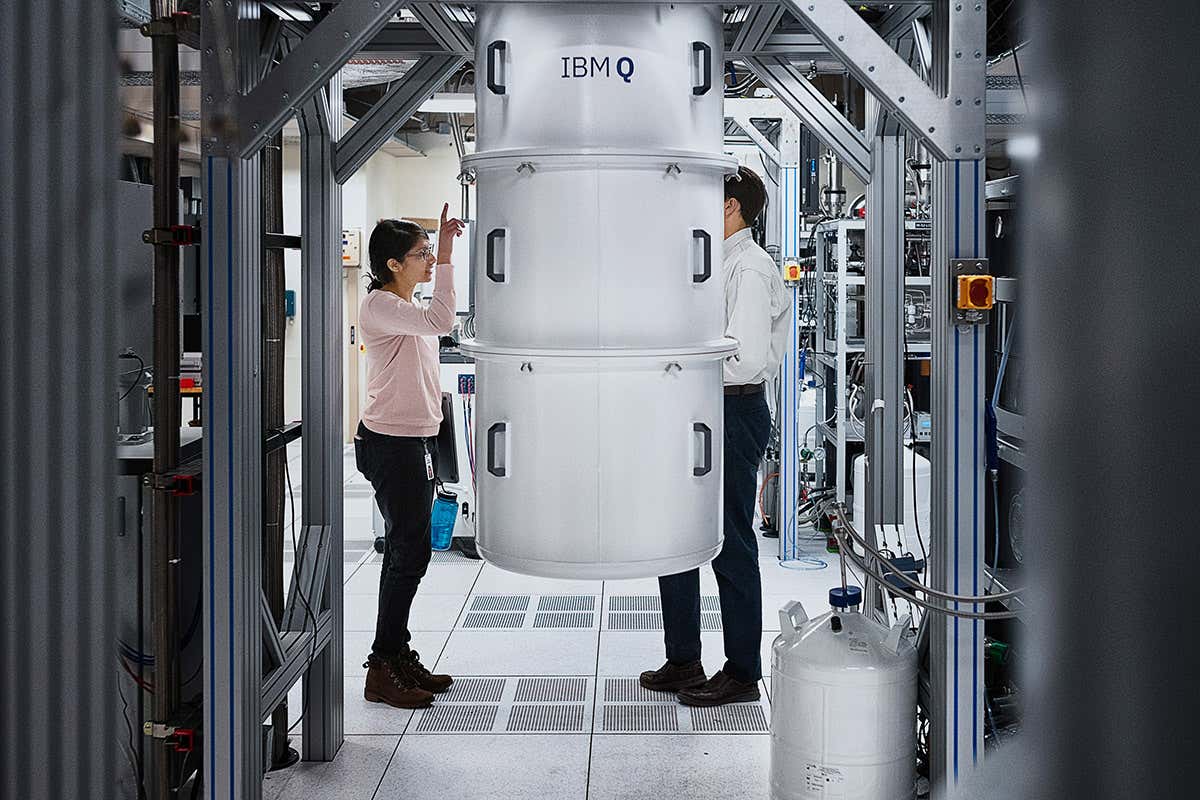
In summary, quantum computing stands at the forefront of a technological revolution, offering unprecedented capabilities and the potential to address some of the most pressing global challenges. As we navigate its advancements and limitations, the future looks bright for this cutting-edge field, encouraging further exploration and innovation.
Questions and Answers
What is a qubit?
A qubit is the basic unit of quantum information, analogous to a classical bit, but it can exist in multiple states simultaneously due to superposition.
How does quantum computing differ from classical computing?
Quantum computing leverages the principles of quantum mechanics, allowing it to perform complex calculations at speeds unattainable by classical computers, particularly for specific problems.
What industries can benefit from quantum computing?
Industries such as healthcare, finance, logistics, and cybersecurity can benefit significantly through enhanced problem-solving capabilities and optimization processes.
What are the main challenges facing quantum computing today?
Key challenges include qubit stability, error correction, and the scalability of current quantum algorithms, which need to be addressed for effective implementation.
How can individuals get involved in quantum computing?
Individuals can explore online courses, workshops, and academic programs focused on quantum computing to gain knowledge and skills relevant to this emerging field.