Graphics Processing Unit (GPU) technology is at the heart of modern computing, playing a vital role in enhancing performance across a wide range of applications. From gaming to video rendering and artificial intelligence, GPUs are designed to handle complex calculations and massive data sets with remarkable efficiency. Their ability to process many tasks simultaneously sets them apart from traditional CPUs, making them essential for achieving high-quality graphics and real-time performance.
The evolution of GPUs has been nothing short of extraordinary, reflecting rapid advancements in technology and increasing demands from users. We will explore the fascinating milestones in GPU development, the major players in the industry, and the shift from 2D to 3D graphics that has shaped their design. By understanding the underlying architecture and capabilities of GPUs, we can appreciate how they have transformed visual experiences and continue to push the boundaries of what is possible in computing.
The role of Graphics Processing Units in modern computing is essential for various applications.
Graphics Processing Units (GPUs) have become indispensable components of modern computing, significantly enhancing performance across a variety of applications. Their architecture allows for efficient handling of complex computations, making them vital in fields such as gaming, video rendering, and artificial intelligence (AI). The parallel processing capabilities inherent in GPUs enable them to tackle multiple tasks simultaneously, which is a game changer in scenarios requiring intense computational power.
The performance enhancement provided by GPUs is particularly noticeable in high-demand applications. In gaming, for instance, GPUs render complex graphics and visual effects in real-time, allowing for immersive experiences with high frame rates and stunning detail. Video rendering benefits similarly; GPUs can process video files much faster than CPUs, drastically reducing the time required to edit, encode, or transcode videos. This efficiency is crucial for content creators and professionals who rely on quick turnaround times without sacrificing quality. Moreover, in the realm of artificial intelligence, GPUs accelerate machine learning tasks by processing large datasets through parallel calculations. This capability allows for faster model training and inference, which is essential in applications like image recognition, natural language processing, and autonomous systems.
Differences in Processing Capabilities
Understanding the differences between CPUs and GPUs is key to appreciating their roles in computing. CPUs are designed for general-purpose tasks and excel at sequential processing. They have fewer cores (typically between 4 to 16) that are optimized for single-threaded performance, making them ideal for tasks requiring strong single-core performance. In contrast, GPUs consist of thousands of smaller cores designed for parallel processing, which allows them to manage a vast number of threads simultaneously.
To illustrate the significance of GPUs in various applications, consider the following examples:
- Gaming: Modern games utilize GPUs to deliver lifelike graphics, real-time ray tracing, and advanced effects like dynamic shadows and reflections, providing players with an incredibly immersive experience.
- Video Editing: Software like Adobe Premiere Pro uses GPU acceleration to enable features such as real-time playback and rendering, significantly speeding up the production workflow for videographers.
- Deep Learning: Frameworks like TensorFlow and PyTorch leverage GPUs to execute complex neural network computations efficiently, making them essential for AI research and development.
“The parallel processing capabilities of GPUs enable them to outperform CPUs in tasks that require handling multiple datasets simultaneously.”
This robust performance across various applications underscores the critical role that GPUs play in modern computing, shaping the future of technology across different sectors.
The evolution of Graphics Processing Units from their inception to current advancements is fascinating.
The development of Graphics Processing Units (GPUs) has significantly transformed the realm of computing and digital graphics. Initially designed to handle simple 2D graphics, GPUs have undergone remarkable changes, evolving into powerful processors capable of rendering complex 3D graphics and performing advanced computations for various applications. This timeline highlights the key milestones that shaped the GPU landscape.
Key Milestones in GPU Development
The trajectory of GPU technology has been marked by significant advancements that have not only improved graphics rendering but have also expanded their application beyond gaming to include fields such as artificial intelligence and data analytics. Below is a timeline of critical events that chart the evolution of GPUs:
- 1980s: The emergence of dedicated graphics hardware began with the introduction of 2D graphics accelerators. Companies like IBM and Commodore started to include basic graphics capabilities in their computers.
- 1995: NVIDIA was founded, marking the beginning of a significant player in the GPU market. Their first product, the NV1, was released in 1995, although not a commercial success.
- 1999: The launch of the NVIDIA GeForce 256, often dubbed the first true GPU, marked a turning point in graphics technology, introducing hardware T&L (transform and lighting) capabilities.
- 2001: ATI Technologies released the Radeon 8500, a major competitor to NVIDIA’s GeForce series, featuring advanced pixel shaders for enhanced graphics effects.
- 2006: NVIDIA introduced the CUDA architecture, which allowed developers to leverage the GPU for general-purpose computing, expanding the utility of GPUs beyond graphics.
- 2010: The advent of DirectX 11 by Microsoft promoted the use of tessellation, enabling more detailed 3D graphics. GPUs began to integrate more advanced features for better realism in games.
- 2020: The launch of NVIDIA’s Ampere architecture brought significant performance increases and improvements in ray tracing capabilities, making real-time rendering of complex light interactions possible.
- 2023: Ongoing advancements in AI and machine learning have led to the development of specialized GPUs designed for deep learning tasks, showing the versatility and ever-expanding scope of GPU applications.
Major Companies in GPU Technology
Several companies have played pivotal roles in the evolution of GPUs, driving innovation and competition in this sector. Their contributions have shaped the direction of graphics technology:
- NVIDIA: A leader in the GPU market known for its GeForce and Quadro series, NVIDIA has pioneered advancements in GPU architecture and AI integration.
- AMD (formerly ATI): AMD has been a key competitor in the GPU market, known for its Radeon graphics cards and contributions to both gaming and professional graphics.
- Intel: In recent years, Intel has made strides in integrated graphics solutions and has entered the discrete GPU market with its Intel Arc series.
- Matrox: Although less prominent today, Matrox was a pioneer in early graphics cards and specialized in multi-display setups for professional uses.
- Qualcomm: Known for mobile GPUs, Qualcomm’s Adreno series has brought advanced graphics capabilities to smartphones and tablets.
Transition from 2D to 3D Graphics and its Influence on GPU Design
The shift from 2D to 3D graphics has profoundly influenced GPU design, pushing manufacturers to innovate and enhance their products. Early GPUs were primarily focused on rendering 2D images, which required relatively simple processing capabilities. However, as the demand for 3D graphics surged, especially in gaming and simulation, GPU designs evolved to accommodate complex rendering techniques.
The introduction of 3D graphics necessitated the incorporation of features such as texture mapping, shading, and lighting effects. This led to the development of programmable shaders, allowing for more intricate visual effects and realism in graphics. The ability to handle parallel processing became essential, as modern games and applications required GPUs to perform numerous calculations simultaneously to render detailed environments.
“The evolution from 2D to 3D graphics not only revolutionized gaming but also paved the way for advancements in virtual reality and augmented reality applications.”
Additionally, the focus on real-time rendering and the ability to simulate realistic light interactions significantly impacted how GPUs are designed today. The introduction of technologies like ray tracing has further enhanced visual fidelity, pushing GPUs to become more powerful and efficient.
With ongoing advancements in GPU technology, the potential applications are continuously expanding, influencing fields such as AI, machine learning, and scientific simulations, which were once thought to be beyond the scope of traditional graphics processing.
The technology behind Graphics Processing Units is complex and intriguing to explore.
The architecture and design of Graphics Processing Units (GPUs) represent a fascinating field of technology that blends engineering precision with cutting-edge computational power. GPUs are engineered to handle complex graphical tasks, particularly in rendering images and processing vast amounts of data. Their unique structure allows them to excel in parallel processing, making them essential for applications ranging from gaming to scientific simulations.
Architecture of GPUs and the Role of Cores and Memory
The architecture of a GPU is significantly different from that of a traditional CPU. At the heart of a GPU lies its array of cores, which are designed to perform parallel processing. Unlike CPUs, which typically have a small number of powerful cores optimized for sequential tasks, GPUs can have hundreds or even thousands of smaller cores. This design enables GPUs to efficiently process multiple tasks simultaneously, making them ideal for rendering graphics and performing calculations in real time.
The memory architecture of a GPU is equally important. Most modern GPUs utilize high-bandwidth memory (HBM) or GDDR (Graphics Double Data Rate) memory, which provides faster data access speeds compared to standard memory used in CPUs. This rapid access is crucial for handling the massive data throughput required in graphics rendering and gaming. The combination of numerous cores and high-speed memory makes GPUs unparalleled in their ability to manage and manipulate large sets of visual data.
“GPUs are purpose-built to handle multiple computations simultaneously, allowing them to execute thousands of threads at once.”
Image Rendering Process and Data Throughput Management
Rendering images is a multi-step process that involves transforming 3D models and scenes into 2D images that can be displayed on a screen. This process begins with geometry processing, where the GPU calculates the shapes and positions of objects in a scene. Following this, the GPU performs shading, applying colors, textures, and lighting effects to create realistic visuals.
During the rendering process, GPUs manage immense data throughput. They receive information from various sources, such as textures, lighting information, and object data, and must process this data quickly to maintain high frame rates. The parallel architecture of the GPU allows it to handle these large volumes of data efficiently, utilizing techniques such as rasterization and fragment shading to produce the final image.
A key aspect of GPU performance is its ability to scale with increasing complexity. As games and applications become more graphically intensive, GPUs are designed to deliver improved performance without compromising on quality, thanks to their architectural advancements and memory technologies.
Comparative Table of GPU Specifications and Capabilities
To better understand the capabilities of different GPUs, the following table compares several popular models, showcasing their specifications and unique features. This comparison illustrates how varying architectures cater to different performance needs, from gaming to professional graphics work.
| GPU Model | CUDA Cores | Memory Type | Memory Size | Base Clock Speed |
|---|---|---|---|---|
| NVIDIA GeForce RTX 3090 | 10496 | GDDR6X | 24 GB | 1.40 GHz |
| AMD Radeon RX 6900 XT | 5120 | GDDR6 | 16 GB | 1.82 GHz |
| NVIDIA GeForce RTX 3080 | 8704 | GDDR6X | 10 GB | 1.44 GHz |
| AMD Radeon RX 6800 XT | 4608 | GDDR6 | 16 GB | 2.01 GHz |
The specifications listed in the table highlight the differences in core counts, memory capabilities, and clock speeds among various GPU models, providing insight into their performance in different applications, from gaming to complex computational tasks in professional environments.
The impact of Graphics Processing Units on gaming experiences cannot be overstated.

The evolution of Graphics Processing Units (GPUs) has had a monumental impact on the gaming landscape, significantly enhancing the overall gaming experience. As technology progresses, GPUs are not only becoming more powerful but also more integral to the development of complex and visually stunning games. This transformation has led to a level of realism and immersion that was previously unattainable, allowing gamers to engage with their favorite titles in dynamic and visually arresting ways.
Advancements in GPU technology have paved the way for lifelike graphics, where intricate details and vibrant colors transform the virtual world. Modern GPUs support advanced rendering techniques, such as ray tracing, which simulates how light interacts with surfaces to create realistic shadows and reflections. This level of detail brings environments to life, whether it’s the flickering of firelight in a dark dungeon or the shimmering surface of a water body. Additionally, techniques like tessellation allow for smoother surfaces and more detailed textures, enhancing the realism of character models and landscapes alike.
Comparison of Gaming on Integrated Graphics versus Dedicated GPUs
The differentiation between integrated graphics and dedicated GPUs highlights the profound impact these technologies have on gaming performance and experience. Integrated graphics, which are built into the CPU, offer basic graphic capabilities suitable for casual gaming and non-demanding applications. However, they fall short when it comes to handling the latest games that require robust performance.
Dedicated GPUs, on the other hand, are standalone units designed specifically for processing graphics. They provide significantly higher performance capabilities, allowing gamers to experience higher resolutions, smoother frame rates, and enhanced visual effects. The difference in experience can be illustrated as follows:
- Performance: Dedicated GPUs can handle demanding titles at higher settings, while integrated graphics may struggle with frame rates and graphical fidelity.
- Graphics Quality: With dedicated GPUs, gamers enjoy advanced graphical features like ultra-high definition textures, shadows, and post-processing effects that integrated graphics simply cannot deliver.
- Future-Proofing: Dedicated GPUs offer room for upgrades and better performance in future games, while integrated graphics can quickly become obsolete as gaming technology evolves.
Role of GPUs in Enabling VR and AR Technologies
Virtual Reality (VR) and Augmented Reality (AR) represent the frontier of immersive gaming experiences, and the GPU plays a critical role in bringing these technologies to life. VR creates fully immersive environments that require rapid rendering of high-resolution images to maintain fluidity in user interaction. A powerful GPU is essential in generating the graphics necessary to create a seamless experience, ensuring that the user feels as though they are genuinely within the game world.
In AR, GPUs are equally important as they enable the integration of digital elements into the real world. This technology relies on real-time image processing to overlay graphics on live video feeds. For instance, a game that allows players to see and interact with digital characters in their actual environment requires a capable GPU to render these graphics swiftly and accurately.
“The performance of the GPU directly influences the quality of the VR and AR experiences, with higher frame rates and resolutions leading to a more convincing and enjoyable immersion.”
Overall, the impact of GPUs on gaming experiences is transformative, shaping not just how games look, but how they feel and engage players. As technology continues to advance, the role of GPUs in driving innovation in gaming remains paramount.
The challenges faced by Graphics Processing Units in the context of power consumption and heat management are significant.
As Graphics Processing Units (GPUs) continue to evolve, the demand for higher performance and advanced features results in notable challenges, particularly concerning power consumption and heat management. With gaming, artificial intelligence, and data processing applications requiring more computational power, the balance between performance and thermal efficiency becomes increasingly critical. Overheating can lead to performance throttling, affecting overall system stability and user experience.
Common issues relating to GPU overheating and performance throttling
Overheating is a prevalent issue with modern GPUs, resulting in decreased efficiency and performance. When a GPU exceeds its designated temperature threshold, it initiates thermal throttling to protect itself from damage. This phenomenon can severely impact frame rates and overall performance during high-demand tasks, such as gaming or rendering.
Key issues related to GPU overheating include:
- High Power Demand: Modern GPUs often consume significant power, especially during intensive tasks, leading to heat generation.
- Inadequate Cooling Solutions: Some systems may not have sufficient cooling mechanisms to dissipate heat effectively, resulting in elevated temperatures.
- Dust Accumulation: Dust can obstruct airflow in cooling systems, reducing their effectiveness and causing heat buildup.
- Overclocking: While overclocking can enhance performance, it also increases power consumption and heat production, amplifying overheating risks.
Methods and technologies used to mitigate heat in modern GPUs
To tackle the challenges of heat management, various methods and technologies have been developed and integrated into modern GPUs. These advancements are crucial for maintaining optimal performance without compromising safety or efficiency.
Key technologies include:
- Advanced Cooling Solutions: Technologies such as vapor chamber cooling and liquid cooling systems offer improved thermal management compared to traditional air cooling methods.
- Thermal Pads and Paste: High-quality thermal interface materials enhance the heat transfer from the GPU die to the heatsink, ensuring better performance.
- Dynamic Thermal Management: Software solutions allow for real-time monitoring and adjustment of clock speeds and power consumption based on temperature readings.
- Improved Fan Designs: Modern GPU fans often feature blades optimized for airflow, reducing noise while effectively cooling the components.
Balance between performance and power efficiency in GPU design
The design of GPUs increasingly emphasizes the dual priorities of performance and power efficiency. Achieving the right balance is essential not only for maximizing computational power but also for minimizing energy consumption and heat production.
The following points illustrate this balance:
- Architecture Efficiency: New architectures, such as NVIDIA’s Ampere and AMD’s RDNA, focus on improving instructions per watt, providing more processing power for less energy.
- Adaptive Power Management: Technologies like NVIDIA’s DLSS (Deep Learning Super Sampling) allow GPUs to render images at lower resolutions, reducing the power load while maintaining visual fidelity.
- Process Node Shrinking: Manufacturing processes have progressed to smaller nodes (e.g., 7nm, 5nm), which significantly reduce power consumption and heat output while increasing transistor density.
- Performance Scaling: Graphics cards can dynamically adjust their performance based on workload demands, ensuring efficient energy usage during less intensive tasks.
{The future of Graphics Processing Units is promising with rapid technological advancements on the horizon.}
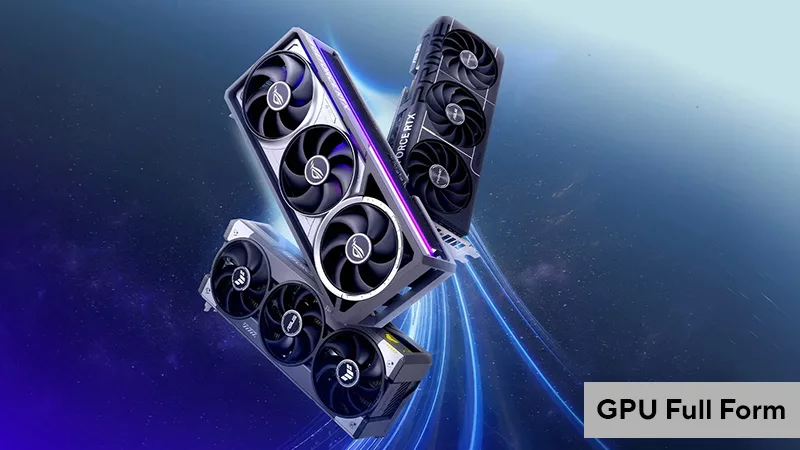
The landscape of Graphics Processing Units (GPUs) is swiftly evolving, driven by technological innovations that promise to reshape various sectors. As we look ahead, the integration of advanced features like ray tracing and artificial intelligence (AI) enhancements is set to redefine not only gaming but also numerous industries reliant on high-level graphics processing and computation.
Among the notable trends shaping the future of GPUs is the incorporation of ray tracing technology. This technique simulates the way light interacts with objects in a virtual environment, resulting in highly realistic images. The ability of GPUs to handle such complex calculations in real-time opens up possibilities for more immersive gaming experiences and enhanced visual fidelity in various applications, including architectural visualization and film production.
{Emerging trends in GPU technology}
The advancements in GPU technology are not limited to graphics rendering. Machine learning enhancements are becoming an integral aspect of GPU development, allowing for faster and more efficient processing of vast data sets. This AI integration enables GPUs to perform tasks such as image recognition and natural language processing with remarkable speed and accuracy. As machine learning models become more sophisticated, the demand for GPUs capable of supporting these technologies is expected to rise dramatically.
The anticipated evolution of GPUs over the next decade includes improvements in performance and energy efficiency. With companies like NVIDIA and AMD continually innovating, we can expect GPUs to become even more powerful, enabling complex computations in fields like scientific research, data analytics, and beyond. Additionally, the convergence of GPUs with other technologies like quantum computing may lead to revolutionary breakthroughs in data processing capabilities.
Potential applications of GPUs span a wide range of industries, showcasing their versatility and importance in modern technology. The following are key areas where GPUs are likely to make a significant impact:
- Healthcare: GPUs can facilitate faster medical imaging analysis, improve the accuracy of diagnostic tools, and support personalized medicine through advanced data analysis.
- Automotive: In self-driving cars, GPUs process data from sensors and cameras in real-time, enhancing vehicle safety and navigation systems.
- Smart Cities: GPUs enable the management of large datasets from IoT devices, optimizing traffic flow, energy consumption, and public safety systems.
The future of GPUs is not merely about enhancing graphics; it encompasses transformative applications that will influence how we interact with technology across various domains. The continuous advancements in this field promise a future where GPUs are integral to groundbreaking developments across numerous industries.
Ultimate Conclusion
In summary, the Graphics Processing Unit (GPU) has become an indispensable component of modern computing, driving innovation and enhancing user experiences across various fields. The advancements in GPU technology not only improve gaming graphics and performance but also pave the way for new applications in emerging sectors like healthcare and smart cities. As we look to the future, the continuous evolution of GPUs promises exciting possibilities that will further revolutionize how we interact with technology.
General Inquiries
What is the main difference between a CPU and a GPU?
The main difference lies in their architecture; CPUs are optimized for sequential processing and general-purpose tasks, while GPUs are designed for parallel processing, making them ideal for handling multiple operations simultaneously.
Can a GPU be used for non-gaming applications?
Absolutely! GPUs are increasingly used for various applications such as video editing, machine learning, and scientific simulations, thanks to their high processing power.
How do GPUs impact artificial intelligence?
GPUs accelerate AI tasks by efficiently processing large volumes of data and performing complex calculations, which is essential for training deep learning models.
Are integrated GPUs better than dedicated GPUs?
While integrated GPUs can handle basic tasks and light gaming, dedicated GPUs offer significantly better performance for demanding applications and high-quality graphics.
What is ray tracing and why is it important?
Ray tracing is a rendering technique that simulates how light interacts with objects to produce realistic images. It enhances visual fidelity in video games and graphics, representing a major advancement in GPU technology.