Database Management System (DBMS) stands as a vital cornerstone in the realm of data management, making it essential for organizations looking to optimize their data handling capabilities. By offering a structured way to store, retrieve, and manage data, DBMS not only enhances data integrity and security but also empowers users to make informed decisions based on accurate information. Throughout industries, various types of DBMS, including relational, NoSQL, and object-oriented systems, are employed to suit diverse data needs, enriching the way businesses operate and compete in the modern market.
As we delve deeper into the functionalities and significance of DBMS, we will uncover the architectural frameworks that support these systems, the key components that enhance user experiences, and the emerging trends that are redefining the landscape of data management. Understanding these aspects is crucial for anyone looking to navigate the complex world of databases effectively, ensuring their organization remains competitive and efficient in handling data-driven tasks.
The Definition and Functionality of a Database Management System
A Database Management System (DBMS) is a software application that enables users to create, manage, and interact with databases. It acts as an intermediary between users and the database, allowing for efficient data storage, retrieval, and manipulation. The core functionality of a DBMS includes data storage and organization, efficient query processing, data integrity, security, and concurrent access management. The significance of a DBMS lies in its ability to streamline data handling, making it essential for businesses and organizations in decision-making and operational processes.
One of the primary functionalities of a DBMS is the ability to perform data operations such as insertion, deletion, updating, and querying. By utilizing a structured query language (SQL), users can interact with the data stored in the database. The DBMS also ensures data integrity through constraints and rules that maintain accuracy and consistency. Furthermore, it provides robust security features that safeguard sensitive information from unauthorized access, ensuring that only authorized personnel can perform specific operations.
Types of Database Management Systems
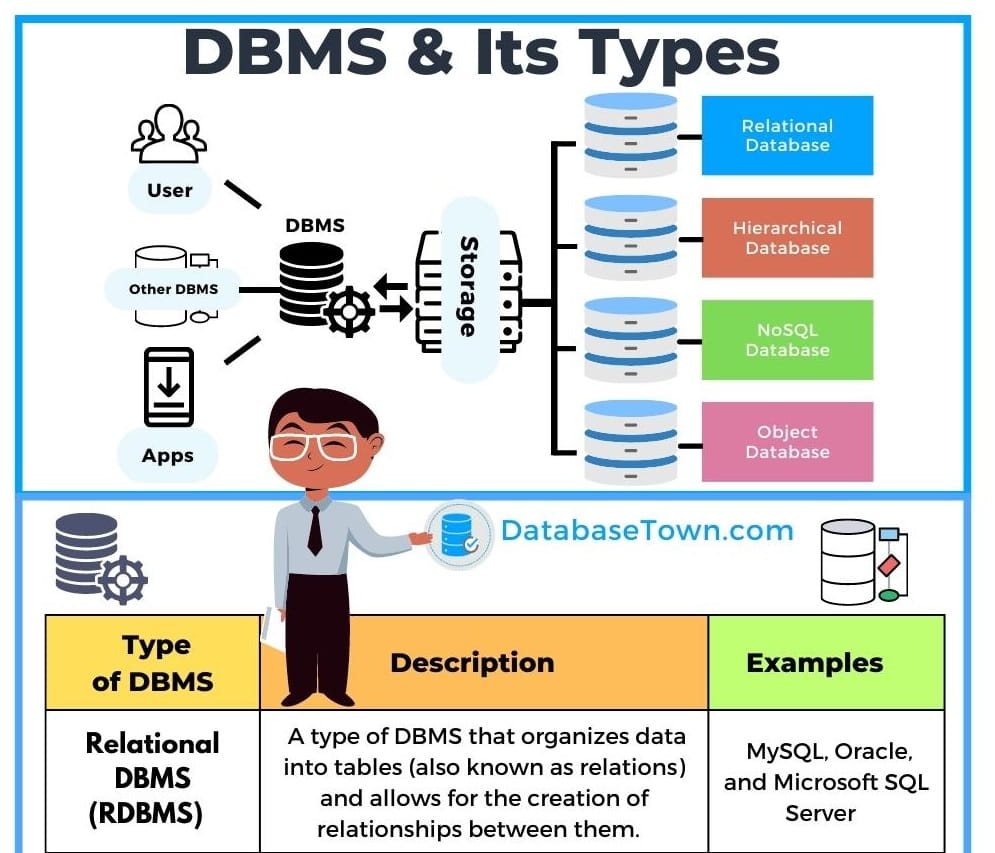
DBMS can be categorized into various types based on their architecture and the way they handle data. Understanding these types is crucial for selecting the right DBMS for specific use cases. The following sections detail the primary types of DBMS and their unique features.
- Hierarchical DBMS: This type organizes data in a tree-like structure, where each record has a single parent. It’s efficient for one-to-many relationships but lacks flexibility in complex data relationships.
- Network DBMS: Similar to hierarchical DBMS, but allows more complex relationships with many-to-many connections. It uses a graph structure to represent data, providing more flexibility than hierarchical models.
- Relational DBMS (RDBMS): Utilizes tables to store data and allows relationships between tables through foreign keys. RDBMS is the most widely used type due to its ease of use and powerful querying capabilities.
- Object-oriented DBMS: This type integrates object-oriented programming with database technology, allowing data to be represented as objects. It’s particularly useful for applications requiring complex data structures.
- NoSQL DBMS: Designed to handle unstructured data and large volumes of data, NoSQL databases offer high scalability and flexibility. They include key-value stores, document databases, and graph databases.
The choice of DBMS greatly depends on the specific requirements of the industry and application. For instance, relational databases like MySQL and PostgreSQL are widely used in web applications, while NoSQL databases like MongoDB and Cassandra are popular in big data scenarios.
In various industries, several DBMS software options are commonly utilized. For example, Oracle Database is favored in enterprise environments for its robust features and scalability. Microsoft SQL Server is widely used in corporate applications, while SQLite is favored in mobile and embedded systems due to its lightweight nature. Each of these systems offers unique strengths tailored to the needs of different users and applications.
The Importance of DBMS in Data Management
In today’s digital landscape, organizations are inundated with vast amounts of data. A Database Management System (DBMS) plays a pivotal role in ensuring that this data is efficiently stored, retrieved, and managed. Implementing a DBMS within an organization not only streamlines data handling but also significantly enhances data integrity, ensuring that the information remains accurate and reliable over time.
The significance of a DBMS extends beyond mere data storage; it is integral to maintaining data integrity, which encompasses accuracy, consistency, and reliability. Through the use of constraints, transaction management, and data validation techniques, a DBMS ensures that data remains trustworthy. This is particularly crucial in sectors such as finance and healthcare, where erroneous data can lead to severe consequences, including financial loss or compromised patient safety. Furthermore, a DBMS allows organizations to implement security measures that protect sensitive data from unauthorized access, thereby fostering a culture of trust and accountability.
Role of DBMS in Data Recovery and Backup Processes
A robust DBMS provides essential functionalities that safeguard organizational data through effective recovery and backup processes. Organizations rely on these features to prevent data loss due to hardware failures, software issues, or human errors.
To illustrate the importance of backup and recovery features within a DBMS, consider the following scenarios:
- Accidental Deletion: In a company without a DBMS, an employee accidentally deletes critical customer records. Recovery can be challenging, often resulting in permanent data loss. In contrast, a DBMS allows for easy restoration of deleted data from backups, minimizing disruption.
- System Crash: Imagine an organization experiencing a system crash that results in data corruption. A DBMS with built-in recovery mechanisms can restore the database to its last consistent state, ensuring business continuity and protecting valuable information.
- Natural Disasters: For businesses located in areas prone to natural disasters, a DBMS can facilitate remote backups, ensuring that data is stored securely off-site. This strategy mitigates the risk of losing vital information during catastrophic events.
The ability to efficiently recover and back up data protects organizations from the ramifications of data loss and ensures that they can maintain operations even in adverse situations.
“A DBMS not only organizes data but also fortifies it against potential threats, ensuring longevity and reliability.”
In summary, the implementation of a DBMS within organizations is fundamental for effective data management. It enhances data integrity, facilitates secure backup and recovery processes, and ultimately supports better decision-making through reliable information. Without a DBMS, organizations may face significant risks that can hinder their operations and damage their reputation.
The Architectural Framework of Database Management Systems
The architectural framework of a Database Management System (DBMS) is essential in understanding how databases function efficiently and effectively. This framework comprises three distinct levels: internal, conceptual, and external. Each level plays a critical role in managing data, ensuring data integrity, and providing users with seamless access to information.
The three levels of database architecture work together to create a robust system that meets the varied needs of users while maintaining the underlying complexity of data storage and management. The internal level deals with the physical storage of data, the conceptual level defines what data is stored and the relationships among those data, and the external level provides different views of the data for different users. This layered approach allows for data abstraction, security, and independence, making it easier to manage large datasets.
Three Levels of Database Architecture
Understanding the characteristics of each architectural level is crucial for database professionals and users alike. The following table provides a comparison of the three levels of database architecture:
| Architectural Level | Definition | Key Characteristics |
|---|---|---|
| Internal Level | The lowest level of data abstraction, which includes the physical storage of data on storage devices. |
|
| Conceptual Level | The middle level that describes what data is stored in the database and the relationships among data entities. |
|
| External Level | The highest level of data abstraction, providing various user-specific views of the data. |
|
In the internal level, physical data storage mechanisms are critical for the overall efficiency of the system. The conceptual level abstracts these details, presenting a unified view of the data and its structure. This abstraction allows for easier changes in the data structure without affecting how users interact with the database. The external level further enhances user experience by enabling different views tailored to specific requirements, thereby simplifying data access and ensuring security.
Through these interconnected levels, DBMS provides a cohesive experience that balances performance, usability, and security, reflecting the underlying principles of data management while catering to diverse user needs.
Key Components and Features of Modern DBMS
Modern Database Management Systems (DBMS) are pivotal in managing data effectively and efficiently. They serve as the backbone for applications across various industries, providing essential functionalities that ensure data integrity, accessibility, and security. Understanding the key components and features of a modern DBMS allows users to leverage its capabilities fully, enhancing the overall data management experience.
Critical Components of a Modern DBMS
A modern DBMS comprises several critical components that work together to manage databases adeptly. The primary components include:
- Database Engine: The database engine is the core service for accessing and processing the database. It handles data storage, retrieval, and execution of queries, ensuring that all operations are performed efficiently.
- Database Schema: This defines the logical structure of the database. It includes the tables, fields, relationships, views, and indexes that organize the data. A well-designed schema is crucial for optimizing data access and integrity.
- User Interface: A user-friendly interface allows users to interact with the database with ease. Modern DBMS offer graphical user interfaces (GUIs) that simplify complex tasks, making it easier for non-technical users to manage data.
Features Enhancing User Experience and Data Management
Several unique features in modern DBMS significantly enhance user experience and streamline data management processes. These features play a vital role in ensuring data consistency and security.
- Transaction Management: Transaction management ensures that database operations are completed successfully and maintains data integrity even in the event of failures. It employs mechanisms such as ACID (Atomicity, Consistency, Isolation, Durability) properties to safeguard against incomplete transactions.
- Data Security: Advanced data security features protect sensitive information from unauthorized access. Techniques such as encryption, user authentication, and role-based access control (RBAC) ensure that only authorized users can access or modify data.
Advanced Functionalities: Indexing and Query Optimization
Advanced functionalities like indexing and query optimization are crucial for improving the performance of a DBMS. These features help in managing large volumes of data effectively.
- Indexing: Indexing creates a data structure that improves the speed of data retrieval operations on a database. By maintaining a separate structure that points to the actual data locations, indexing minimizes the time taken to execute queries, significantly speeding up search operations.
- Query Optimization: Query optimization is the process of analyzing and rewriting queries to improve their execution efficiency. The DBMS evaluates multiple execution plans and selects the most efficient one, which reduces resource consumption and enhances performance.
“A well-optimized database can handle thousands of queries per second while maintaining data integrity and speed.”
These components and features collectively contribute to the robust functionality of modern DBMS, enabling organizations to manage their data effectively and securely.
Comparison of Different Types of Database Management Systems
Database management systems (DBMS) are essential tools for storing, retrieving, and managing data. They come in various types, each designed to handle different requirements and use cases. Understanding the distinctions between relational, NoSQL, and object-oriented DBMS can greatly influence the choice of technology for specific applications.
Relational, NoSQL, and object-oriented DBMS possess unique structures and functionalities that cater to various data management needs. Relational DBMS, based on a table structure, emphasize data integrity and relationships through the use of SQL as the query language. NoSQL DBMS diverge from traditional structures, accommodating unstructured and semi-structured data with flexibility, scalability, and performance. Object-oriented DBMS integrate object-oriented programming principles, allowing data to be represented as objects, which is beneficial for applications requiring complex data representations.
Comparison of Relational, NoSQL, and Object-Oriented DBMS
The following key aspects highlight the differences among these database types, helping organizations select the right DBMS according to their specific needs.
– Structure
– Relational DBMS: Utilizes tables with rows and columns, emphasizing structured data and predefined schemas.
– NoSQL DBMS: Employs various data models (document, key-value, graph, column-family) allowing for flexible structures without a strict schema.
– Object-Oriented DBMS: Represents data as objects similar to programming languages, supporting complex data types and relationships.
– Functionality
– Relational DBMS: Provides ACID (Atomicity, Consistency, Isolation, Durability) compliance, ensuring reliable transactions and data integrity.
– NoSQL DBMS: Offers high scalability and performance, enabling horizontal scaling; it may sacrifice some ACID properties for availability and speed.
– Object-Oriented DBMS: Supports complex data relationships and hierarchies, making it suitable for applications requiring object manipulation.
– Advantages and Disadvantages
– Relational DBMS
– Advantages: Strong data integrity, mature technology, rich SQL capabilities, and extensive support for transactions.
– Disadvantages: Limited scalability for massive datasets, less suitable for unstructured data.
– Use Case: Banking systems where data integrity and complex queries are crucial.
– NoSQL DBMS
– Advantages: High scalability, flexibility, designed to handle large volumes of unstructured data.
– Disadvantages: Lack of standardization, potential for eventual consistency rather than immediate consistency.
– Use Case: Social media platforms that require rapid data retrieval and can handle varied data formats.
– Object-Oriented DBMS
– Advantages: Aligns closely with object-oriented programming, simplifying complex data handling and relationships.
– Disadvantages: Less widespread use compared to relational systems, potential for performance issues with large datasets.
– Use Case: CAD systems for engineering applications where intricate data models are necessary.
- Data Structure: Tables (Relational), Flexible Models (NoSQL), Objects (Object-Oriented).
- Scalability: Limited (Relational), High (NoSQL), Moderate (Object-Oriented).
- Data Integrity: Strong (Relational), Variable (NoSQL), Moderate (Object-Oriented).
- Transaction Support: ACID (Relational), BASE (NoSQL), ACID (Object-Oriented).
- Use Cases: Banking, Social Media, CAD Applications.
The Role of DBMS in Data Security and Privacy
In today’s digital landscape, the security and privacy of data are paramount. With the increasing volume of sensitive information being stored and processed, Database Management Systems (DBMS) play a crucial role in safeguarding this data. By implementing various security measures, DBMS not only protects data from unauthorized access but also ensures that user privacy is maintained. Understanding these mechanisms is essential for organizations that handle sensitive information.
DBMS employs a variety of measures to secure data and ensure user privacy, including encryption, data masking, and user access controls. These methods work together to create a robust security framework that secures data both at rest and in transit. Encryption transforms data into a format that is unreadable without a decryption key, making it significantly more difficult for unauthorized users to access sensitive information. Data masking involves obscuring specific data within a database to protect it while still allowing for analysis. Additionally, user access controls are implemented to restrict who can view or manipulate data based on predefined user roles and permissions.
Access Control and Authentication
Access control and authentication are critical components in the protection of sensitive information within a DBMS. Access control mechanisms define who is allowed to access certain data and what actions they can perform, thereby establishing a framework for data usage. Authentication processes, on the other hand, verify the identity of users attempting to access the system. Together, these measures help to prevent unauthorized access and data breaches.
One common access control model is Role-Based Access Control (RBAC), which assigns permissions based on user roles within an organization. This model simplifies administration by grouping users with similar responsibilities and applying consistent access rights. A well-defined RBAC system ensures that only authorized personnel have access to sensitive data.
Authentication methods have evolved to enhance security further. Multi-factor authentication (MFA) is increasingly being adopted, requiring users to provide multiple forms of verification, such as a password and a biometric scan or a unique one-time code sent to their mobile device. This extra layer of security helps to mitigate risks associated with compromised login credentials.
Compliance Standards
DBMS must also adhere to various compliance standards to safeguard sensitive information effectively. These standards dictate how data should be handled, stored, and protected, ensuring that organizations meet legal and regulatory requirements. Not adhering to these standards can result in severe penalties and damage to an organization’s reputation.
The General Data Protection Regulation (GDPR) is an example of a compliance standard that governs data protection and privacy in the European Union. GDPR mandates strict guidelines for the handling of personal data, including user consent protocols and rights to data access and deletion. Organizations utilizing a DBMS must implement features that facilitate compliance, such as auditing capabilities to track data access and modifications.
Another notable standard is the Health Insurance Portability and Accountability Act (HIPAA), which sets forth regulations for protecting sensitive patient information in the healthcare sector. DBMS systems used in healthcare must be equipped with specific safeguards, such as encryption and access controls, to ensure the confidentiality and integrity of health data.
Implementing robust access controls and adhering to compliance standards are essential for the protection of sensitive information within a DBMS.
Trends and Future Directions in Database Management Systems
The landscape of Database Management Systems (DBMS) is continually evolving, driven by technological advancements and the increasing demand for efficient data handling. Emerging trends such as cloud-based databases and real-time data processing are reshaping how organizations manage data. The focus on scalability, accessibility, and performance is leading to innovative solutions that cater to modern business needs. This segment will delve into these trends and future directions, highlighting their significance and potential impact.
Cloud-Based Databases
Cloud-based databases represent a pivotal shift in DBMS technology, allowing organizations to store and manage data remotely. This model offers several advantages, including cost-effectiveness, scalability, and enhanced collaboration. With cloud solutions, businesses can dynamically adjust their storage needs without significant upfront investment in hardware. Some notable features and benefits include:
- Scalability: Organizations can easily scale resources up or down based on demand, ensuring optimal performance during peak loads.
- Accessibility: Data can be accessed from anywhere, increasing collaboration among teams, especially in remote work environments.
- Reduced Maintenance: Cloud service providers handle system updates and maintenance, allowing businesses to focus on their core operations.
- Enhanced Security: Leading cloud providers implement advanced security measures, often surpassing what many organizations could achieve in-house.
The adoption of cloud-based databases is expected to grow, with predictions suggesting that by 2025, the majority of enterprise data will reside in cloud environments. This shift not only transforms data management practices but also promotes wider adoption of data analytics and machine learning capabilities.
Real-Time Data Processing
Real-time data processing is another significant trend in DBMS, enabling organizations to process and analyze data as it is generated. This capability is crucial for businesses that require timely insights to make informed decisions. The importance of real-time data can be illustrated through various industries:
- Financial Services: Real-time transaction processing helps detect fraud instantly, protecting both consumers and businesses.
- Retail: Businesses can analyze customer behavior in real-time, allowing for personalized marketing strategies and inventory management.
- Healthcare: Real-time data analytics can improve patient care by monitoring health metrics continuously.
The shift towards real-time processing is supported by advancements in technologies such as in-memory databases and streaming data platforms. These innovations facilitate faster data retrieval and analysis, leading to improved operational efficiency and competitive advantage.
Future Innovations Impacting DBMS
As technology progresses, several innovations are poised to influence the future of DBMS functionality. Some anticipated developments include:
- Artificial Intelligence and Machine Learning: Integration of AI can enhance database management through automated optimization and predictive analytics.
- Blockchain Technology: The decentralized nature of blockchain can offer added security and transparency in data management, particularly in sectors like finance and supply chain.
- Serverless Computing: This paradigm shift allows developers to build applications without managing servers, streamlining the deployment and scalability of database applications.
The convergence of these technologies will likely result in more intelligent, autonomous database systems that can self-optimize and adapt to changing business requirements.
Predictions on Technology Advancements
Looking forward, several predictions can be made regarding the evolution of database management systems. For instance, as organizations increasingly adopt hybrid cloud environments, DBMS solutions will need to facilitate seamless integration across on-premises and cloud resources. Additionally, with the rise of big data, databases that can efficiently manage unstructured data will become essential. A relevant example is the growing use of NoSQL databases for handling large volumes of diverse data types.
Furthermore, as data privacy regulations tighten globally, DBMS will need to incorporate robust security features to ensure compliance without sacrificing performance. The integration of advanced encryption techniques and automated data governance can help organizations navigate these challenges effectively.
In conclusion, the trends and future directions of Database Management Systems are indicative of a rapidly changing landscape, influenced by technological advances and the ever-evolving needs of businesses. The emphasis on cloud-based solutions, real-time processing, and emerging innovations is setting the stage for a dynamic future in database management.
Challenges and Solutions in Implementing DBMS
Implementing a Database Management System (DBMS) can significantly enhance an organization’s data handling capabilities, but it is not without its challenges. Organizations often face hurdles that can impede the successful adoption of a DBMS. Understanding these challenges is essential for devising effective solutions that facilitate a smoother transition.
Several common challenges arise when organizations decide to implement a DBMS. Identifying these challenges allows organizations to strategize effectively. The key challenges include resistance to change, data migration issues, and ensuring data security. Maintaining data integrity and achieving user buy-in are also significant hurdles. Addressing these challenges requires a thorough understanding of the organization’s unique needs and a strategic approach to implementation.
Common Challenges in DBMS Implementation
Successfully navigating the complexities of DBMS implementation involves addressing several challenges. Below are some of these challenges along with strategies to overcome them:
- Resistance to Change: Employees may be hesitant to adopt new systems due to comfort with existing processes. To mitigate this, organizations should involve staff early in the implementation process and emphasize the benefits of the new system.
- Data Migration Issues: Transferring existing data to the new DBMS can lead to data loss or corruption. Conducting a thorough data audit before migration and employing data validation processes can minimize these risks.
- Data Security Concerns: Ensuring that the DBMS is secure from breaches is critical. Implementing robust security protocols and regularly updating them can significantly enhance data protection.
- Maintaining Data Integrity: Inconsistencies can arise during data entry or migration. Utilizing automated tools for data cleansing can help maintain accuracy and reliability.
- User Buy-In: Gaining user acceptance is essential for success. Providing ongoing training and support fosters a culture of adaptability and ensures that users understand the benefits of the DBMS.
Importance of Training and Support
Training and support play a crucial role in the successful adoption of a DBMS. Employees must be adequately trained to utilize the system effectively, which can prevent many complications associated with its use. A comprehensive training program can cover system functionalities, data management practices, and security protocols.
Additionally, ongoing support helps address users’ queries and technical issues as they arise. Creating a dedicated helpdesk or utilizing online resources can ensure users feel supported throughout the transition. Organizations that invest in training and support often experience higher user satisfaction and better overall performance from their DBMS.
Successful Case Studies
Several organizations have faced and successfully navigated the challenges of DBMS implementation. One notable example is a large retail chain that transitioned to a centralized DBMS. Initially, they encountered significant resistance from employees worried about job security and changes in workflow. By involving employees in the planning process and conducting comprehensive training sessions, the organization fostered a positive attitude towards the DBMS.
Another example is a healthcare provider that struggled with data migration issues while implementing a new DBMS. They adopted a phased approach to migration, allowing them to backtrack and address any issues with data integrity before full implementation. This method greatly reduced the risks associated with data loss and ensured a smoother transition.
In conclusion, while implementing a DBMS presents various challenges, understanding these hurdles and employing effective strategies can lead to successful outcomes. Through proper training, ongoing support, and learning from real-world examples, organizations can enhance their data management capabilities significantly.
Closing Summary
In conclusion, the exploration of Database Management Systems (DBMS) reveals not only their critical role in managing data but also the necessity of understanding architectural frameworks, features, and security measures to fully leverage their capabilities. As technology continues to evolve, so too will the innovations in DBMS, making it imperative for organizations to stay updated on trends and best practices. By embracing DBMS, businesses can unlock the full potential of their data, ensuring robustness and agility in their operations for years to come.
Frequently Asked Questions
What is a Database Management System (DBMS)?
A DBMS is software that allows users to create, manage, and manipulate databases, ensuring data is organized and accessible.
Why is a DBMS important for businesses?
A DBMS enhances data integrity, facilitates backup and recovery, and simplifies data access, which are crucial for efficient business operations.
What are some examples of popular DBMS software?
Popular DBMS software includes MySQL, Oracle Database, Microsoft SQL Server, and MongoDB, each serving different needs and applications.
How does a DBMS ensure data security?
A DBMS implements access controls, encryption, and authentication measures to protect sensitive data from unauthorized access.
What are the challenges of implementing a DBMS?
Common challenges include high costs, data migration issues, and the need for training; however, these can be mitigated with proper planning and support.
What future trends should we expect in DBMS technology?
Expect trends such as increased cloud integration, real-time data processing, and advancements in artificial intelligence for enhanced data analytics and management.