Brain-Computer Interface (BCI) technology is transforming how we interact with the world around us, bridging the gap between human thoughts and digital systems. This innovative field allows for direct communication between the brain and computers, opening doors to advancements in various sectors such as healthcare, gaming, and communication. As we delve into the intricacies of BCI, we uncover a blend of neuroscience, engineering, and computer science that works harmoniously to enhance human capabilities.
At its core, BCI operates by decoding brain signals and translating them into actionable commands. This involves several key components including sensors that detect neural activity, signal processors that interpret this data, and output devices that carry out the intended actions. Different types of BCIs serve unique purposes, ranging from those that assist individuals with disabilities to those enhancing gaming experiences, showcasing the versatility and potential of this groundbreaking technology.
The fundamental principles of Brain-Computer Interfaces and their operational mechanisms

Brain-Computer Interfaces (BCIs) represent a revolutionary technology that bridges the gap between human cognition and digital systems. They enable direct communication between the brain and external devices, facilitating control and interaction without traditional physical input methods. This technology is particularly significant for individuals with disabilities, providing them with new means of communication and control over environments and devices.
At a basic level, BCIs work by detecting and interpreting brain signals, which are the electrical activities generated by neuronal firing. These signals can be captured through various methods, primarily using electrodes placed on or inside the skull. The signals are then processed and translated into commands that can control devices such as computers, prosthetics, or even wheelchairs. The operation of a BCI system involves several key components: signal acquisition, signal processing, feature extraction, and device output.
Key components of a BCI system
Understanding the core components of a BCI system is essential for grasping how this technology functions. The primary elements include:
- Signal Acquisition: This is the first step in the BCI process, where brain signals are captured using electrodes. These electrodes can be non-invasive, like electroencephalography (EEG) caps, or invasive, such as implanted neural probes. The choice of method affects the quality and clarity of the signals collected.
- Signal Processing: Once the signals are acquired, they undergo a series of processing steps to filter out noise—unwanted electrical activity that can interfere with interpretation. Techniques like digital filtering and amplification are commonly applied here to enhance the quality of the data.
- Feature Extraction: This component involves identifying specific patterns within the processed signals that correlate with particular thoughts or intentions. For example, certain brain wave patterns may indicate movement intention or emotional states, which are crucial for translating brain activity into actionable commands.
- Device Output: The final stage involves translating the interpreted signals into commands that can control external devices. This could range from moving a cursor on a computer screen to operating a robotic limb, thereby fulfilling the primary purpose of the BCI—to allow users to interact with technology using their thoughts.
Different types of BCIs can be categorized based on their invasiveness and application. For instance, non-invasive BCIs, such as those using EEG, are widely used for applications like gaming or mental state monitoring, whereas invasive BCIs, which involve implanted electrodes, are often utilized in clinical settings for rehabilitation of motor functions in paralyzed individuals. Another type is the partially invasive BCI, which uses electrodes placed under the skull but outside the brain, providing a middle ground between the two extremes. Each type of BCI presents unique advantages and challenges, shaping the ways they can be employed in real-world scenarios and influencing ongoing research and development.
The historical evolution of Brain-Computer Interface technology through the years
The development of Brain-Computer Interface (BCI) technology has evolved from rudimentary concepts to intricate systems that enable direct communication between the brain and external devices. This evolution spans several decades, showcasing significant milestones that have shaped the current landscape of BCI applications, from medical uses to assistive technologies.
The journey of BCI technology began in the late 1960s, a time marked by early experiments in neuroscience and computer science. The initial work focused on understanding how brain signals could be interpreted and used to control machines. In 1964, neurophysiologist José Delgado famously showcased the use of electrical stimulation to control animal behavior, laying the groundwork for future BCI research.
Milestones in BCI Development
Several key breakthroughs have propelled BCI technology forward, driven by inventive minds and groundbreaking research. The following timeline highlights important events that have been fundamental to the evolution of BCI:
| Year | Milestone | Significance |
|---|---|---|
| 1964 | José Delgado’s Stimulation of Brain | This demonstration illustrated the concept of influencing behavior through brain stimulation. |
| 1970s | Development of EEG-based Systems | Electroencephalography (EEG) became a primary method for interfacing with brain activity. |
| 1998 | First BCI to Control a Computer Cursor | Researchers at the University of California, Los Angeles enabled a monkey to control a cursor using brain signals. |
| 2004 | First Human BCI Trials | Human trials began, showing the potential for BCI in restoring mobility through neural control. |
| 2013 | BrainGate2 Clinical Trials | Enabled paralyzed patients to control robotic arms and computer cursors using thought. |
| 2020 | Advancements in Non-invasive BCIs | New non-invasive techniques improved accessibility for users without surgical intervention. |
Key figures such as Dr. Miguel Nicolelis, known for his pioneering work on BCI, have pushed the boundaries of what is possible in this field. His work demonstrated the feasibility of controlling robotic limbs with brain signals in non-human primates, paving the way for future innovations. Another important contributor is Dr. John Donoghue, whose work with the BrainGate project has been instrumental in translating BCI research into real-world applications for individuals with disabilities.
Overall, the historical evolution of BCI technology reflects a remarkable journey of discovery and innovation, with contributions from numerous researchers and institutions that have shaped its trajectory. The milestones reached thus far indicate a promising future for BCIs, with the potential for even greater advancements on the horizon.
The various applications of Brain-Computer Interfaces in different fields
Brain-Computer Interfaces (BCIs) are revolutionary technologies that create a direct communication pathway between the brain and external devices. This innovative approach has opened new avenues across various sectors, significantly transforming how we interact with technology. BCIs have the potential to enhance human capabilities and provide solutions to complex problems, particularly in healthcare, gaming, and communication. Below, we explore these distinct areas where BCI technology is making substantial impacts.
Applications in Healthcare
In the healthcare sector, BCIs are primarily utilized for rehabilitation and assistive technologies, enhancing the quality of life for patients with neurological conditions. These interfaces can translate neural signals into actionable commands, allowing individuals with mobility impairments to control prosthetic limbs or communication devices.
- Neurological Rehabilitation: BCIs are used in neurorehabilitation to help stroke patients regain motor functions by providing real-time feedback on brain activities.
- Assistive Devices: People with severe disabilities can control wheelchairs or computer interfaces using thought alone, facilitating independence and improving daily living.
- Brain Monitoring: BCIs are effective in monitoring brain activity for patients with epilepsy, providing alerts for seizure occurrences and enabling timely medical intervention.
Applications in Gaming
The gaming industry has recognized the potential of BCIs to create immersive experiences that enhance user engagement. By harnessing brain activity, games can adapt to players’ emotional states and cognitive loads, leading to a more personalized experience.
- Emotion-Based Gaming: Games can analyze players’ brain signals to adapt challenges based on their stress levels, ensuring a balanced gaming experience.
- Direct Control: Players can control game elements using their thoughts, eliminating traditional controllers and allowing for more intuitive gameplay.
- Neurofeedback Training: Gamers can use BCIs for training purposes, improving focus and cognitive abilities through targeted exercises that respond to their brain activity.
Applications in Communication
BCIs are revolutionizing communication methods, especially for individuals with speech or mobility impairments. These systems enable users to communicate their thoughts seamlessly, enhancing social interaction and expression.
- Thought-to-Speech Systems: BCIs can convert brain signals into speech, allowing non-verbal individuals to express themselves verbally, fostering better social connections.
- Social Media Interaction: Users can engage with social media platforms by simply thinking about their desired posts, breaking down barriers for those with physical disabilities.
- Collaborative Work: BCIs facilitate teamwork by enabling individuals to share ideas and thoughts directly through neural signals, enhancing brainstorming sessions.
Comparative Table of BCI Applications
The following table summarizes the varied applications of BCIs across healthcare, gaming, and communication sectors, showcasing how each field uniquely benefits from this technology.
| Field | Application | Impact |
|---|---|---|
| Healthcare | Neurological Rehabilitation | Improves recovery outcomes for stroke patients. |
| Healthcare | Assistive Devices | Enhances independence for individuals with disabilities. |
| Gaming | Emotion-Based Gaming | Creates a personalized and immersive gaming experience. |
| Gaming | Direct Control | Eliminates the need for traditional controllers. |
| Communication | Thought-to-Speech Systems | Empowers non-verbal individuals to communicate effectively. |
| Communication | Social Media Interaction | Breaks down barriers for social engagement. |
Case Studies Demonstrating BCI Impact
Several real-world applications of BCIs illustrate their profound impact on individuals and society.
One notable case involves a paralyzed man who was able to control a robotic arm using a BCI to feed himself, showcasing the profound potential of neurotechnology in restoring independence.
In another example, a gaming company developed a BCI system that allowed players to control game characters purely through their thoughts. This innovative approach not only elevated the gaming experience but also highlighted the potential of BCIs in enhancing cognitive engagement.
Additionally, research studies have demonstrated that BCIs can significantly improve communication for individuals with Locked-In Syndrome, allowing them to spell words and communicate thoughts by simply imagining movements. This transformative capability underscores the importance of BCIs in bridging gaps in communication and enhancing social interaction.
Overall, the applications of Brain-Computer Interfaces are vast and varied, reflecting their potential to revolutionize multiple fields.
The ethical considerations and societal impacts of Brain-Computer Interfaces
The emergence of Brain-Computer Interface (BCI) technology brings both excitement and apprehension. While the potential applications of BCIs are vast, ethical dilemmas surround their implementation, raising fundamental questions about human autonomy, privacy, and societal norms. As we navigate this innovative landscape, it is essential to critically assess the implications of integrating BCIs into everyday life.
The ethical dilemmas posed by BCI technology are multifaceted. One significant concern is the issue of consent, particularly for individuals who may not fully understand the complexities of BCI technology. For instance, when BCIs are used in medical settings, such as treating neurological disorders, it is crucial to ensure that patients are fully informed of the risks and benefits. A case that highlights this issue is the use of BCIs in patients with severe paralysis, where they may need to rely on caregivers for decisions about their treatment. Furthermore, there are concerns regarding data security and the potential for unauthorized access to individuals’ neural data, which could lead to manipulation or exploitation.
Public perception and societal implications
The integration of BCIs into daily life is met with varying levels of public perception, influenced by cultural beliefs, media portrayals, and individual experiences. While some view BCIs as revolutionary tools for enhancing human capabilities, others express apprehension about the potential for misuse. The idea of machines reading thoughts or influencing behavior evokes fears surrounding personal privacy and agency. This duality in perception can create societal divides, as certain demographics may embrace BCIs for their perceived benefits, while others may reject them on ethical grounds.
To understand the societal implications of BCIs, it is important to consider the potential disparities in access to this technology. If BCIs become widely available, there is a risk that they may create a divide between those who can afford such advancements and those who cannot. This could lead to a new form of inequality, where enhanced cognitive abilities become a privilege rather than a right. Additionally, the normalization of BCIs could alter societal expectations surrounding mental and physical health, leading to pressure on individuals to adopt such technologies to remain competitive or relevant.
Regulations and guidelines governing BCI technology
The development and use of BCI technology are guided by various regulations and ethical guidelines, aimed at ensuring safety and promoting responsible innovation. These frameworks are essential in addressing the ethical concerns associated with BCIs.
The following list Artikels some key regulations and guidelines that influence BCI technology:
- FDA Guidelines: In the United States, the Food and Drug Administration (FDA) oversees the approval of medical devices, including BCIs, ensuring they meet safety and efficacy standards.
- IEEE Standards: The Institute of Electrical and Electronics Engineers (IEEE) has developed standards for the ethical use of BCI technology, focusing on privacy, consent, and data security.
- Declaration of Helsinki: This ethical guideline emphasizes informed consent and the welfare of research participants, applicable to BCI studies involving human subjects.
- European Union General Data Protection Regulation (GDPR): This regulation addresses the protection of personal data, which is crucial for maintaining the privacy of individuals using BCIs.
- National Institutes of Health (NIH) Guidelines: The NIH provides guidelines for research involving neurotechnology, ensuring ethical considerations are prioritized in BCI studies.
These regulations play a vital role in shaping the development and deployment of BCI technologies, addressing ethical concerns and fostering public trust.
Future trends and innovations in Brain-Computer Interface technology
The future of Brain-Computer Interface (BCI) technology promises an array of groundbreaking advancements that could revolutionize how humans interact with machines and each other. Over the next decade, developments in BCI are expected to enhance communication for individuals with disabilities, improve mental health treatments, and even augment human cognitive abilities. This journey into the future will involve intricate fusion with artificial intelligence, neurotechnology, and ethical considerations surrounding privacy and accessibility.
The anticipated advancements in BCI technology will likely focus on increasing the accuracy and efficiency of neural data extraction. Innovations in non-invasive techniques, like advanced EEG and functional near-infrared spectroscopy (fNIRS), will provide higher resolution data with minimal discomfort to users. Research aims to develop brain implants that can interface directly with neurons, enabling real-time data transmission and creating a seamless interaction between the brain and external devices. A crucial advancement will be the integration of AI algorithms that can interpret neural signals with remarkable precision, enabling applications in areas such as prosthetic control and cognitive enhancement.
Potential challenges hindering BCI advancement
While the prospects for BCI are exciting, several challenges could impede progress. These include technical hurdles, ethical dilemmas, and regulatory issues that need addressing to facilitate widespread adoption.
To fully understand the nature of these challenges, it is essential to explore them in detail:
- Technical Limitations: Current BCI systems often struggle with signal noise, limiting their effectiveness. Researchers are working on improving signal processing algorithms and device sensitivity to mitigate these issues.
- Ethical Concerns: Privacy issues arise as BCIs can potentially read thoughts. Establishing guidelines and regulations will be vital to ensure user consent and data security.
- Accessibility: The high cost of BCI technology may limit access for many potential users. Efforts are underway to develop more affordable and commercially viable solutions.
- Long-term Viability: Concerns about the long-term effects of invasive BCIs on the brain’s health need thorough research. Ongoing studies are crucial to ensure the safety of these technologies.
Addressing these challenges will require interdisciplinary collaboration among neuroscientists, ethicists, and engineers to create comprehensive frameworks that support technological growth while respecting individual rights and health.
Visionary ideas for the future of BCIs
Researchers are exploring several visionary ideas that could shape the next generation of BCIs. One compelling concept is the development of “thought-to-text” systems, allowing individuals to communicate by merely thinking their messages, which can significantly enhance communication for people with speech impairments.
Another innovative area involves neurofeedback techniques that could enable users to control devices through thought alone, enhancing the potential applications in gaming, education, and even remote work environments. The idea of “collective brain networks,” where multiple users can connect their BCIs to collaborate on tasks or share thoughts in real-time, is also under consideration.
Additionally, advancements in neurostimulation could open doors to cognitive enhancement, allowing individuals to boost memory and learning capabilities through targeted brain stimulation.
The integration of AI with BCI technology could lead to machines that not only understand our thoughts but also predict our needs based on our neural patterns.
These visionary concepts highlight the potential for BCIs to not only transform communication and interaction but also enrich human cognitive capabilities in unprecedented ways.
The role of Brain-Computer Interfaces in enhancing human capabilities
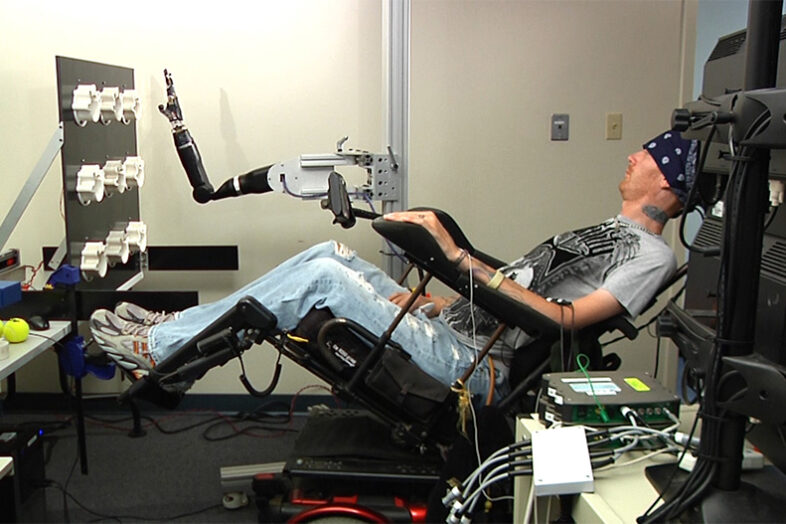
Brain-Computer Interfaces (BCIs) represent a groundbreaking intersection of neuroscience and technology, with the potential to significantly enhance both cognitive and physical abilities in humans. By establishing a direct communication pathway between the brain and external devices, BCIs could enable individuals to perform tasks that were previously considered impossible or to augment existing capabilities beyond natural limits.
BCIs have shown promising results in augmenting human performance, particularly in the fields of cognitive enhancement and motor function recovery. Researchers have conducted various studies and experiments demonstrating that BCIs can facilitate improved learning, memory retention, and even decision-making processes. For instance, a study published in the journal “Nature” detailed how participants using a BCI system were able to enhance their working memory capacity through real-time feedback. Such systems use neurofeedback to help individuals train their brains to optimize cognitive tasks, revealing the profound impact BCIs can have on mental capabilities.
Examples of Successful BCI Experiments
Several notable experiments highlight the transformative potential of BCIs in enhancing human performance. One significant experiment involved individuals with movement disabilities using BCIs to control robotic limbs. In a study conducted by researchers at the University of Pittsburgh, participants were able to operate an advanced prosthetic arm directly with their brain signals, regaining significant independence in their daily lives.
Moreover, a groundbreaking trial at the University of California allowed paralyzed patients to control computer cursors merely through thought. This development not only showcased the capability of BCIs in restoring lost physical functions but also opened avenues for cognitive enhancement, particularly in communication and interaction with digital environments.
Another intriguing study involved the use of BCIs to improve learning capabilities. In a controlled experiment, participants wearing an electroencephalography (EEG) headset were able to enhance their learning efficiency by receiving feedback on their mental focus and engagement levels. This allowed them to adjust their cognitive strategies in real-time, leading to improved information retention.
“BCIs have the potential to redefine human capabilities, merging biological functions with technological enhancements.”
The implications of such advancements in BCI technology extend far beyond individual enhancement. As BCIs become more integrated into daily life, they challenge existing notions of personal identity and societal norms. The idea of enhancing human capabilities raises ethical questions about equality, access, and the definition of what it means to be human. For instance, individuals leveraging BCIs for cognitive enhancement may find themselves with significant advantages in educational or professional settings, potentially leading to disparities based on access to such technologies.
Furthermore, the societal acceptance of augmented individuals may evolve, leading to new norms surrounding personal identity and the expectations placed upon those who choose to enhance their capabilities. The merging of human cognition with technology may also prompt philosophical debates about authenticity and the essence of human experience as we navigate this new frontier of enhancement.
Ending Remarks
In summary, Brain-Computer Interfaces (BCIs) are at the cutting edge of technology, offering not only innovative solutions for various challenges but also prompting significant ethical discussions and societal implications. As we look to the future, the potential of BCIs to enhance human capabilities continues to inspire researchers and developers alike. The dialogue around BCIs will only grow richer as we navigate their benefits and challenges, influencing how we perceive identity, ability, and connection in an increasingly digital world.
Top FAQs
What is a Brain-Computer Interface (BCI)?
A BCI is a technology that enables direct communication between the brain and external devices, translating brain activity into commands for computers or other machines.
Who can benefit from BCIs?
Individuals with physical disabilities, neurological disorders, or those seeking enhanced cognitive or physical abilities can benefit significantly from BCIs.
Are BCIs safe to use?
While BCIs are generally considered safe, ongoing research is necessary to mitigate potential risks and address ethical concerns surrounding their use.
What are some potential future applications of BCIs?
Future applications may include advanced prosthetics controlled by thought, immersive virtual reality experiences, and improved communication tools for those with speech impairments.
How do BCIs impact personal identity?
BCIs challenge traditional notions of identity by merging human cognition with technology, prompting discussions about what it means to be human in an increasingly connected world.