Bandwidth is a vital concept in the realm of networking, playing a crucial role in determining the efficiency and speed of data transmission across networks. As technology continues to evolve, understanding bandwidth becomes increasingly important for both individual users and organizations alike.
This discussion will explore bandwidth from various angles, including its definition, the different types, and its significance in various networking scenarios. We will dive into factors that affect bandwidth performance, measurement techniques, management strategies for optimal use, and how it influences streaming and gaming experiences. Finally, we will touch upon future trends that could reshape how we utilize bandwidth in our daily lives.
Bandwidth as a Concept in Networking
Bandwidth is a crucial concept in networking that refers to the maximum rate of data transfer across a network path. It essentially measures how much data can be transmitted over a connection in a given amount of time, typically expressed in bits per second (bps). Understanding bandwidth is vital for optimizing network performance, as it directly influences the efficiency and speed of data transmission. In an increasingly digital world where businesses rely on real-time communication, streaming, and large data transfers, having sufficient bandwidth is paramount. Insufficient bandwidth can lead to congestion, slow speeds, and poor user experiences.
Several types of bandwidth exist, including digital and analog bandwidth, each with its unique applications and significance. Digital bandwidth refers to the data transfer capacity of digital signals, which is prevalent in modern-day networking environments. This type of bandwidth is often measured in Mbps (megabits per second) or Gbps (gigabits per second) and is critical for tasks such as video streaming, online gaming, and large file uploads. Analog bandwidth, on the other hand, relates to the frequency range of analog signals used in communication technologies such as radio and television broadcasting. The concept of analog bandwidth is essential in understanding how signals propagate and can be affected by noise, which can ultimately impact the quality of communication.
In various networking scenarios, bandwidth plays a pivotal role in determining performance. For instance, in a typical home network, a user might require sufficient bandwidth for activities such as streaming high-definition movies, video conferencing, and playing online games simultaneously. If the available bandwidth is limited, users may experience buffering during video playback or lag during online gaming. In a corporate setting, bandwidth requirements can be even more significant, with multiple employees accessing cloud services, engaging in video meetings, and transferring large data files, all of which necessitate robust bandwidth to maintain productivity.
Additionally, consider a scenario in which a company invests in a high-bandwidth fiber-optic connection. The result is not only faster downloads and uploads but also improved employee collaboration through seamless communication tools, ultimately enhancing operational efficiency and customer satisfaction.
Bandwidth is the key to unlocking the potential of digital communication, enabling faster and more reliable data exchange.
Factors Affecting Bandwidth Performance
Bandwidth performance is influenced by various factors that can either enhance or hinder the efficiency of data transmission across networks. Understanding these factors is crucial for optimizing network performance, ensuring reliable connectivity, and enhancing user experiences. This discussion delves into the primary elements impacting bandwidth performance, focusing on latency, jitter, network congestion, and the role of hardware and software configurations.
Latency and Jitter
Latency refers to the time it takes for data to travel from the source to the destination. High latency can significantly degrade the performance of applications that require real-time communication, such as video conferencing or online gaming. On the other hand, jitter is the variation in latency over time, leading to inconsistent data flow. Fluctuations in latency can cause packet loss, resulting in choppy video or interrupted audio streams.
Consequently, it is essential to monitor both latency and jitter to maintain a stable and high-quality connection. Tools and techniques such as Quality of Service (QoS) settings can help prioritize critical traffic, thereby reducing latency and jitter during peak usage times.
Network Congestion
Network congestion occurs when the volume of data traffic exceeds the capacity of the network infrastructure, leading to reduced bandwidth availability. This situation can be compared to a busy highway where too many vehicles result in slower travel times and increased delays.
During peak hours, residential and commercial network usage can spike, leading to congestion. The following factors contribute to this challenge:
- Number of connected devices: More devices on the network can lead to higher demand for bandwidth.
- Data-intensive applications: Activities like streaming, online gaming, and large file downloads consume significant bandwidth, exacerbating congestion.
- Network architecture: Outdated or inadequate network infrastructure can contribute to slower performance under heavy load.
Understanding congestion patterns can help in implementing measures such as bandwidth throttling or upgrading infrastructure to ensure smoother user experiences.
Hardware and Software Configurations
The configuration of network hardware and software plays a pivotal role in optimizing bandwidth performance. Properly configured routers, switches, and access points can help manage traffic effectively and enhance data flow.
Factors to consider include:
- Router Quality: Higher-quality routers with advanced features can handle more connections and reduce latency.
- Firmware Updates: Keeping hardware firmware up to date ensures that devices perform optimally and exploit new performance enhancements.
- Network Settings: Configuring settings such as MTU (Maximum Transmission Unit) and adjusting Wi-Fi channels can minimize interference and improve speed.
A well-optimized network setup can significantly improve bandwidth efficiency, leading to enhanced overall performance and user satisfaction.
Measuring Bandwidth
Measuring bandwidth is essential in understanding network performance and ensuring optimal functionality. Bandwidth refers to the maximum rate at which data can be transmitted over a network connection in a given amount of time. Accurate bandwidth measurement allows network administrators to identify bottlenecks, plan for upgrades, and ensure that users receive reliable service. Various methods and tools exist to measure bandwidth effectively, giving a clearer picture of a network’s capabilities.
Several methods are commonly employed to measure bandwidth in a network environment. One of the primary techniques is the use of throughput tests, which involve sending a large amount of data over the network and measuring how long it takes to complete the transfer. This method provides a direct measurement of the usable bandwidth. Another approach is to use packet analysis, which involves monitoring the data packets transmitted over the network to analyze bandwidth usage patterns, latency, and other performance metrics. Additionally, network simulation tools can provide insights into how different scenarios might affect bandwidth, helping in planning and optimization.
Popular Tools for Bandwidth Measurement
Utilizing the right tools is crucial for effective bandwidth measurement. Several popular tools can help achieve accurate results, each with its unique functionalities:
- iPerf: A versatile tool that can create TCP and UDP data streams and measure the throughput of a network that is carrying them. It is widely used for testing both wired and wireless networks.
- NetFlow Analyzer: This tool provides detailed insights into network traffic patterns and bandwidth usage, allowing administrators to track data flow and pinpoint any issues.
- Wireshark: A network protocol analyzer that captures live data packets and allows for in-depth analysis of bandwidth utilization and network performance.
- SolarWinds Bandwidth Analyzer: A comprehensive monitoring tool that provides real-time visualization of bandwidth utilization across the entire network, helping identify slowdowns and congestion.
- Speedtest: A popular online service that measures the download and upload speeds of an internet connection, useful for quick checks of bandwidth capacity.
When conducting bandwidth tests, following a systematic procedure is key for obtaining reliable results. Begin by selecting the appropriate tool based on the network environment and specific requirements. Ensure that the network is under standard operational conditions to avoid skewed results. Run the test multiple times to obtain an average measurement, as fluctuations may occur due to various factors like network congestion or hardware limitations.
Interpreting the results involves looking at metrics such as throughput, latency, and packet loss. A well-performing network typically shows high throughput with low latency and minimal packet loss.
For instance, a throughput measurement significantly lower than the expected bandwidth could indicate a network issue or configuration problem.
Understanding these metrics helps in making informed decisions regarding network management and enhancement strategies.
Bandwidth Management Strategies in Organizations
Effective bandwidth management is crucial for organizations to ensure that their network resources are utilized optimally, thereby enhancing overall efficiency. By prioritizing bandwidth allocation, organizations can avoid slowdowns, reduce downtime, and improve user satisfaction across departments. This is especially important in environments where numerous applications compete for limited bandwidth, which can lead to performance bottlenecks.
Organizations can implement various strategies to manage bandwidth effectively. These strategies may include traffic shaping, quality of service (QoS) policies, bandwidth throttling, and application awareness. Each approach can significantly influence how bandwidth is allocated and used, ultimately impacting productivity and operational efficiency.
Bandwidth Management Techniques
Understanding the various techniques for bandwidth management helps organizations choose the right approach tailored to their specific needs. Here’s an overview of some of the most common bandwidth management strategies:
- Traffic Shaping: This technique involves controlling the flow of data to ensure that critical applications receive the necessary bandwidth. By shaping traffic, organizations can prioritize important data packets and manage less critical data more efficiently.
- Quality of Service (QoS): QoS policies allow organizations to set priorities for different types of traffic, ensuring that high-priority applications such as VoIP or video conferencing receive sufficient bandwidth. This prevents these applications from being adversely affected by lower-priority traffic.
- Bandwidth Throttling: Throttling limits the maximum bandwidth available to certain applications or users during peak times. This helps to evenly distribute bandwidth usage and prevent network congestion.
- Application Awareness: By identifying and managing specific applications that consume significant bandwidth, organizations can implement more targeted strategies, such as blocking or limiting non-essential applications during critical business hours.
The following table illustrates the pros and cons of different bandwidth management techniques:
| Technique | Pros | Cons |
|---|---|---|
| Traffic Shaping | Improves performance for critical applications; reduces congestion. | Can be complex to implement; requires monitoring. |
| Quality of Service (QoS) | Ensures high-quality performance for prioritized traffic; customizable. | May require advanced networking equipment; can be difficult to manage. |
| Bandwidth Throttling | Helps maintain a consistent network experience; easy to implement. | Can negatively impact user experience if over-applied; may disrupt workflows. |
| Application Awareness | Targets specific issues; allows for tailored solutions. | Requires in-depth monitoring and analysis; possible resistance from users. |
“Effective bandwidth management is not just about maximizing speed, but also about ensuring reliability and efficiency across all organizational operations.”
The Impact of Bandwidth on Streaming and Gaming
Bandwidth plays a crucial role in determining the quality of user experiences across streaming services and online gaming platforms. As digital content consumption grows, understanding bandwidth’s influence becomes increasingly important for both casual viewers and dedicated gamers. Insufficient bandwidth can lead to frustrating experiences such as buffering during a movie or lag during a crucial moment in a game, directly affecting overall enjoyment and engagement.
The relationship between bandwidth and the quality of streaming or gaming is straightforward: higher bandwidth typically allows for better quality, while lower bandwidth can lead to pixelation, buffering, and latency issues. This impact can be observed across various platforms and formats.
Bandwidth Requirements for Streaming Platforms and Online Games
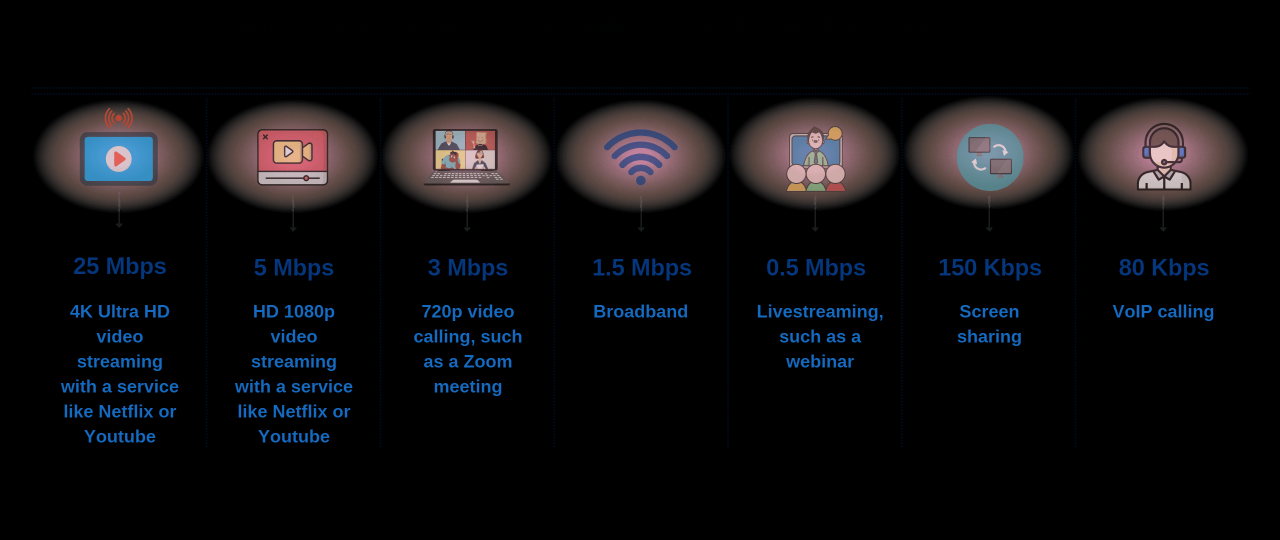
Different streaming services and online games have varying bandwidth requirements that significantly affect user experiences. Below are the typical bandwidth needs for popular platforms, which illustrate the differences in consumption based on content type and quality.
- Streaming Services:
- Netflix: For standard definition (SD), around 3 Mbps is required. High definition (HD) demands about 5 Mbps, while ultra-high definition (4K) requires approximately 25 Mbps.
- YouTube: Similar to Netflix, SD needs around 3 Mbps, HD requires 5-10 Mbps, and 4K streaming can demand up to 25 Mbps depending on the frame rate and quality.
- Amazon Prime Video: Comparable to Netflix, with SD at 3 Mbps, HD at 5 Mbps, and 4K at 15-25 Mbps.
- Online Gaming:
- Fortnite: Generally requires about 3 Mbps for an optimal experience, but lower latency is often more critical than bandwidth.
- Call of Duty: Warzone: Aiming for at least 12 Mbps helps ensure smoother gameplay, especially during action-packed moments.
- League of Legends: Typically requires around 6 Mbps, but the focus should be on minimal latency for competitive play.
The bandwidth consumption varies widely, reflecting the differences in content delivery and interactivity. For instance, while watching a movie might use a consistent bandwidth, gaming often requires bursts of high-speed accessibility to maintain seamless gameplay.
“For streaming services, 25 Mbps is often seen as the benchmark for uninterrupted 4K viewing.”
As users engage with multiple devices simultaneously, their total bandwidth consumption can quickly add up, highlighting the necessity for reliable high-speed internet connections.
Future Trends in Bandwidth Technology
As we look ahead, the landscape of bandwidth technology is poised for significant transformation. Emerging technologies and advancements in network infrastructure promise to enhance bandwidth performance and availability. This evolution will not only affect how we consume data but also shape business operations and consumer behavior in profound ways.
Emerging Technologies Influencing Bandwidth
Several emerging technologies are set to redefine bandwidth capabilities. Key innovations include:
- 5G and Beyond: The rollout of 5G networks is already changing the bandwidth game, enabling faster data speeds and reduced latency. Future iterations, such as 6G, promise even greater enhancements, potentially reaching speeds of up to 100 Gbps.
- Wi-Fi 6 and Wi-Fi 6E: These newer standards are designed to improve performance in dense environments, providing higher throughput and better efficiency, which are crucial for bandwidth-heavy applications.
- Quantum Computing: While still in its infancy, quantum computing holds the potential to revolutionize data processing and transmission, potentially increasing bandwidth capabilities exponentially.
Advancements in Network Infrastructure
The underlying infrastructure supporting bandwidth technology is evolving rapidly. Significant advancements include:
- Fiber Optic Networks: The expansion of fiber optic cables continues to enhance bandwidth availability, offering higher data transfer rates and increased reliability compared to traditional copper lines.
- Edge Computing: By processing data closer to the source, edge computing minimizes latency and maximizes bandwidth efficiency, facilitating real-time data access and analysis.
- Software-Defined Networking (SDN): SDN allows for more dynamic and efficient network management, enabling better allocation of bandwidth resources based on current demand.
Impact of Future Bandwidth Usage on Consumer and Business Behavior
Changes in bandwidth usage are expected to influence how consumers and businesses interact with technology.
- Increased Streaming Services: As higher bandwidth becomes accessible, the demand for high-definition and 4K streaming content will expand, resulting in shifts in consumer preferences towards subscription-based models.
- Remote Work and Collaboration: Greater bandwidth availability will facilitate smoother remote work experiences, with enhanced video conferencing capabilities becoming essential for businesses.
- Internet of Things (IoT): An increase in connected devices and IoT applications will drive demand for bandwidth, leading to smarter homes and cities that rely on constant data exchange.
Last Recap
In summary, bandwidth is more than just a technical term; it directly influences our digital experiences, from video streaming to online gaming. By understanding and managing bandwidth effectively, organizations and individuals can enhance their connectivity and overall performance. As we look to the future, staying informed about emerging trends in bandwidth technology will be essential for adapting to our ever-changing digital landscape.
Essential Questionnaire
What is bandwidth in simple terms?
Bandwidth refers to the maximum amount of data that can be transmitted over a network at a given time, often measured in bits per second (bps).
How is bandwidth different from speed?
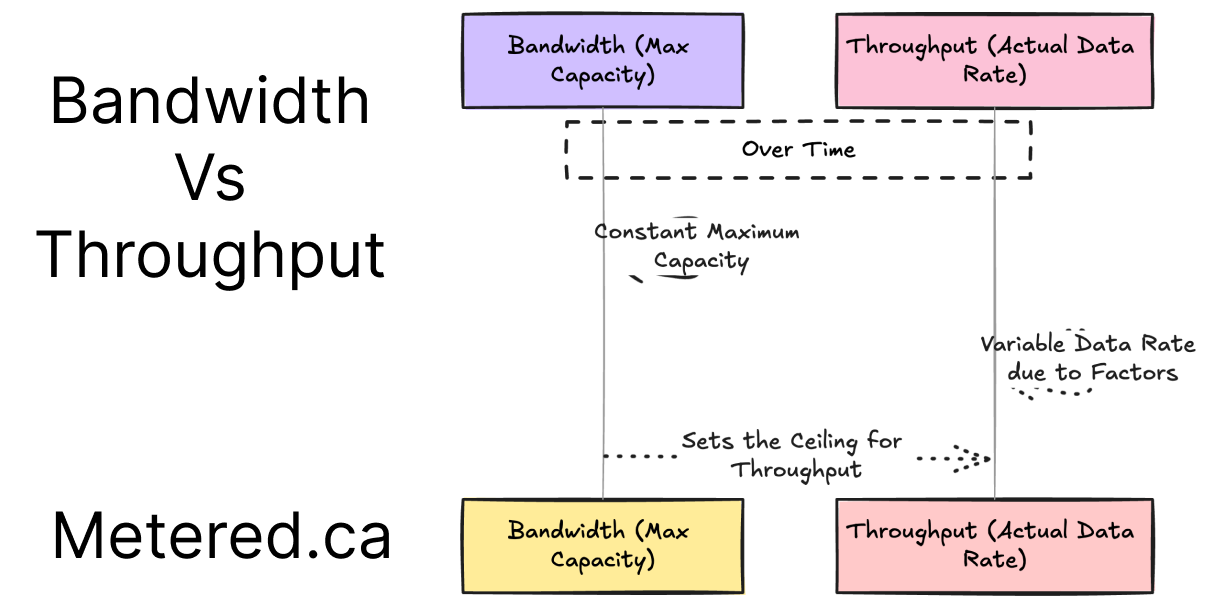
While bandwidth indicates the maximum data transfer capacity, speed refers to how fast data is actually flowing through the network.
Can bandwidth be increased?
Yes, bandwidth can often be increased by upgrading network equipment, changing service plans, or optimizing network configurations.
What is the impact of low bandwidth?
Low bandwidth can lead to slow internet speeds, buffering during streaming, and lag in online gaming, negatively affecting the user experience.
Are there tools to measure bandwidth?
Yes, various tools such as Ookla Speedtest, PingPlotter, and Wireshark can be used to measure and analyze bandwidth performance.