Back-end Development is the unsung hero of modern web applications, quietly working behind the scenes to ensure that everything runs smoothly for the end-user. This essential component of web development encompasses everything from server handling to database management, creating a seamless experience that enhances user satisfaction. In an age where the efficiency and security of applications are paramount, back-end development plays a crucial role in safeguarding data while optimizing performance, making it a focal point of technological advancement.
From enabling secure data transactions to powering complex algorithms, back-end development shapes the way users interact with digital platforms. A variety of programming languages and frameworks, such as Python, Ruby, and Node.js, serve as the backbone of this discipline, each offering unique benefits that cater to specific needs. With databases serving as the nerve center for data storage and retrieval, understanding how to manage these systems effectively is key to maintaining high-performance applications. As we explore the intricacies of back-end development, we uncover the technologies and best practices that drive innovation in this essential field.
The significance of back-end development in modern web applications
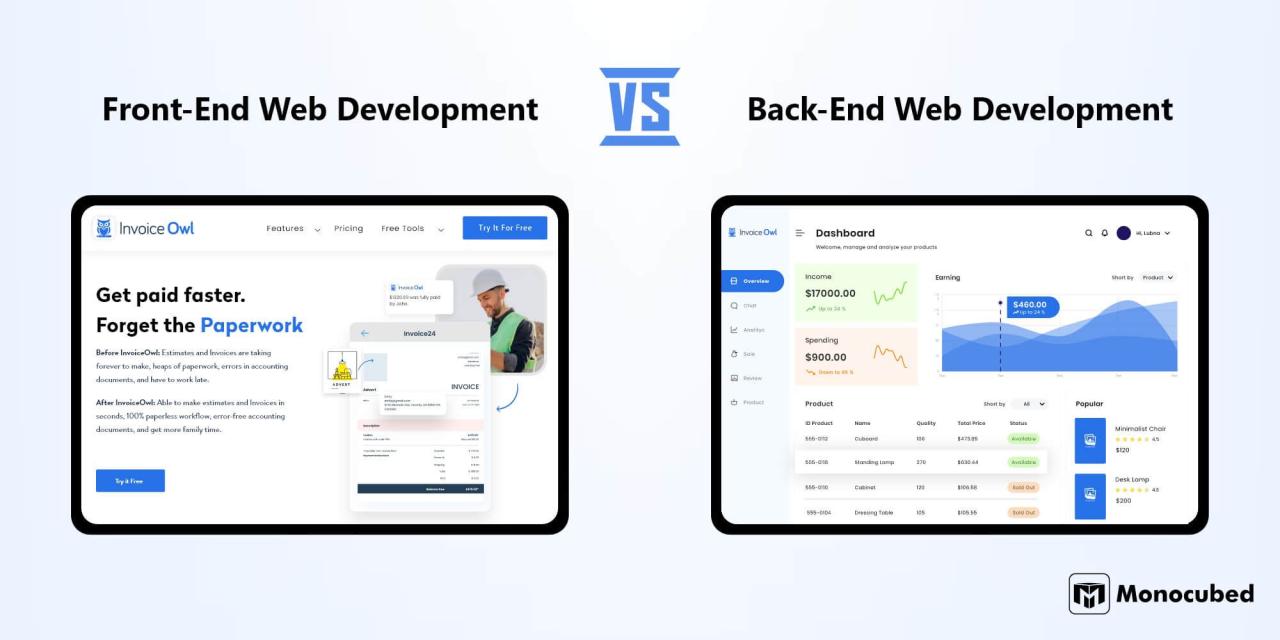
Back-end development is a crucial component of modern web applications, serving as the backbone that supports front-end functionality. It manages the server, application, and database interactions, ensuring that everything runs smoothly behind the scenes. This hidden but essential side of web development enhances user experience, manages data securely, and facilitates efficient operations.
The role of back-end development in enhancing user experience is multi-faceted. First, it ensures that users have access to fast and reliable data processing, which is essential for web applications that handle large volumes of requests. When users interact with a web application, they expect real-time responses and instant updates. Back-end developers implement APIs (Application Programming Interfaces) that enable quick communication between the front-end and the back-end, ensuring that users receive the information they need without lag. Moreover, back-end development optimizes database management, allowing for efficient data retrieval, which directly influences how users perceive the speed and fluidity of an application.
Security and data management
Back-end development significantly contributes to the security and data management of web applications. A secure back-end serves as a protective barrier against various cyber threats, including unauthorized access and data breaches. Developers implement various security protocols, such as encryption and authentication mechanisms, to safeguard sensitive user data. For instance, the use of HTTPS ensures that data transmitted between the user’s browser and the server is encrypted, making it difficult for malicious actors to intercept.
Data management is another critical aspect of back-end development. It involves not only storing data but also retrieving and manipulating it efficiently. Developers utilize databases, such as MySQL, PostgreSQL, and MongoDB, to manage large datasets effectively. Additionally, frameworks like Node.js and Django streamline the process of building robust back-end systems, enabling developers to create applications that can handle complex data structures with ease.
In summary, back-end development plays an indispensable role in the functionality, security, and overall performance of modern web applications, making it a key area of focus for developers aiming to create seamless user experiences.
Key programming languages utilized in back-end development
Back-end development is a crucial aspect of building robust web applications, responsible for server-side logic, database interactions, and application integration. Several programming languages excel in this domain, each offering unique features and capabilities suited for different types of projects. Understanding the strengths and weaknesses of these languages helps developers select the right tools for their specific needs.
JavaScript
JavaScript, commonly associated with front-end development, has made significant strides in back-end programming through environments like Node.js. This evolution allows developers to use a single language across both the client and server sides, enhancing productivity and code reusability.
- Benefits:
– JavaScript’s asynchronous nature and event-driven architecture make it ideal for handling concurrent connections efficiently.
– The extensive npm ecosystem provides thousands of libraries and frameworks, accelerating development.
– Programmers familiar with JavaScript can transition seamlessly to back-end development without learning a new language. - Drawbacks:
– JavaScript’s dynamic typing can lead to runtime errors that are harder to debug.
– As applications scale, managing complex codebases may become challenging without strict coding standards.
Python
Python has gained immense popularity in back-end development due to its simplicity and readability. Its diverse frameworks, such as Django and Flask, empower developers to create scalable web applications quickly and efficiently.
- Benefits:
– Python’s syntax is clean and easy to learn, making it a favored choice for beginners and experienced developers alike.
– Its rich set of libraries, particularly for data manipulation and machine learning, makes it versatile for various applications.
– Python promotes rapid development, allowing for quick prototyping and iteration. - Drawbacks:
– The performance of Python, being an interpreted language, may not match that of compiled languages in high-performance scenarios.
– The Global Interpreter Lock (GIL) can be a bottleneck in multi-threaded applications, limiting concurrency.
Java
Java has long been a stalwart in back-end development, known for its portability and robustness. It operates on the principle of “write once, run anywhere,” making it a top choice for large-scale enterprise applications.
- Benefits:
– Java’s strong typing and object-oriented structure enhance code maintainability and reduce runtime errors.
– The Java Virtual Machine (JVM) allows for cross-platform compatibility, making deployment easier across different environments.
– It has a mature ecosystem with powerful frameworks like Spring, which facilitate building secure and scalable applications. - Drawbacks:
– Java can be more verbose compared to dynamic languages, leading to longer development times.
– Memory consumption can be higher due to automatic garbage collection, which may affect performance in resource-constrained environments.
Evolving Trends in Back-end Programming Languages
The landscape of back-end programming languages is continuously evolving in response to changing technology needs and developer preferences. Emerging trends include:
- The rise of microservices architecture, which promotes the use of lightweight languages and frameworks that facilitate service decomposition and scalability.
- Increased popularity of serverless computing, enabling developers to focus on code rather than infrastructure, with languages like JavaScript and Python being favored for their ease of use in such environments.
- Growing interest in languages such as Go and Rust, known for their performance and safety features, appealing to developers seeking efficient and reliable back-end solutions.
Understanding databases and their role in back-end development
Databases are foundational components of back-end development, allowing applications to store, retrieve, and manage data efficiently. A solid understanding of databases is crucial for any back-end developer, as they directly impact performance, scalability, and overall application integrity. This segment will explore the various types of databases, their design principles, and best practices for managing them effectively.
Types of databases in back-end development
In back-end development, the choice of database can significantly influence application performance and data handling capabilities. The two primary categories of databases used are SQL (Structured Query Language) and NoSQL (Not Only SQL).
- SQL Databases: SQL databases are relational databases that use structured data models. They excel in situations where data relationships are crucial. Popular examples include MySQL, PostgreSQL, and Microsoft SQL Server. SQL databases enforce data integrity through ACID (Atomicity, Consistency, Isolation, Durability) properties, which ensure reliable transactions.
- NoSQL Databases: NoSQL databases offer flexibility in data storage, allowing for unstructured or semi-structured data. They are ideal for handling large volumes of varied data and rapid scaling. Examples include MongoDB, Cassandra, and Redis. NoSQL databases often prioritize performance and scalability over strict data integrity, making them suitable for applications requiring high availability.
Importance of database design and management for performance optimization
Effective database design and management are essential for optimizing performance. A well-structured database can reduce query times, enhance data retrieval efficiency, and minimize system resource consumption. Poor database design can lead to data redundancy, slow response times, and increased maintenance efforts.
Key considerations for optimizing database performance include indexing, normalization, and query optimization.
“Proper indexing improves query performance by reducing retrieval time, while normalization eliminates data redundancy.”
Best practices for database security and integrity
Securing databases is critical to protect sensitive data from unauthorized access and ensure the integrity of information stored. The following best practices are recommended for maintaining database security and integrity:
- Access Control: Implement strict user access controls, ensuring that only authorized personnel can access sensitive data.
- Encryption: Use encryption for sensitive data both at rest and in transit to prevent exposure to unauthorized users.
- Regular Backups: Schedule regular backups to protect data from loss due to hardware failures, accidental deletions, or security breaches.
- Update and Patch: Regularly update database management systems and apply security patches to protect against vulnerabilities.
- Monitoring and Auditing: Continuously monitor database activity and conduct audits to identify and respond to suspicious behavior promptly.
Frameworks and tools that enhance back-end development efficiency
Back-end development has rapidly evolved, and choosing the right frameworks and tools can significantly streamline the development process. Frameworks such as Node.js, Django, and Ruby on Rails not only provide developers with a solid foundation but also offer various features that facilitate the building of complex applications efficiently. These frameworks are designed to enhance productivity, reduce development time, and ensure maintainability of the code, making them vital assets in any back-end developer’s toolkit.
One of the primary advantages of using frameworks is their ability to offer pre-defined structures and components, allowing developers to focus on writing business logic rather than handling repetitive tasks. This section delves into popular frameworks and their specific contributions to back-end development efficiency.
Popular Back-end Frameworks
Three of the most utilized frameworks in back-end development are Node.js, Django, and Ruby on Rails. Each framework has unique features that cater to different development needs and preferences. Below is a comparative view of these frameworks, highlighting their core attributes:
| Framework | Language | Type | Key Features | Use Cases |
|---|---|---|---|---|
| Node.js | JavaScript | Runtime Environment |
|
Web applications, APIs, real-time applications (e.g., chat apps) |
| Django | Python | Web Framework |
|
Content management systems, e-commerce sites, social networks |
| Ruby on Rails | Ruby | Web Framework |
|
Startups, MVPs, SaaS applications |
The above table not only showcases the characteristics of each framework but also illustrates how developers can leverage them according to their project requirements. By selecting a framework that aligns with the project goals, developers can enhance their workflow efficiency, minimize coding errors, and ultimately deliver higher-quality applications.
The role of APIs in back-end development
APIs, or Application Programming Interfaces, play a crucial role in the architecture of modern web applications by acting as intermediaries that facilitate communication between different software systems. In the context of back-end development, APIs enable the seamless exchange of data and functionality between the front-end and back-end components of an application, ensuring that users have a smooth and responsive experience while interacting with the application.
APIs essentially define a set of rules and protocols that allow various software components to communicate with each other. By providing a standardized way for front-end clients to request data and services from the back-end, APIs help to create a clear separation of concerns. This modularity allows developers to work independently on the front-end and back-end, making it easier to manage and scale applications.
RESTful services and GraphQL in back-end development
REST (Representational State Transfer) and GraphQL are two prominent architectural styles for building APIs, each with its own set of principles and use cases. Understanding the differences between them helps developers choose the right approach for their projects.
RESTful services rely on predefined endpoints and HTTP methods (like GET, POST, PUT, DELETE) to interact with resources. Each endpoint represents a specific resource, and clients must make multiple requests to gather related data. This can sometimes lead to over-fetching or under-fetching data, depending on the client’s needs. REST is well-suited for simpler applications where the data structure is relatively straightforward.
On the other hand, GraphQL provides a more flexible approach to data fetching. Clients can specify exactly what data they need in a single request, allowing for more efficient data retrieval. This is particularly beneficial in complex applications with multiple interconnected resources. GraphQL’s type system also offers strong validation, making it easier for developers to understand and work with the API.
Here’s a comparison of key differences between RESTful services and GraphQL:
| Feature | REST | GraphQL |
|---|---|---|
| Data Retrieval | Multiple endpoints; might need several requests | Single endpoint; allows clients to specify desired data |
| Versioning | Typically requires versioning when changes occur | No versioning needed; clients adapt to changes |
| Response Structure | Fixed structure based on endpoint | Flexible structure as defined by the client query |
| Complex Queries | Can lead to over-fetching or under-fetching | Efficiently handles complex queries |
Real-world applications illustrate the profound impact APIs have on functionality and user experience. For instance, social media platforms like Facebook and Twitter expose APIs that allow third-party applications to access user data, post content, and retrieve feeds. This integration enhances functionality, enabling developers to create rich applications that leverage existing platforms.
Another example is e-commerce websites, which often use APIs to connect their front-end interfaces with back-end services such as payment gateways, inventory management, and shipping providers. This connectivity allows for a smooth check-out process, real-time inventory updates, and personalized user experiences based on customer data.
In summary, APIs play an indispensable role in back-end development by ensuring effective communication between different layers of an application. By understanding the distinct capabilities of RESTful services and GraphQL, developers can make informed decisions on how to structure their APIs for optimal performance and flexibility.
Challenges faced in back-end development and how to overcome them
Back-end development is a critical aspect of software engineering that deals with server-side logic and database interactions. Developers frequently encounter various challenges that can hinder their workflow or compromise the integrity of the applications they are building. Understanding these challenges and knowing how to effectively address them is essential for success in back-end development.
One of the most common challenges in back-end development is dealing with scalability. As applications gain more users, the underlying architecture must handle increased load without sacrificing performance. Developers often encounter bottlenecks in database queries and server resources, leading to slow response times.
Scalability Issues
To address scalability challenges, developers can adopt a few key strategies. Implementing load balancing can distribute traffic across multiple servers, ensuring no single server becomes overwhelmed. Additionally, utilizing microservices architecture allows for the independent scaling of different components of an application. This modular approach can lead to more efficient resource management.
Furthermore, optimizing database queries and employing caching mechanisms can significantly improve application responsiveness. For example, using Redis as a caching layer can reduce database load by storing frequently accessed data in memory, leading to faster retrieval times.
Security Vulnerabilities
Security is another major concern for back-end developers. Protecting sensitive user data from breaches is paramount, yet vulnerabilities often arise from improper coding practices or outdated libraries.
To combat security vulnerabilities, developers should regularly update their dependencies and utilize security tools such as static code analysis and vulnerability scanning. Adopting security best practices, such as implementing OAuth for authentication and using HTTPS for data transmission, can help safeguard user data. Additionally, conducting regular security audits and penetration testing can proactively identify and mitigate potential threats, as exemplified by companies like Slack, which routinely test their systems for vulnerabilities.
Debugging and Error Handling
Debugging complex back-end systems can be particularly challenging due to the intricate interplay between various components. A single error can cascade through the system, making it difficult to pinpoint the source of the issue.
To streamline the debugging process, developers can implement structured logging to capture detailed information about application behavior. Tools like ELK Stack (Elasticsearch, Logstash, Kibana) can provide insights into application logs, allowing developers to identify and resolve errors more effectively. Furthermore, employing automated testing frameworks can help catch bugs early in the development process, reducing the time spent on debugging.
Deployment and DevOps Challenges
The deployment process presents its own set of challenges, including configuration management and ensuring consistent environments across development, staging, and production. Developers may face issues when deploying updates, leading to downtime or unexpected behavior in live systems.
Utilizing containerization technologies such as Docker can alleviate many deployment challenges by creating consistent environments for applications. Additionally, adopting CI/CD (Continuous Integration/Continuous Deployment) pipelines can automate the testing and deployment process, ensuring that code changes are integrated smoothly and reliably. Companies like Spotify have successfully implemented CI/CD practices, allowing them to deploy updates multiple times a day without significant disruptions.
In conclusion, while back-end development presents various challenges, strategies and tools are available to effectively address these issues. By understanding scalability, security, debugging, and deployment challenges, developers can build robust and reliable applications that meet user needs and stand the test of time.
The future of back-end development in a rapidly changing tech landscape

The landscape of back-end development is evolving at an unprecedented pace, driven by a multitude of technological advancements and innovative methodologies. As the demand for scalable, efficient, and robust applications continues to grow, back-end developers must adapt to these changes to remain relevant in the field.
Emerging trends: Serverless architecture and microservices
Serverless architecture and microservices are two pivotal trends shaping the future of back-end development. Serverless architecture allows developers to build and run applications without the complexities of managing servers. This paradigm shift facilitates a more agile development process, enabling teams to focus on coding rather than infrastructure. Key benefits include:
- Cost Efficiency: With serverless computing, organizations pay only for the compute time they consume, which greatly reduces costs associated with idle server capacity.
- Scalability: The architecture automatically scales resources in response to demand, ensuring optimal performance during peak usage times.
- Faster Deployment: Developers can push updates more rapidly, improving the responsiveness to business needs.
Microservices, on the other hand, promote a design approach where applications are structured as a collection of loosely coupled services. Each service is independently deployable and scalable. This modular design allows for:
- Improved Resilience: If one service fails, it doesn’t bring down the entire application, enhancing overall reliability.
- Technology Agnosticism: Teams can choose the best technology stack for each service, optimizing performance and maintainability.
- Faster Development Cycles: Smaller teams can work on different services simultaneously, allowing for quicker iterations and releases.
Advancements in cloud computing shaping back-end development
The rise of cloud computing has dramatically transformed back-end development practices. Cloud platforms provide powerful tools and services that enhance the development process. Notable aspects include:
- Managed Services: Services such as Amazon RDS for databases or Google Cloud Functions for serverless applications reduce the burden of operational tasks on developers.
- Global Distribution: Cloud computing allows applications to be deployed in multiple regions, improving latency and user experience for global users.
- Enhanced Security: Cloud providers offer robust security measures, including encryption and compliance with regulations, giving developers peace of mind.
As organizations increasingly migrate to the cloud, back-end developers are required to possess cloud-specific skills, such as familiarity with AWS, Azure, or Google Cloud Platform.
Artificial intelligence integration in back-end processes
The integration of artificial intelligence (AI) into back-end processes is revolutionizing how applications operate. AI can optimize performance, enhance user experiences, and automate mundane tasks. Key implications include:
- Data Processing: AI can analyze large datasets to provide insights, which can inform decisions and improve application functionalities.
- Predictive Analytics: By employing machine learning algorithms, applications can predict user behavior, allowing for personalized experiences.
- Automation: Routine processes such as data entry and report generation can be automated, freeing developers to focus on more complex tasks.
The future of back-end development is marked by these transformative trends, driving efficiency, scalability, and innovation in technology. As developers adapt to these changes, their tools and methodologies will continue to evolve, opening new avenues for growth and creativity in the tech landscape.
Best practices for testing and maintaining back-end systems
Testing and maintaining back-end systems is crucial for ensuring that applications run smoothly and perform reliably under various conditions. A well-tested back end minimizes the risk of bugs and performance issues, enhancing user experience and trust in the application. This segment explores the significance of testing and Artikels structured approaches for implementing effective unit and integration tests, along with a checklist of maintenance tasks that promote optimal back-end performance.
Significance of Testing in Back-end Development
Testing serves as a fundamental pillar in guaranteeing the reliability and performance of back-end systems. By identifying bugs early in the development process, teams can resolve issues before they impact users. Additionally, comprehensive testing ensures that the system can handle various scenarios, including high traffic loads and unexpected inputs.
Testing is not just a phase; it is a continuous process that safeguards the integrity of back-end systems.
Implementing Unit Tests and Integration Tests
A structured approach to testing should encompass both unit tests and integration tests, each serving distinct purposes in the development lifecycle.
Unit tests focus on individual components of the application, verifying that each unit of the code functions as intended. These tests should be automated and run frequently to catch issues as soon as they arise. Here are key steps to implement unit tests:
- Identify critical functions and methods within the codebase.
- Create test cases that cover a variety of scenarios, including edge cases.
- Utilize testing frameworks such as JUnit for Java or pytest for Python to automate the tests.
- Run unit tests after each significant change to ensure no new bugs are introduced.
Integration tests, on the other hand, examine how different components of the application work together. This type of testing is vital for identifying issues that may not be apparent in isolated unit tests. To implement integration tests, follow these guidelines:
- Define the interfaces between components that need to be tested collaboratively.
- Create test scenarios that mimic real-world usage of the application.
- Leverage tools like Postman for API testing or Selenium for full-stack integration testing.
- Run integration tests regularly, especially before deploying changes to production.
Checklist for Maintenance Tasks
Regular maintenance is essential to ensure optimal performance and reliability of back-end systems. A structured checklist can help keep systems running smoothly and efficiently. Key maintenance tasks include:
- Monitor server performance metrics such as CPU usage, memory usage, and response times.
- Conduct regular backups of databases and application data to prevent data loss.
- Review and optimize database queries to improve performance and reduce load times.
- Update software dependencies regularly to ensure security and functionality.
- Conduct security audits to identify vulnerabilities and apply necessary patches.
- Test back-end systems for compatibility with new technologies and frameworks.
- Document all changes and updates for future reference and troubleshooting.
Epilogue
In summary, Back-end Development is not just a technical aspect of web applications; it is a dynamic framework that evolves alongside technological progress. As we witnessed, its significance spans from enhancing user experience and ensuring security to fostering an environment where cutting-edge technologies like AI can thrive. By embracing best practices and understanding the tools available, developers can navigate challenges and harness the full potential of back-end processes. Ultimately, the future of back-end development promises to be as exciting as it is transformative, opening doors to possibilities we have yet to imagine.
General Inquiries
What is back-end development?
Back-end development refers to the server-side of web applications, handling data storage, server logic, and application functionality beyond what users see on the front end.
Why is back-end development important?
It is crucial for ensuring that applications run efficiently, securely, and can handle user requests effectively while managing data interactions.
What skills are needed for back-end development?
Key skills include proficiency in programming languages like Python or Java, understanding databases, familiarity with frameworks, and knowledge of APIs.
How do APIs work in back-end development?
APIs (Application Programming Interfaces) act as intermediaries that allow different software applications to communicate with each other, enabling integration between front-end and back-end systems.
What are the common challenges in back-end development?
Common challenges include ensuring security, managing data complexity, handling server performance, and integrating new technologies effectively.
How can back-end performance be optimized?
Performance can be optimized through efficient database management, utilizing caching strategies, and conducting regular code reviews and testing.