Fiber Optics has emerged as a groundbreaking technology that transforms the way we communicate, diagnose diseases, and explore future innovations. By harnessing the principles of light transmission, fiber optics allows for exceptionally fast and reliable data transfer, revolutionizing industries from telecommunications to healthcare.
This technology originated from early concepts of light transmission, evolving through key milestones and innovative minds who have significantly shaped its development. Understanding the physics behind fiber optics, such as total internal reflection and the differences between single-mode and multi-mode fibers, gives us insight into its remarkable capabilities. Today, fiber optics is not just a technological marvel; it’s a critical component in modern life, enhancing connectivity and improving medical practices.
The Historical Development of Fiber Optics Technology
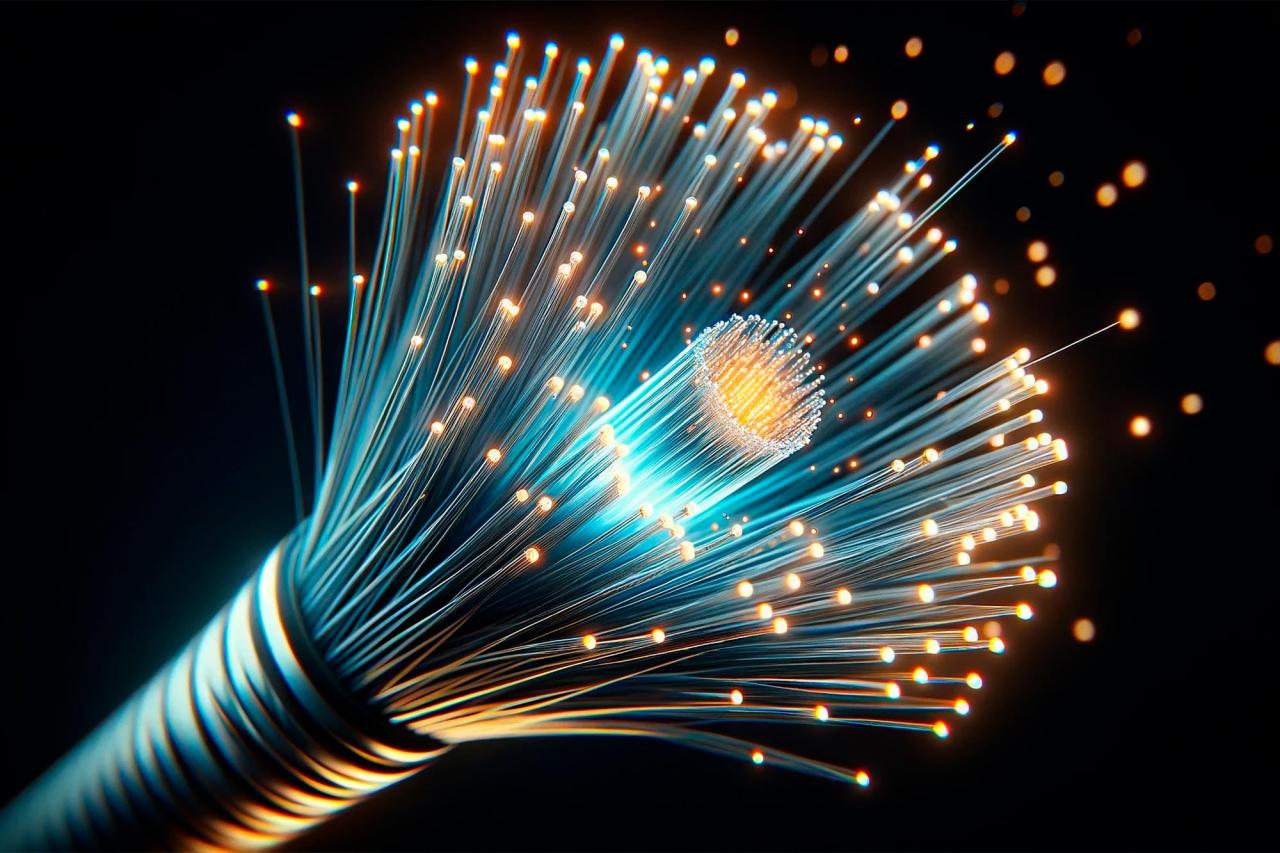
The journey of fiber optics technology is one marked by innovation and critical breakthroughs that transformed communication and data transmission. Initially rooted in the principles of light transmission, the evolution of fiber optics has brought us to a point where this technology is integral to modern telecommunications, medicine, and even lighting.
The early concepts of fiber optics can be traced back as far as the 19th century. One of the earliest milestones was the invention of the “light pipe” by Daniel Colladon and Jacques Babinet in the 1840s. They demonstrated that light could be transmitted through water, laying the groundwork for future developments. This was further conceptualized by the work of Alexander Graham Bell, who experimented with light transmission, connecting it to sound waves.
A pivotal moment in fiber optics history occurred in 1956 when Dr. Narinder Singh Kapany coined the term “fiber optics.” His work involved the use of glass fibers to transmit light, and he is often referred to as the “Father of Fiber Optics.” The introduction of low-loss glass fibers by researchers at Corning Glass Works in the 1970s marked another critical milestone. These fibers enabled light to travel longer distances with minimal loss, making them viable for communication purposes.
In the same decade, the development of the first fiber optic communication system by Dr. Charles K. Kao and Dr. George Hockham at the Standard Telecommunication Laboratories in the UK was groundbreaking. Their research demonstrated that light signals could be transmitted through fiber optics over long distances without significant degradation. Kao’s insights earned him the Nobel Prize in Physics in 2009, solidifying his contribution to the field.
The commercialization of fiber optics began in the 1980s, revolutionizing the telecommunications industry. The introduction of fiber-optic cables allowed for higher bandwidth and faster data transmission rates compared to traditional copper wires. The advancements continued into the 21st century, with innovations in fiber materials and laser technology further enhancing the performance of fiber-optic systems.
Overall, the historical development of fiber optics technology is a testament to human ingenuity and the relentless pursuit of better communication methods. Key figures like Kapany, Kao, and Hockham have significantly shaped this field, leading to the robust fiber-optic networks we rely on today.
Understanding the Physics Behind Fiber Optics
Fiber optics technology relies heavily on the principles of physics to transmit data at high speeds over long distances. At its core, fiber optics uses thin strands of glass or plastic to guide light, which carries information through the process of light transmission. The efficient transportation of light within these fibers is governed by fundamental optical principles, particularly total internal reflection, which is crucial for understanding how fiber optics works.
The transmission of light within fiber optic cables occurs through the process of total internal reflection. This principle arises when light travels from a medium of higher refractive index to one of lower refractive index, at a specific angle known as the critical angle. When these conditions are met, light does not escape into the second medium but instead reflects back into the first medium. This behavior is vital for maintaining the integrity of the signal as it travels through the fiber. In fiber optics, the core of the fiber has a higher refractive index than the cladding surrounding it, ensuring that light remains contained within the core, regardless of bends or twists in the fiber.
Principles of Total Internal Reflection
Total internal reflection is a critical phenomenon in fiber optics, and its principles can be summarized as follows:
- Refractive Index: The refractive index of a medium determines how much light bends as it enters the medium. In fiber optics, the core has a higher refractive index compared to the cladding.
- Critical Angle: The critical angle is the minimum angle of incidence at which total internal reflection occurs. If the angle of incidence exceeds this angle, the light is reflected rather than refracted.
- Guiding Light: Total internal reflection allows fiber optics to guide light over long distances with minimal loss, making it an ideal medium for telecommunications and high-speed data transfer.
The two main types of fiber optic cables are single-mode and multi-mode fibers, each differing in their physical structure and the way light propagates through them.
Differences Between Single-Mode and Multi-Mode Fibers
Single-mode fibers have a much smaller core diameter (typically around 8 to 10 micrometers) that allows only one mode of light to propagate. This structure significantly reduces modal dispersion, allowing for longer transmission distances, often exceeding 100 kilometers without requiring signal regeneration. Single-mode fibers are primarily used in long-distance telecommunications and high-speed data networks.
In contrast, multi-mode fibers feature a larger core diameter (around 50 to 62.5 micrometers), permitting multiple light modes to travel simultaneously. While this leads to higher modal dispersion, multi-mode fibers are generally used for shorter distances, such as within buildings or local area networks (LANs), where cost-effectiveness is more critical than distance.
The choice between single-mode and multi-mode fibers ultimately depends on the specific application requirements, including distance, bandwidth, and budget constraints, making an understanding of these differences essential for anyone involved in fiber optics technology.
The Role of Fiber Optics in Medical Technology
Fiber optics play a transformative role in various medical technologies, enhancing both diagnostics and treatment methods in healthcare settings. The flexibility and efficiency of fiber optic systems make them indispensable for several medical applications. One of the most notable uses is in endoscopy, where fiber optics enable highly detailed internal examinations with minimal invasiveness, leading to improved patient outcomes and faster recovery times.
Fiber optics significantly enhance the precision of many healthcare procedures. They allow for the transmission of high-quality images from inside the human body to an external monitor in real-time. This capacity is pivotal in diagnosing diseases, guiding biopsies, and performing surgeries with increased accuracy. The use of fiber optics in endoscopic tools allows doctors to visualize areas that are difficult to access, such as the gastrointestinal tract, respiratory system, and even vascular systems. The illumination provided by fiber optic cables helps in differentiating between healthy and diseased tissues, which is crucial for effective diagnosis and treatment planning. Because of their small size, fiber optics can be used in minimally invasive procedures, reducing the risk of infection and speeding up recovery times for patients.
Innovative Uses of Fiber Optics in Medical Devices
The integration of fiber optics into various medical devices is leading to innovative solutions that improve patient care. Some notable applications include:
- Laser Surgery: Fiber optic cables are used to deliver laser energy precisely to target tissues, minimizing collateral damage and enhancing recovery.
- Optical Coherence Tomography (OCT): This imaging technique uses light waves to capture micrometer-resolution images from within the body, significantly aiding in the diagnosis of retinal diseases and cardiovascular issues.
- Photodynamic Therapy (PDT): Fiber optics are employed to deliver light to cancerous tissues, activating photosensitive drugs that specifically target and destroy cancer cells.
- Flexible Endoscopes: Modern endoscopes utilize fiber optics to provide high-definition images and the ability to maneuver through complex anatomical structures, improving diagnostic capabilities.
“Fiber optics have transformed the landscape of medical diagnostics and treatment, enabling procedures that are less invasive and more effective.”
These advancements not only demonstrate the potential of fiber optics but also highlight the ongoing evolution in medical technology that prioritizes patient safety and procedural efficacy.
Future Trends in Fiber Optics Technology
The field of fiber optics is rapidly evolving, with numerous advancements on the horizon that promise to transform various industries. Emerging technologies, such as photonic crystal fibers, are paving the way for innovations that could enhance data transmission, telecommunications, and even medical applications. As research and development continue, the implications for sectors like networking, healthcare, and manufacturing become increasingly significant.
One of the most exciting emerging technologies in fiber optics is the development of photonic crystal fibers (PCFs). These specialized fibers utilize microstructured arrangements to manipulate light in unprecedented ways. Unlike traditional optical fibers, which rely on total internal reflection, PCFs can control light propagation through the photonic bandgap effect. This allows for improved performance in terms of bandwidth and signal integrity, making them ideal for high-capacity data transmission applications.
The potential advancements in fiber optics technology are vast. Some of the notable trends and predictions include:
Emerging Technologies and Their Impact
The future of fiber optics is promising, and several key trends are expected to shape its evolution:
1. Increased Internet Speeds: The advent of new materials and designs in fiber optics will lead to faster internet connections, crucial for meeting the demands of data-heavy applications such as streaming services and remote work.
2. Smart Cities Development: Fiber optic networks will play a fundamental role in developing smart cities, enabling efficient communication between IoT devices and improving urban infrastructure management.
3. Telemedicine Growth: As healthcare increasingly leverages telemedicine, fiber optics will facilitate high-speed data transfer essential for remote diagnostics and consultations, enhancing patient care.
4. Advanced Sensors: Innovations in fiber optics are paving the way for advanced sensor technologies, which can monitor a wide range of parameters in real-time, significantly benefiting industries such as environmental monitoring and security.
5. Quantum Computing Integration: Research is being conducted into integrating fiber optics with quantum computing systems, potentially revolutionizing data processing capabilities and leading to exponential growth in computing power.
The ongoing research and development in fiber optics is crucial for several reasons. It not only fuels the advancements in technology but also drives economic growth by creating new markets and job opportunities. As industries increasingly rely on high-speed connectivity and efficient data transfer, the significance of fiber optics will only continue to rise. The continuous push towards smaller, faster, and more efficient fibers directly correlates with the ability of businesses and services to innovate, ultimately improving the quality of life for individuals as well. The future of fiber optics is not just a technical evolution; it is a foundational leap towards a more connected and technologically advanced society.
Challenges Facing Fiber Optics Deployment
The deployment of fiber optics technology is often viewed as a critical step toward enhancing connectivity and communication infrastructure. However, there are several challenges that hinder its widespread adoption. These barriers can be broadly categorized into technical, economic, and regulatory challenges, each presenting unique obstacles that must be addressed for successful implementation.
Technical, Economic, and Regulatory Challenges
Fiber optics technology is not without its technical hurdles. The installation of fiber optic networks requires significant infrastructure changes, including the laying of fiber cables, which can be labor-intensive and time-consuming. Additionally, specialized training is needed for technicians to handle the delicate fiber materials and the advanced technology associated with them. Compatibility with existing technologies poses another technical barrier; integrating fiber optics into pre-established networks can be complex and costly.
Economic challenges play a crucial role in fiber optics deployment as well. The initial investment required for fiber optic installations is substantial, often deterring small service providers and municipalities. According to a report from the Fiber Broadband Association, the average cost per mile for fiber deployment can exceed $30,000, making it a daunting financial commitment. Return on investment can be slow, particularly in rural areas where subscriber numbers may be limited, challenging business models that rely on high subscription rates to recoup costs.
Regulatory challenges can further complicate fiber optics deployment. The process of obtaining permits and navigating local regulations can be lengthy and frustrating. In many regions, existing telecommunications laws may favor traditional providers, creating a disparity that limits competition and innovation. Furthermore, the lack of a cohesive national policy regarding broadband expansion can lead to inconsistencies in deployment strategies across different jurisdictions.
To address these challenges, potential solutions include public-private partnerships that can share the financial burden of infrastructure development, investment incentives for service providers, and streamlined regulatory processes. Additionally, fostering community engagement and awareness can lead to more localized support for fiber optic projects, encouraging investment in underserved areas.
By overcoming these barriers through collaboration and innovation, the full potential of fiber optics technology can be realized, paving the way for enhanced connectivity and communication across diverse communities.
Environmental Impact of Fiber Optics
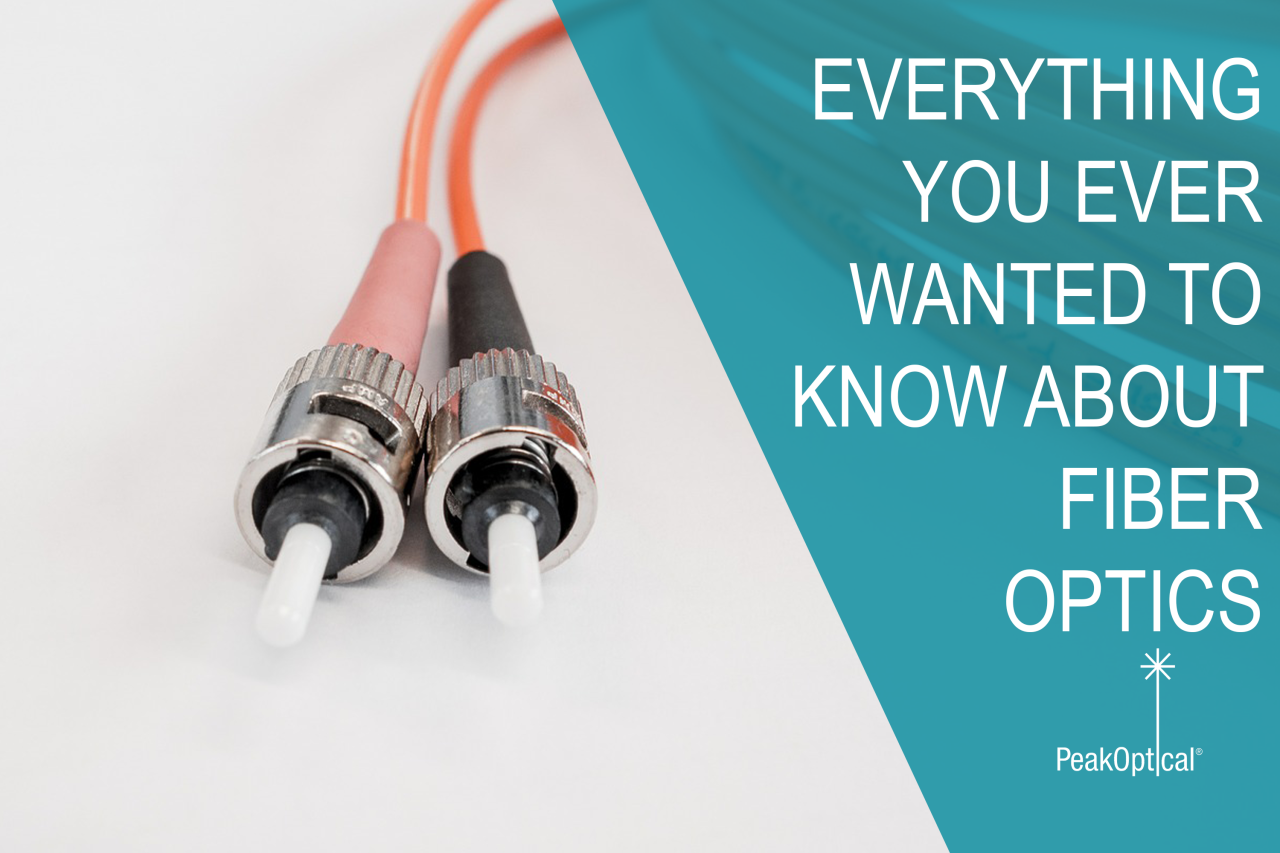
The environmental impact of fiber optics encompasses various stages including production, usage, and disposal. As the industry continues to expand, understanding these impacts becomes increasingly vital. From raw material extraction to end-of-life management, each phase presents challenges and opportunities for sustainability.
Analysis of Production and Disposal Effects
The production of fiber optic cables involves the use of silica, which is derived from quartz sand. The extraction of silica can lead to significant environmental degradation, including habitat destruction and soil erosion. Additionally, the energy-intensive manufacturing process relies heavily on fossil fuels, contributing to greenhouse gas emissions. The disposal of fiber optic cables poses its own set of challenges; while they are more durable than traditional copper cables, improper disposal methods can result in harmful chemicals leaching into the environment. Recycling options are limited and often not widely implemented, which exacerbates the issue of electronic waste.
Sustainability Practices in Fiber Optics Manufacturing
Sustainability in fiber optics manufacturing is gaining traction as companies seek to reduce their environmental footprint. Several practices have emerged to promote eco-friendly production methods:
1. Recycled Materials: Some manufacturers are exploring the use of recycled plastics and silica to produce fiber optic cables. This not only reduces the demand for virgin materials but also minimizes waste.
2. Energy Efficiency: Manufacturers are increasingly adopting energy-efficient technologies and practices. For example, using renewable energy sources like solar and wind power for production facilities can significantly reduce carbon footprints.
3. Water Conservation: The fiber optics industry is beginning to prioritize water conservation techniques, reducing water usage during manufacturing processes.
4. Eco-friendly Packaging: Many companies are transitioning to biodegradable or recyclable packaging materials to minimize waste generated from shipping and storage.
Innovations in Eco-friendly Fiber Optics
The fiber optics industry is also exploring potential innovations to enhance sustainability. One notable development is the creation of biodegradable fiber optic cables, which are designed to decompose naturally without releasing harmful substances. Additionally, advancements in manufacturing techniques, such as 3D printing, may allow for more efficient use of materials, reducing waste in production.
“Sustainable fiber optics innovations not only benefit the environment but also create new market opportunities and enhance brand reputation.”
As the demand for high-speed data transmission continues to grow, the focus on sustainability within the fiber optics sector will be crucial for minimizing environmental impacts and promoting a greener future. The ongoing research and development in eco-friendly technologies offer promising pathways for the industry to align with global sustainability goals.
The Historical Development of Fiber Optics Technology
The journey of fiber optics technology is a fascinating tale of innovation, scientific discovery, and the relentless pursuit of knowledge. It not only revolutionized communication but also laid the groundwork for the digital age. Understanding its historical context provides insight into the transformative impact it has had on multiple industries.
The development of fiber optics technology can be traced back to ancient concepts of light transmission and subsequent scientific breakthroughs. One of the earliest examples of light guiding was demonstrated by the philosopher and mathematician, Euclid, who documented properties of light in his work “Optics” around 300 BCE. However, practical applications began to emerge much later.
The 19th century marked a significant turning point with the invention of the optical fiber. In 1820, the work of physicists like François Arago brought attention to the behavior of light, and by the 1860s, Scottish physicist John Tyndall demonstrated that light could be transmitted through a stream of water, illustrating the principle of total internal reflection.
Further advancements came with the invention of the first glass optical fibers by Heinrich L. F. (Ludwig) Schott in 1880. These fibers allowed for the transmission of light over greater distances. During the 1920s, Harold Stephen Black, while working at Bell Labs, famously demonstrated the potential of these fibers for long-distance communication.
The real leap, however, occurred in the 1960s when researchers like Charles K. Kao and George A. Hockham developed the theoretical framework for fiber optics communication. Kao’s groundbreaking paper in 1966 calculated the potential for fiber to transmit signals over long distances without significant loss, earning him the nickname “the father of fiber optics.” His work led to the development of low-loss optical fibers, making fiber optics a viable medium for telecommunication.
By the 1970s, the first commercial applications were realized, with companies like Corning Glass Works producing the first low-loss optical fibers. This era marked the beginning of a new age in communication technology, paving the way for the high-speed internet, cable television, and modern global telecommunications systems we rely on today.
Key figures such as Kao and Hockham catalyzed the transformation of fiber optics from a theoretical concept to a practical technology, and their contributions are essential to understanding the impact fiber optics has had on modern communication infrastructure.
End of Discussion
In conclusion, as we reflect on the journey of fiber optics, it’s clear that this technology is poised for a bright future. From its historical milestones to its crucial applications in telecommunications and healthcare, the impact of fiber optics continues to grow. As challenges are addressed, ongoing research and innovation promise even more transformative advancements that will shape various industries for years to come.
Clarifying Questions
What is fiber optics?
Fiber optics is a technology that uses thin strands of glass or plastic to transmit data as pulses of light, enabling high-speed communication.
How does fiber optics differ from copper cables?
Fiber optics offers higher bandwidth, faster data transmission speeds, and greater distance capabilities compared to traditional copper cables.
What are the main types of fiber optic cables?
The main types are single-mode fibers, which are used for long-distance communication, and multi-mode fibers, which are better for shorter distances within buildings.
Are fiber optic cables more expensive than copper?
While the initial installation cost of fiber optic cables can be higher, their long-term benefits often outweigh the costs due to lower maintenance and higher performance.
Can fiber optics be used in residential areas?
Yes, many internet service providers are expanding fiber optic networks into residential areas to offer faster internet services.