Microservices are revolutionizing the way we build and deploy software applications. By breaking down complex systems into smaller, manageable services, organizations can achieve greater flexibility, scalability, and resilience. This innovative approach allows teams to work independently on different components, leading to faster delivery and improved collaboration. In this exploration of microservices, we will uncover the essential principles, advantages, and challenges that come with adopting this architecture, as well as its integration with modern practices like DevOps.
Our journey will delve into the crucial role of APIs in facilitating communication between microservices, the importance of effective data management strategies, and the security considerations that must be addressed to protect these distributed systems. We will also look at best practices for implementing microservices successfully, ensuring that organizations can harness the full potential of this architectural style.
Understanding the Principles of Microservices

Microservices architecture has revolutionized the way software is built and deployed, enabling organizations to achieve greater flexibility, scalability, and speed. Unlike traditional monolithic architectures, microservices are based on the principle of breaking down applications into smaller, independent services that can be developed, deployed, and scaled autonomously. This foundational concept leads to significant improvements in the development lifecycle, allowing teams to respond more quickly to changing business needs and technological advancements.
In microservices architecture, each service corresponds to a specific business capability and operates as an isolated unit. This means that teams can work on different services simultaneously, reducing dependencies and bottlenecks common in monolithic systems. Each service communicates with others through well-defined APIs, ensuring modularity and maintainability in the overall system. The significance of microservices lies in their ability to enhance agility, allowing organizations to innovate faster and implement changes without disrupting the entire application.
Differences Between Microservices and Monolithic Architectures
Understanding the distinctions between microservices and monolithic architectures is crucial for organizations contemplating a transition to more modern software practices. In a monolithic architecture, the entire application is built as a single, unified unit. This can lead to challenges in scaling, as any change, even minor, requires redeploying the entire application. Conversely, microservices allow for independent deployment; each service can be updated or scaled without impacting others.
Key differences include:
- Deployment: Monolithic applications require full redeployment, while microservices can be deployed independently.
- Scalability: Scaling a monolithic application often means duplicating the entire system, whereas microservices can be scaled individually based on demand.
- Technology Stack: Monoliths typically use a single technology stack, while microservices can leverage different technologies suited to each service’s needs.
- Development Speed: With microservices, teams can work simultaneously on different components, speeding up the development cycle significantly.
Advantages and Challenges of Adopting Microservices
While the adoption of microservices offers numerous benefits, it also presents certain challenges that organizations must navigate. The advantages primarily stem from increased agility and the ability to innovate rapidly. Teams can deploy features more frequently and respond to user feedback more effectively, leading to enhanced customer satisfaction.
However, challenges include:
- Complexity: The distributed nature of microservices introduces complexity in terms of service management, data consistency, and network communication.
- Monitoring: Ensuring performance and health across multiple services requires robust monitoring tools and practices.
- Deployment Management: Coordinating deployments across numerous services can be cumbersome without proper orchestration.
- Data Management: Handling data across independent services can lead to challenges in maintaining consistency and integrity.
“Microservices enable organizations to achieve greater flexibility, scalability, and speed in their software development practices.”
The Role of APIs in Microservices Architecture
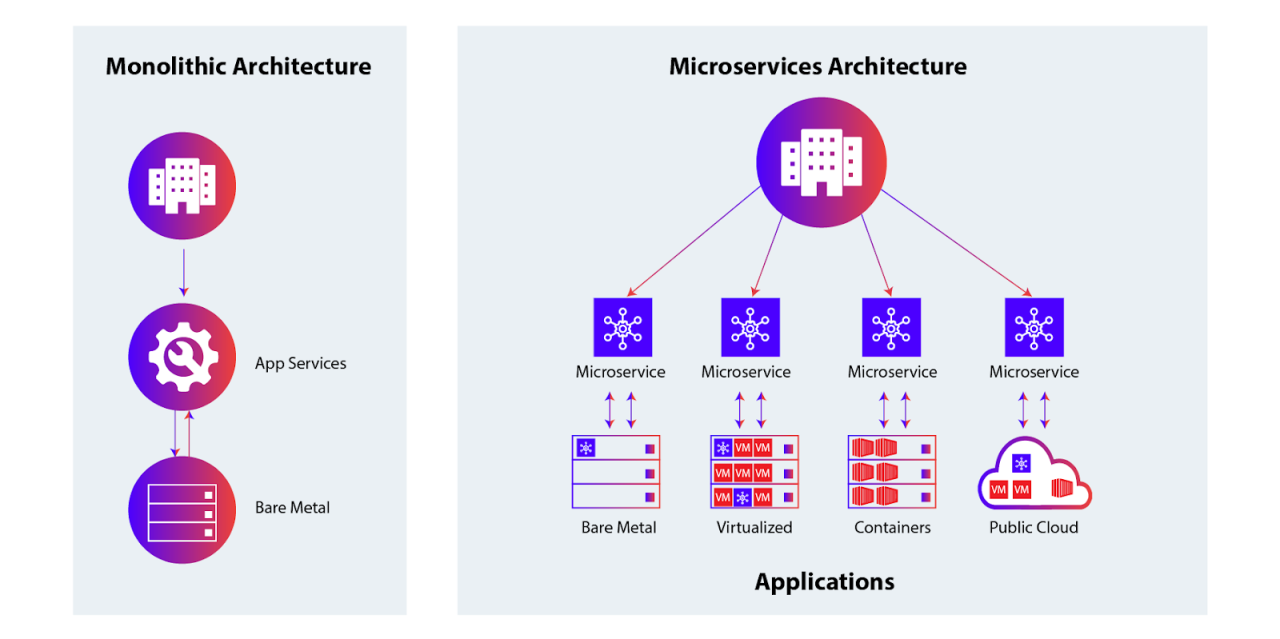
In a microservices architecture, APIs play a pivotal role by acting as the communication bridge between different services. This decentralized approach allows various microservices to interact seamlessly, fostering agility and scalability within an application framework. APIs enable the services to communicate over a network, allowing them to share data and functionalities effectively. As each microservice is designed to perform a specific business function, APIs become essential for orchestrating these services into a cohesive application.
Microservices rely heavily on APIs to facilitate communication and data exchange between services. This is particularly important as it allows different teams to develop, deploy, and scale each microservice independently. Moreover, APIs provide a standardized method for services to interact, regardless of the underlying technology or programming language used. For instance, one microservice could be built using Java, while another could utilize Node.js, yet they can communicate through a common API.
Types of APIs Commonly Used in Microservices
Different types of APIs are prevalent within microservices architectures, each serving a specific purpose. Understanding these types is crucial for effectively leveraging them in your architecture. Below are some of the most commonly used APIs:
- REST APIs: These are perhaps the most widely recognized APIs in microservices. They follow the principles of Representational State Transfer (REST), allowing services to communicate over HTTP using standard methods like GET, POST, PUT, and DELETE. REST APIs are stateless and can handle multiple formats, such as JSON and XML.
- GraphQL APIs: An alternative to REST, GraphQL enables clients to request only the data they need, reducing over-fetching and under-fetching issues. It provides a more flexible approach to data retrieval, which can be particularly beneficial in microservice environments where services often require diverse data from multiple sources.
- gRPC: This high-performance, open-source RPC framework is designed for efficient communication between services. It uses HTTP/2 for transport and Protocol Buffers as the interface description language, making it suitable for scenarios requiring real-time data exchange, such as in streaming services.
- WebSocket APIs: WebSocket APIs enable persistent connections between clients and servers, allowing for two-way communication. This is ideal for applications that require real-time updates, such as messaging apps or live dashboards.
Methods for Designing Effective APIs for Microservices
Designing effective APIs for microservices is essential for ensuring smooth interactions between services and enhancing overall application performance. Here are several methods for achieving this:
- Use Clear and Consistent Naming Conventions: API endpoints should be intuitively named to reflect their functionality. This enhances readability and makes it easier for developers to understand the purpose of each endpoint.
- Implement Versioning: As APIs evolve, versioning is critical to ensuring backward compatibility. This allows existing clients to continue using the old API while new features can be added in the newer versions without disrupting service.
- Utilize Documentation Standards: Comprehensive documentation is vital for API usability. Tools like Swagger or OpenAPI can be used to create interactive documentation, making it easier for developers to understand how to integrate with the API.
- Adopt Security Best Practices: Implementing authentication and authorization mechanisms like OAuth 2.0 ensures that only authorized users can access specific APIs, protecting sensitive data and maintaining integrity.
- Monitor and Analyze API Traffic: Utilizing tools for monitoring API performance helps in identifying bottlenecks and optimizing response times. This can lead to better resource management and improved user experience.
“APIs are the lifeblood of microservices; they enable seamless communication and collaboration among distributed services.”
Microservices and DevOps Integration
The integration of microservices with DevOps practices represents a transformative approach to software development and deployment. This synergy allows organizations to enhance their agility, improve collaboration among teams, and streamline the delivery of high-quality applications. Microservices architecture breaks down applications into smaller, manageable services that can be developed, deployed, and scaled independently, while DevOps fosters a culture of shared responsibility across development and operations teams. Together, they pave the way for more efficient workflows and faster time to market.
In a microservices environment, DevOps practices are instrumental in ensuring that the lifecycle of each service is managed effectively. This integration is largely facilitated by several key tools and technologies that support various stages of the DevOps pipeline. Notable tools include:
Key Tools and Technologies
The right tools are essential for achieving seamless integration between microservices and DevOps practices. The following tools are crucial for enhancing the DevOps lifecycle in a microservices environment:
- Docker: This containerization tool enables developers to package applications and their dependencies into containers, ensuring consistency across different environments and facilitating easier deployment.
- Kubernetes: An orchestration platform that automates the deployment, scaling, and management of containerized applications, Kubernetes is vital for managing microservices in a production environment.
- Jenkins: A widely-used CI/CD tool that supports the automation of various stages of the software development lifecycle, Jenkins is particularly effective in environments with microservices architecture.
- Prometheus: A powerful monitoring and alerting toolkit, Prometheus provides insights into the performance of microservices, making it easier to troubleshoot issues and optimize resource utilization.
- Git: Version control systems like Git are essential for managing source code in microservices, enabling teams to collaborate effectively and maintain a clear history of changes.
Continuous Integration (CI) and Continuous Deployment (CD) processes are significantly impacted by the adoption of microservices. With CI/CD, teams can integrate code changes frequently and deploy them rapidly, which is particularly advantageous when working with microservices. Each microservice can be independently tested and deployed, minimizing the risk associated with large-scale deployments.
“Microservices enable faster iterations and reduce deployment risks, allowing teams to adopt CI/CD practices effectively.”
By automatically running tests and deploying services as part of the CI/CD pipeline, organizations can enhance their ability to deliver new features and updates to users consistently. This results in not only improved efficiency but also a better overall customer experience as changes can be rolled out quickly in response to user feedback or market needs.
Data Management Strategies for Microservices
In the realm of microservices architecture, effective data management is crucial to ensure that services operate independently while maintaining data consistency. Given the decentralized nature of microservices, unique strategies must be adopted to address data storage and management. This includes selecting appropriate data storage solutions and establishing clear data access patterns that align with the principles of microservices.
Data storage and management within microservices can take various forms, primarily focusing on either centralized or decentralized approaches. Centralized data management involves consolidating data into a single location, often using a single database or a unified data service. This strategy simplifies data access and can streamline operations, as developers and services interact with a common data source. However, it may introduce bottlenecks and single points of failure, reducing the overall resilience of the system.
On the other hand, decentralized data management aligns more closely with the microservices philosophy. Each microservice can manage its own database tailored to its specific needs, promoting autonomy and reducing interservice dependencies. This approach can enhance scalability since services can evolve independently without being tied to a central data schema. However, it also complicates data consistency and requires robust strategies to manage data integrity across services.
Advantages of Decentralized vs Centralized Data Management
Understanding the advantages of each data management approach is essential for making informed architecture decisions. Here are some key benefits to consider:
- Decentralized Data Management:
Enhances service autonomy, allowing teams to choose the best storage solution that fits their specific service requirements.
This flexibility leads to optimized performance and efficient resource utilization.
- Improved Scalability:
As the number of services grows, decentralized management allows each service to scale independently without impacting others. - Fault Isolation:
In a decentralized setup, failure in one service’s database does not compromise the entire system, leading to better overall system resilience. - Centralized Data Management:
Simplifies data access for applications that require shared data across multiple services.
This can reduce the complexity of data interactions among microservices, promoting easier integration.
Data Consistency Models in Microservices
Maintaining data consistency across microservices can be challenging, given their independent nature. Various consistency models can be applied to manage this effectively:
- Eventual Consistency:
This model allows for temporary discrepancies between services, with the assurance that all data will become consistent over time. It’s commonly used in systems where absolute immediate consistency is not critical but where eventual alignment is acceptable. - Strong Consistency:
Ensures that any read operation reflects the most recent write operation. This is crucial in scenarios requiring immediate data accuracy, such as financial transactions. - Casual Consistency:
Offers a more relaxed approach where operations are only guaranteed to be consistent relative to the causal relationships between them, making it easier to achieve consistency while still providing a certain level of reliability.
Understanding these data management strategies and consistency models is vital for architects and developers working with microservices, as they directly influence system performance, reliability, and maintainability.
Security Considerations in Microservices
Microservices architecture presents unique security challenges that are distinct from traditional monolithic structures. As applications are broken down into smaller, independently deployable services, each one becomes a potential target for various security threats, making a comprehensive security strategy essential. The decentralized nature of microservices also complicates the enforcement of security policies, as each service may have different security requirements and potential vulnerabilities.
The critical security challenges posed by microservices stem primarily from their distributed architecture. Each microservice communicates with others over the network, which exposes them to risks such as data interception and unauthorized access. Additionally, managing authentication and authorization across multiple services can become cumbersome, leading to potential misconfigurations that could be exploited. The use of APIs to facilitate service communication requires stringent security controls, as unsecured APIs can serve as gateways for cyber threats. Furthermore, the rapid development and deployment cycles typical in microservices environments can lead to inadequate security testing, increasing the likelihood of vulnerabilities slipping through the cracks.
Best Practices for Securing Microservices Architectures
Implementing robust security measures is crucial for protecting microservices. The following best practices can significantly enhance the security posture of microservices architectures:
- Utilize API Gateway: Implement an API gateway to manage traffic between clients and services while enforcing security policies.
- Implement Service-to-Service Authentication: Use mutual TLS or OAuth tokens to authenticate service-to-service communications.
- Adopt Zero Trust Security Model: Assume that threats exist both inside and outside the network. Verify every request and connection.
- Regularly Update Dependencies: Keep all libraries and dependencies up to date to mitigate known vulnerabilities.
- Conduct Security Audits: Regularly perform security assessments and penetration testing to identify and address vulnerabilities.
- Encrypt Data: Use encryption for sensitive data both at rest and in transit to prevent unauthorized access.
- Monitor and Log Activities: Implement logging and monitoring to detect and respond to suspicious activities in real time.
The role of service mesh in enhancing microservices security cannot be overstated. A service mesh provides a dedicated infrastructure layer for managing service-to-service communication, which includes built-in security features. It enables fine-grained traffic control, allowing organizations to enforce security policies consistently across all services. Service meshes typically provide capabilities like mutual TLS for encryption between services, rate limiting to protect against Denial-of-Service attacks, and observability features to monitor service interactions. By centralizing security functions within the service mesh, organizations can simplify their security architecture and ensure that security policies are uniformly applied, minimizing the risk of vulnerabilities arising from misconfigurations.
Monitoring and Logging in Microservices
In the intricate world of microservices, monitoring and logging are not just best practices; they are essential components for maintaining system health and ensuring optimal performance. As microservices architecture becomes increasingly prevalent, understanding how to effectively monitor and log interactions across services is crucial for diagnosing issues and enhancing user experiences.
Monitoring and logging serve as the backbone of observability in a microservices ecosystem. With multiple services communicating seamlessly, it is vital to have visibility into their interactions, performance, and potential failures. Effective monitoring allows teams to proactively identify bottlenecks or failures before they escalate into larger problems. Logging, on the other hand, provides a historical record that can be invaluable for troubleshooting and analyzing system behavior over time. Together, these practices empower development teams to respond to incidents swiftly and make data-driven decisions for future improvements.
Key Metrics to Monitor for Performance Insights
To effectively monitor the performance of microservices, it is important to focus on specific metrics that provide insights into system health and functionality. These key metrics include:
- Response Time: Measures how long it takes for a service to respond to a request. High response times can indicate performance issues.
- Throughput: The number of requests handled by a service over a specific period, providing insight into the service’s load capacity.
- Error Rate: The percentage of failed requests compared to total requests, which can help identify issues impacting user experience.
- CPU and Memory Usage: Monitoring resource usage helps determine if services have sufficient resources to handle their workloads.
- Dependency Latency: Measures the time taken for interactions with other services, crucial for understanding performance across interconnected services.
Each of these metrics provides a different perspective on the system’s health, allowing teams to pinpoint areas needing attention and optimization.
Tools and Frameworks for Logging and Monitoring
Various tools and frameworks are available to help implement effective monitoring and logging strategies in microservices. These tools are designed to aggregate, analyze, and visualize data efficiently.
Prominent tools include:
- Prometheus: An open-source monitoring solution widely used for collecting metrics and providing alerts based on those metrics.
- Grafana: Often used in conjunction with Prometheus, Grafana is a powerful visualization tool that enables users to create dashboards for monitoring system performance.
- ELK Stack (Elasticsearch, Logstash, Kibana): A popular framework for logging that processes and visualizes logs, allowing teams to search and analyze log data effectively.
- Sentry: A tool focused on real-time error tracking that helps developers monitor application performance and errors across services.
- Zipkin: A distributed tracing system that helps gather timing data needed to troubleshoot latency issues in microservices.
These tools not only facilitate effective monitoring and logging but also aid in creating a more resilient microservices architecture, enabling teams to deliver better services with confidence.
Best Practices for Implementing Microservices
Transitioning to a microservices architecture can significantly enhance the scalability, maintainability, and flexibility of an application. However, to successfully implement microservices, it’s essential to adhere to specific best practices. These guidelines not only improve the transition process but also help mitigate common pitfalls associated with microservices architectures.
One of the fundamental best practices when adopting microservices is to ensure clear service boundaries. This means defining the scope of each service to address specific business capabilities. By doing so, development teams can work on independent services without stepping on each other’s toes, enabling more efficient development cycles.
Designing for Failure and Resilience
In microservices architecture, designing for failure and resilience is critical due to the distributed nature of the services. Unlike monolithic applications, where failures might be contained, failures in microservices can cascade and affect the entire system if not managed properly.
Building resilience into microservices involves several strategies:
- Implement Circuit Breakers: This design pattern prevents an application from repeatedly trying to execute an operation that’s likely to fail, allowing it to recover gracefully.
- Utilize Bulkheads: This involves isolating different parts of an application to prevent a failure in one area from impacting others.
- Graceful Degradation: In case of service failure, the application should continue to provide a subset of functionalities instead of complete downtime.
- Automated Testing and Monitoring: Continuous testing and robust monitoring tools are essential to detect issues before they escalate and impact users.
Emphasizing these strategies can lead to a more robust microservices architecture capable of withstanding failures effectively.
Examples of Successful Microservices Implementations
Several companies have successfully leveraged microservices to enhance their software delivery and operational efficiency. For instance, Netflix transitioned from a monolithic application to a microservices architecture to manage its vast data and streaming services seamlessly. By decomposing its platform into over 700 microservices, Netflix can deploy updates multiple times a day while maintaining high availability and performance for its users.
Another notable example is Amazon, which utilizes microservices to handle its colossal e-commerce platform. Each service, from inventory management to payment processing, operates independently, allowing Amazon to scale rapidly and innovate continually without disrupting other parts of the system.
“Microservices allow organizations to innovate faster and enhance their offerings without the traditional constraints of monolithic architectures.”
These examples illustrate that when implemented correctly, microservices can significantly improve operational efficiency, speed up deployment cycles, and enhance user experience, making them a compelling architectural choice in today’s software development landscape.
Wrap-Up
In conclusion, embracing microservices is not just about adopting new technologies; it’s about rethinking how we approach software development. With the right strategies, tools, and practices, organizations can create resilient and scalable systems that meet the demands of today’s fast-paced digital landscape. As we continue to explore this dynamic field, understanding the interplay between microservices and other methodologies will be crucial for driving innovation and achieving long-term success.
Essential Questionnaire
What are microservices?
Microservices are an architectural style that structures an application as a collection of loosely coupled services, each responsible for a specific business capability.
How do microservices differ from a monolithic architecture?
In a monolithic architecture, all components are interconnected and run as a single unit, whereas microservices are independent, enabling faster updates and scalability.
What are the benefits of using microservices?
Microservices offer increased agility, better resource utilization, improved fault isolation, and the ability to use different technologies for different services.
What are the challenges of implementing microservices?
Challenges include managing service interdependencies, ensuring data consistency, handling increased complexity, and requiring a cultural shift within teams.
How can I ensure security in a microservices architecture?
Best practices include implementing authentication and authorization mechanisms, using service mesh technologies, and regularly conducting security audits.
What monitoring tools are recommended for microservices?
Popular tools include Prometheus, Grafana, ELK Stack, and Datadog, which help in tracking performance metrics and logging data.
How does CI/CD work with microservices?
CI/CD practices in microservices involve automating the integration and deployment of services independently, allowing for faster release cycles and more frequent updates.